Cover image

Rewarding Behavior: Why Enterprise AI Needs More Than Bigger Models

Enterprise AI teams have developed a familiar reflex. When the model behaves unreliably, they try a better prompt. When that fails, they try a larger model. When that becomes expensive, they invent a workflow diagram with many arrows and call it an operating model. Very dignified. Very scalable, in the same way that adding more sticky notes to a broken process is scalable. ...

June 10, 2026 · 17 min · Zelina
Cover image

Expert Witness: How MoE Translation Models Can Lose Weight Without Losing the Plot

Translation is one of those AI workloads where scale is both a blessing and a tax. A large language model can translate with impressive robustness, follow instructions, preserve formatting, and handle messy inputs better than many older systems. Then the bill arrives. The model is not only carrying translation ability; it is also carrying mathematical reasoning, factual memory, coding patterns, roleplay habits, tool-use affordances, and several other things that are not exactly required to turn German into English. ...

June 4, 2026 · 17 min · Zelina
Cover image

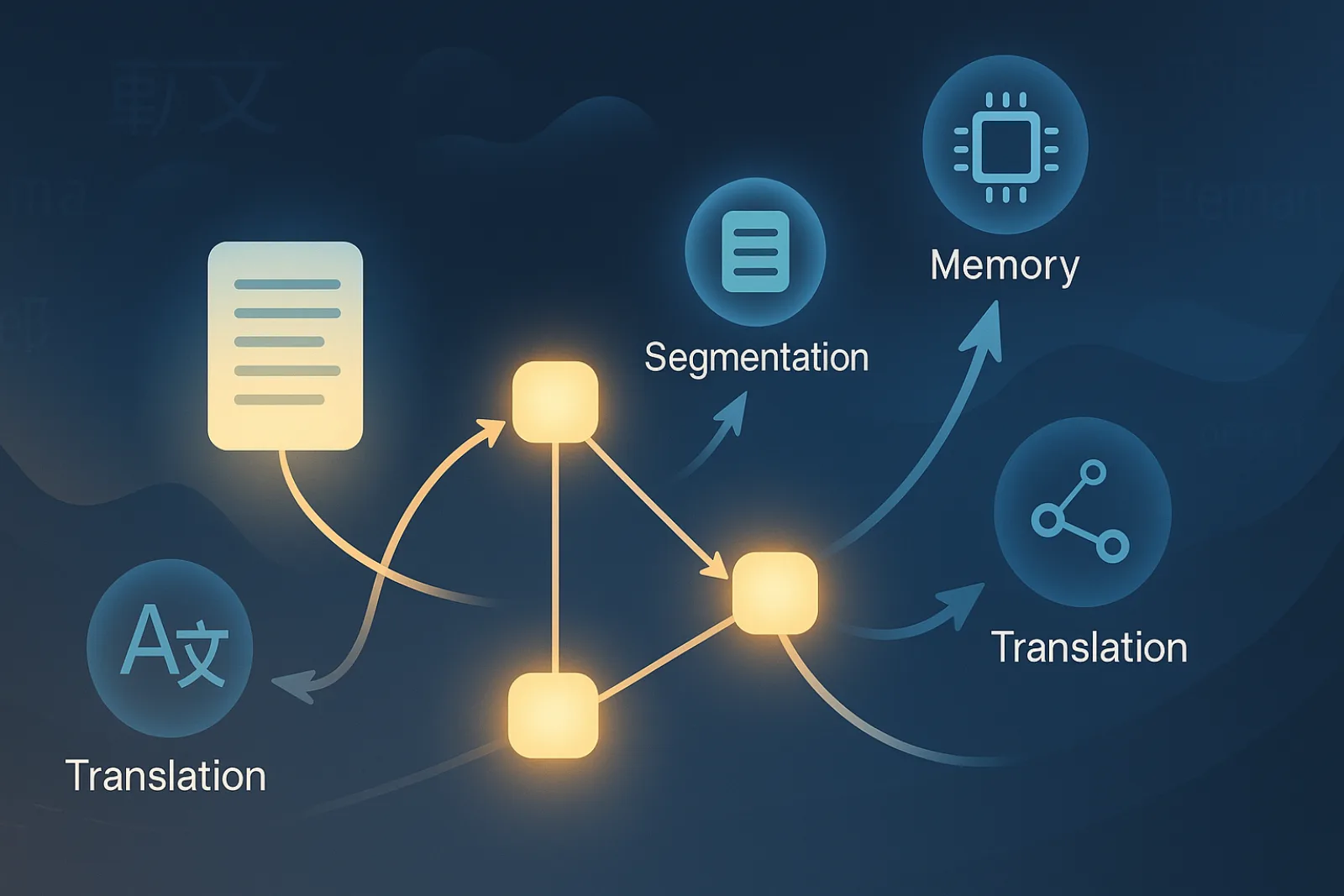
Threading the Needle: How GRAFT Reinvents Document Translation with DAGs and LLM Agents

TL;DR for operators Long-document translation does not fail only because the model lacks enough tokens. It fails because documents are not bags of sentences. They contain references, implied pronouns, repeated terms, topic shifts, callbacks, causal links, and the occasional sentence that makes sense only because something three paragraphs earlier did the heavy lifting. ...

July 12, 2025 · 17 min · Zelina