Cover image

Learning to Struggle: Teaching LLMs to Code Like Real Students

TL;DR for operators ParaStudent asks a sharper question than “Can an LLM solve programming homework?” It asks whether an LLM can generate code that looks like it came from a real novice: incomplete, inconsistent, stylistically awkward, and improving over time.1 The key empirical surprise is that GPT-4.1 is often too competent to be realistic. In the high-resolution experiment, GPT-4.1 produces pass rates of 96.7% on familiar problems and 100.0% on new problems, while real student submissions average 9.8% and 12.1% respectively at the evaluated next-submission points. A fine-tuned Qwen-2.5 Coder 7B model, called qwen-student, comes much closer to real student behaviour across pass rate, PEP 8 violations, style score, embedding distance, and incremental edit patterns. The paper’s business relevance is not “AI will replace students,” which would be a rather grim product roadmap. The useful pathway is synthetic student behaviour for training tutor agents, testing feedback systems, building benchmarks, and stress-testing interventions where real student data is scarce or sensitive. The boundary is material. ParaStudent works best when the model has seen related problems from the same course. Generalisation to new problems is weaker, and the high-resolution setup predicts the next submission using real prior attempts rather than generating an entire student journey from scratch. For edtech teams, the takeaway is simple: if the product depends on modelling learners, correctness is the wrong north star. The right question is whether the system can represent how learners fail, revise, and partially recover. Homework code is supposed to look a little broken Student code is not merely worse professional code. It has its own texture. ...

July 19, 2025 · 17 min · Zelina
Cover image

The Debugger Awakens: Why Kodezi Chronos Leaves GPT-4 in the Dust

TL;DR for operators Kodezi Chronos is interesting because it does not treat debugging as “write better code from a longer prompt.” It treats debugging as a full maintenance workflow: retrieve the right repository context, reason across code and history, generate a patch, run tests, inspect failure, revise, document, and remember what happened next time.1 ...

July 19, 2025 · 18 min · Zelina
Cover image

Red Flag on the Track: Why LLMs Still Struggle with Real Algorithmic Reasoning

TL;DR for operators FormulaOne is a useful red flag because it tests something many businesses quietly assume LLMs already possess: the ability to design deep algorithms, not merely write plausible code around familiar patterns.1 The benchmark contains 120 hard dynamic-programming problems on tree-like graphs, plus 100 easier FormulaOne-Warmup problems. The hard tasks are generated from Monadic Second-Order logic, come with verifiable evaluation, and sit near the kind of combinatorial reasoning used in routing, scheduling, network design and other optimisation-heavy domains. ...

July 18, 2025 · 17 min · Zelina
Cover image

Pricing Plans, Meet Prompt Engineering: LLMs and the Future of SaaS Monetization

TL;DR for operators SaaS pricing has become too complex to live only as a web page. Plans, feature gates, usage limits, add-ons, annual discounts, enterprise exceptions, and product bundles now behave like operational logic. Yet in many companies, that logic is still scattered across marketing pages, billing systems, sales decks, spreadsheets, and someone’s memory. A robust governance model, naturally. ...

July 17, 2025 · 18 min · Zelina
Cover image

Reasoning at Scale: How DeepSeek Redefines the LLM Playbook

TL;DR for operators DeepSeek-R1 is not a story about one model suddenly becoming clever because someone found the secret lever labelled “reason harder”. It is a systems story: take a strong base model, reward it on problems where correctness can be checked, let longer reasoning traces emerge, repair the ugly parts with cold-start data and alignment, then distil the resulting behaviour into smaller models where deployment economics actually matter.1 ...

July 15, 2025 · 14 min · Zelina
Cover image

Serverless Bulls and Bears: How One Developer Built a Real-Time Stock Analyst with Zero Infrastructure

TL;DR for operators A paper on a “real-time stock analyst” sounds, at first blush, like another attempt to place a crystal ball inside a chatbot and call it alpha. Fortunately, this one is more useful than that. Taniv Ashraf’s paper, A Serverless Architecture for Real-Time Stock Analysis using Large Language Models, is best read as a build-and-debug case study, not as evidence that Gemini can reliably predict stock prices.1 ...

July 15, 2025 · 15 min · Zelina
Cover image

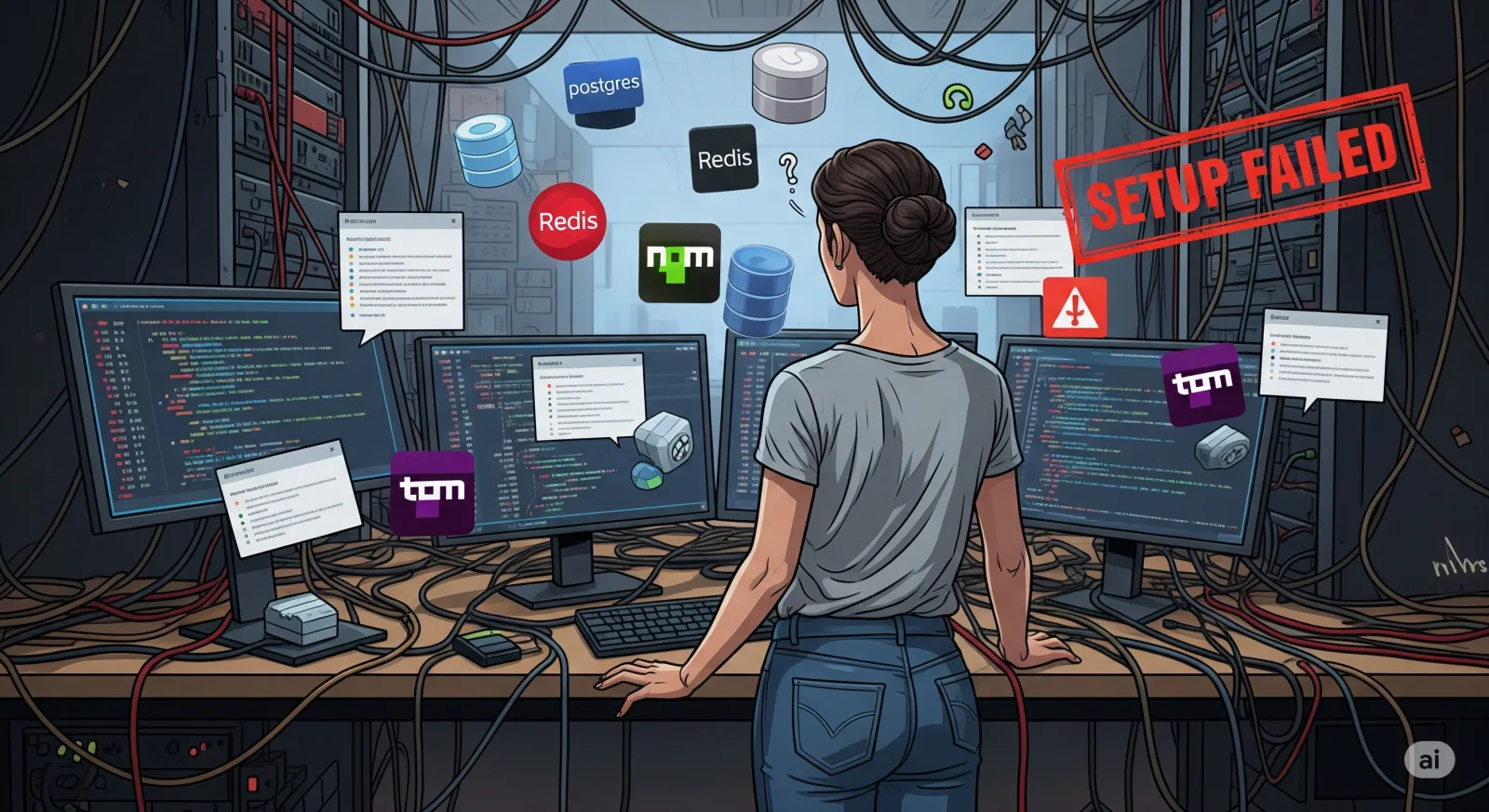
The First Hurdle: Why Coding Agents Struggle with Setup

TL;DR for operators Setup is where many AI coding-agent promises meet the concrete floor. The SetupBench paper introduces a 93-task benchmark that asks software engineering agents to do something less glamorous than writing a clever patch: start from a bare Linux sandbox, install what is missing, resolve dependency conflicts, initialise databases, configure services, and prove the environment works through a deterministic validation command.1 ...

July 15, 2025 · 16 min · Zelina
Cover image

The Retrieval-Reasoning Tango: Charting the Rise of Agentic RAG

TL;DR for operators Static RAG is still useful. It is also no longer the whole game. The paper behind this article argues that retrieval and reasoning are converging into a more tightly coupled architecture: reasoning can improve retrieval, retrieval can improve reasoning, and agentic systems can interleave both over multiple steps.1 That sounds like a neat academic symmetry until you put it inside an enterprise workflow, where every extra retrieval call means latency, cost, permissions, ranking risk, and one more place for the machine to confidently ingest rubbish. ...

July 15, 2025 · 18 min · Zelina
Cover image

Cognitive Gridlock: Is Consciousness a Jamming Phase?

TL;DR for operators The paper’s headline is irresistible: consciousness as a jamming phase. It is also exactly the kind of headline that can make otherwise sensible people reach for a procurement memo and a philosophy degree at the same time. The useful reading is narrower and better. Kaichen Ouyang proposes a neural jamming phase diagram for language models, mapping three physical controls from jamming physics onto AI systems: effective temperature, volume fraction, and stress.1 In business terms, those become compute budget, model-and-data density, and training/deployment noise. The paper argues that generalisation may emerge when those controls push the model towards a critical surface where local representations become globally correlated. ...

July 14, 2025 · 14 min · Zelina
Cover image

Inner Critics, Better Agents: The Rise of Introspective AI

TL;DR for operators If your agent stack is becoming expensive because every “reflection” step means another model call, this paper is worth reading. Its proposal, Introspection of Thought (INoT), tries to compress an external multi-agent debate loop into one structured prompt. The LLM is not literally running multiple agents. It is being instructed, through a hybrid Python-and-natural-language prompt called PromptCode, to simulate two internal debaters that reason, critique, rebut, revise, and then return an answer.1 ...

July 14, 2025 · 15 min · Zelina