Cover image

Factor Factory: How LLMs Are Reinventing Sparse Portfolio Optimization

TL;DR for operators Portfolio teams do not usually fail because they have no models. They fail because the models age, the signals decay, and the process of discovering new sparse selection logic is slow, expensive, and wonderfully allergic to market regime shifts. The paper behind EFS — Evolutionary Factor Search — proposes a useful change in framing: stop asking the LLM to “pick stocks” and ask it to generate executable alpha-factor formulas that can be backtested, filtered, evolved, and used to rank assets under sparse portfolio constraints.1 That distinction matters. The LLM is not the portfolio manager. It is the factor-factory intern with suspicious stamina. The backtest loop is still the adult in the room. ...

July 27, 2025 · 17 min · Zelina
Cover image

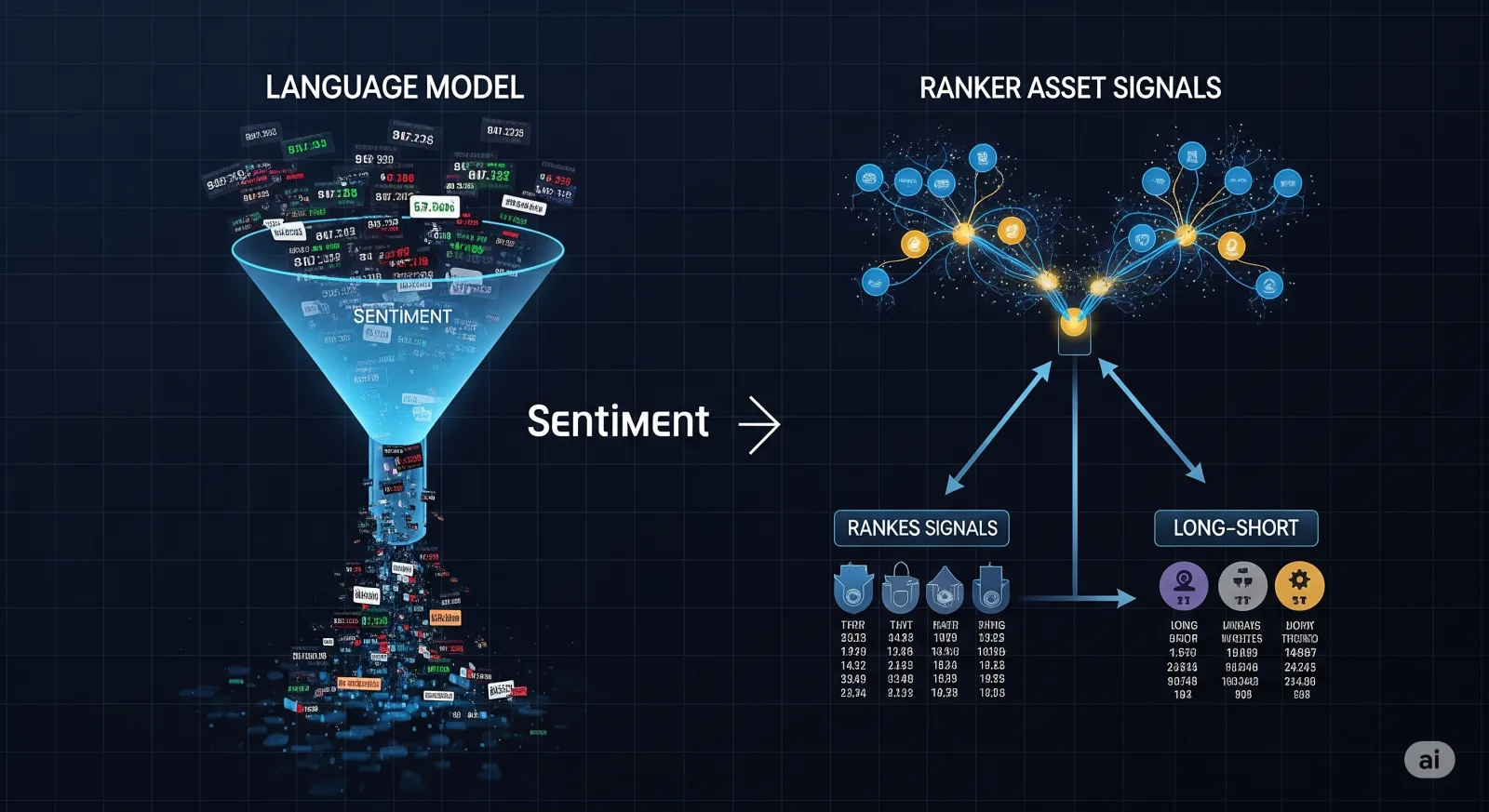
The Sentiment Edge: How FinDPO Trains LLMs to Think Like Traders

TL;DR for operators News is only useful when it survives the journey from headline to position sizing. FinDPO, proposed by Giorgos Iacovides, Wuyang Zhou, and Danilo Mandic, is a finance-specific Llama-3-8B-Instruct sentiment model trained with Direct Preference Optimization rather than ordinary supervised fine-tuning.1 The paper’s headline result is not merely that FinDPO scores well on sentiment benchmarks. Plenty of models win benchmarks, then politely disappear when transaction costs arrive. ...

July 27, 2025 · 14 min · Zelina
Cover image

Plug Me In: Why LLMs with Tools Beat LLMs with Size

TL;DR for operators The Athena paper is useful because it makes a simple operational point that many AI buying committees still manage to avoid: a bigger language model is not the same thing as a better workflow.1 An LLM can explain, infer, and format. It is still a poor substitute for a calculator, a live database, a calendar API, a search service, or a domain-specific computation engine. This is not a moral failure. It is just architecture. ...

July 14, 2025 · 14 min · Zelina
Cover image

Beyond the Pull Request: What ChatGPT Teaches Us About Productivity

TL;DR for operators Most companies still ask the wrong first question about LLMs in software development: “Do they make developers write code faster?” That question is not useless. It is just too small. A recent paper by Sardar Bonabi, Sarah Bana, Vijay Gurbaxani, and Tingting Nian uses Italy’s temporary 2023 ChatGPT ban as a natural experiment to examine what happened to public GitHub activity when Italian developers abruptly lost access to ChatGPT, compared with similar developers in France and Portugal.1 The study covers 88,022 open-source software developers and looks at a 16-week window: eight weeks before the ban, four weeks during it, and four weeks after access was restored. ...

July 1, 2025 · 17 min · Zelina
Cover image

Divide and Conquer: How LLMs Learn to Teach

TL;DR for operators The useful finding is not “LLMs can write lessons.” They can, in the same way a junior analyst can write a memo: quickly, plausibly, and with enough confidence to become dangerous if nobody reads it. The paper tests GPT-4o with retrieval-augmented generation (RAG) for creating interactive, scenario-based lessons used to train novice human tutors in online middle-school mathematics.1 The lesson topics are practical rather than ornamental: encouraging student independence, encouraging help-seeking behaviour, and persuading students to turn cameras on during online tutoring. ...

June 24, 2025 · 17 min · Zelina
Cover image

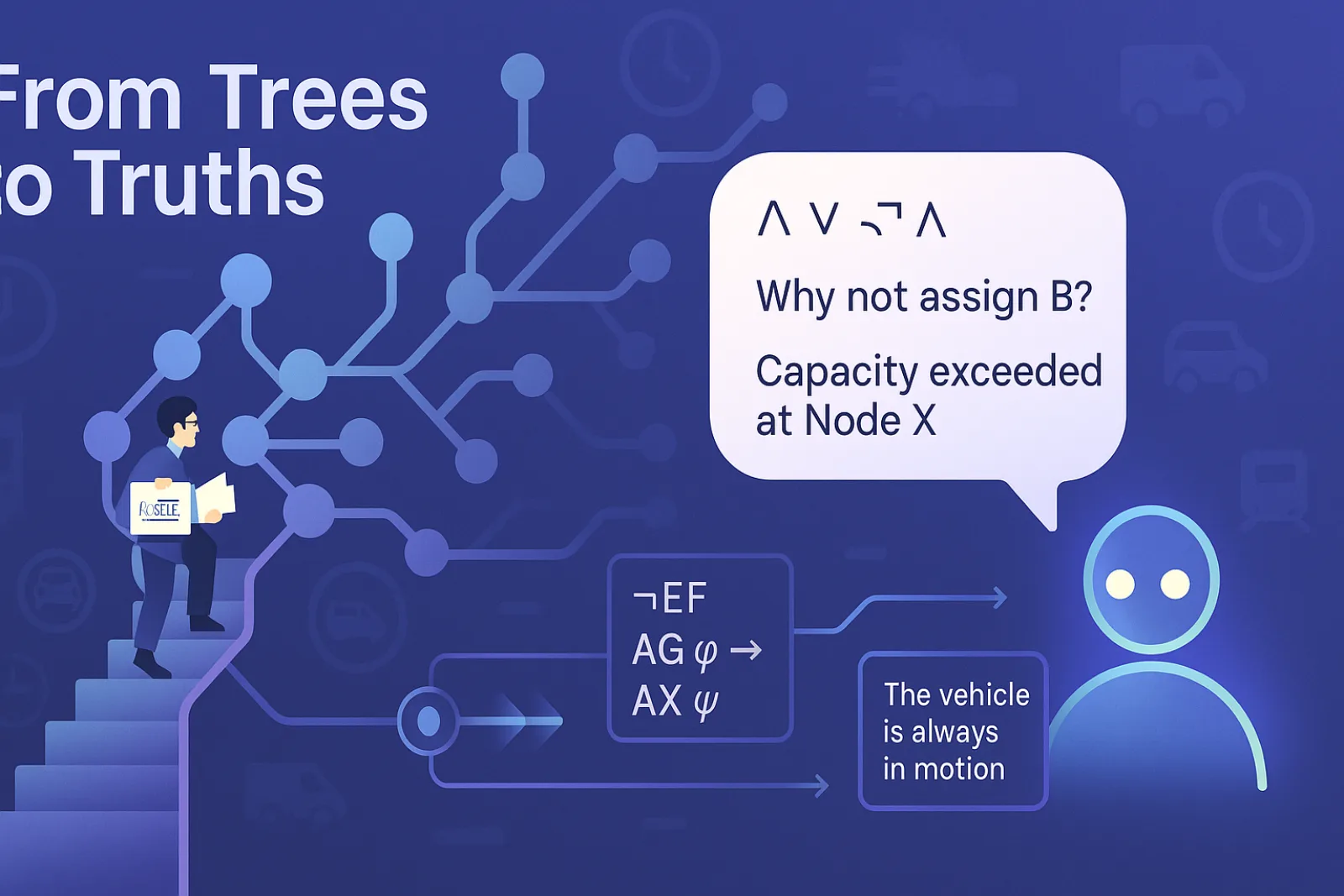
From Trees to Truths: Making MCTS Talk with Logic-Backed LLMs

TL;DR for operators If your optimisation system can choose the route, assign the vehicle, or schedule the job but cannot explain why, the obvious temptation is to bolt on a chatbot and call the matter solved. That is also how one gets fluent nonsense with a user interface. The paper behind this article proposes a better pattern: let the LLM translate a user’s question into formal variables and logic, evaluate those variables against the actual Monte Carlo Tree Search tree, retrieve domain knowledge only when the question calls for it, and then generate the final natural-language explanation.1 The LLM is still useful, but it is no longer allowed to improvise the evidence. A small mercy, really. ...

May 4, 2025 · 16 min · Zelina

BLOOM

A multilingual large language model developed by the BigScience initiative, capable of generating text in 46 languages and 13 programming languages.

1 min

Claude 3 Sonnet

A mid-sized member of Anthropic’s Claude 3 model family, optimized for balanced performance across reasoning, speed, and multimodal understanding.

1 min

Gemma 3 (Keras)

An experimental LLM built using Keras 3 and JAX/TPU, designed to showcase research-focused model development on the Kaggle Models platform.

1 min

Gemma 7B

A 7-billion-parameter open-weight language model developed by Google, optimized for efficiency, safety, and general-purpose reasoning.

1 min