Cover image

Mind Over Machine: When AGI Starts Thinking in Needs

A factory line does not need a chatbot with feelings. It needs a control system that can tell the difference between a harmless deviation, a costly delay, and a situation that deserves to interrupt a human operator before the machine becomes expensive sculpture. That is the useful way to read Computational Concept of the Psyche by Anton Kolonin and Vladimir Krykov.1 The paper’s title sounds as if we are about to attach a synthetic soul to a machine, perhaps with a dashboard of emotions and a tasteful blue glow. Fortunately, the core argument is more operational than theatrical: an intelligent agent should not only predict the next state of the world; it should manage its own state of needs while acting under uncertainty, risk, and resource limits. ...

March 17, 2026 · 16 min · Zelina
Cover image

Stacking the Odds: Why Blocksworld Still Breaks Your Fancy LLM Agent

A robot arm, a few colored blocks, and a table. That is the setup. No messy warehouse, no sensor dust, no tired operator, no forklift reversing into the wrong aisle. Just blocks. And still, the fancy LLM agent stumbles. That is the useful discomfort in Benchmark for Planning and Control with Large Language Model Agents: Blocksworld with Model Context Protocol.1 The paper does not show a robot revolution. It shows something more valuable for anyone trying to deploy LLM agents in industrial workflows: even in a symbolic world where the rules are explicit, the actions are discrete, the state can be queried, and the tool interface is standardized, reliability degrades as soon as the task stops being politely simple. ...

December 4, 2025 · 17 min · Zelina
Cover image

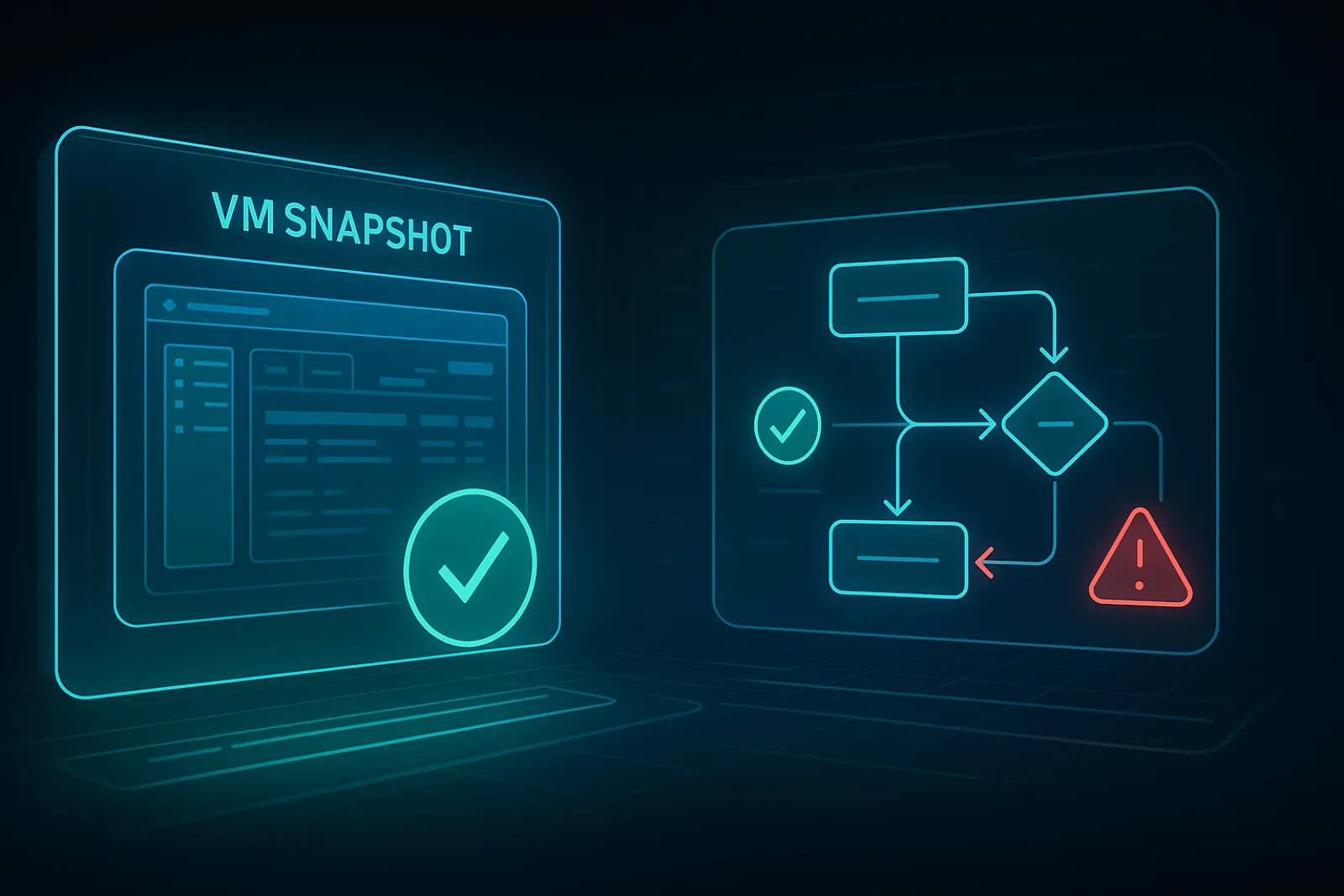
Snapshot, Then Solve: InfraMind’s Playbook for Mission‑Critical GUI Automation

Why this paper matters (for operators, not just researchers) Industrial control stacks (think data center DCIM, grids, water, rail) are hostile terrain for “general” GUI agents: custom widgets, nested hierarchies, air‑gapped deployment, and actions that can actually break things. InfraMind proposes a pragmatic agentic recipe that acknowledges these constraints and designs for them. The result is a system that learns an interface before it tries to use it, then executes with auditability and guardrails. ...

October 1, 2025 · 5 min · Zelina