Cover image

Graph RAG, No Smoke: Why Explainable AI in Manufacturing Needs a Memory

Factory AI has an old communication problem. The model can say, “this screw-placement attempt is likely to fail.” The operator then asks the obvious follow-up: “Because of what?” A dashboard answers with a probability. A SHAP plot answers with colored bars. A feature-importance chart answers with something that looks scientific enough to intimidate the meeting room into silence. None of these answers necessarily tells the worker, engineer, or manager what is connected to what: the screw geometry, the robot arm, the training dataset, the preprocessing step, the model, the task, and the explanation artifact. ...

April 22, 2026 · 15 min · Zelina
Cover image

When Retrieval Learns to Breathe: Teaching LLMs to Go Wide *and* Deep

Retrieval has a breathing problem. Most enterprise RAG systems inhale once, grab the nearest chunks, and then hope the model can make the answer sound less fragile than the evidence actually is. That works tolerably well when the user asks for something sitting neatly inside a document paragraph. It works less well when the answer lives across entities, relations, aliases, product categories, authors, diseases, suppliers, regulations, or customer records. In other words, it works less well in the part of business where knowledge is not a pile of text but a network. ...

January 21, 2026 · 18 min · Zelina
Cover image

Preference Chains of Command: Making LLM Agents Pick Like People

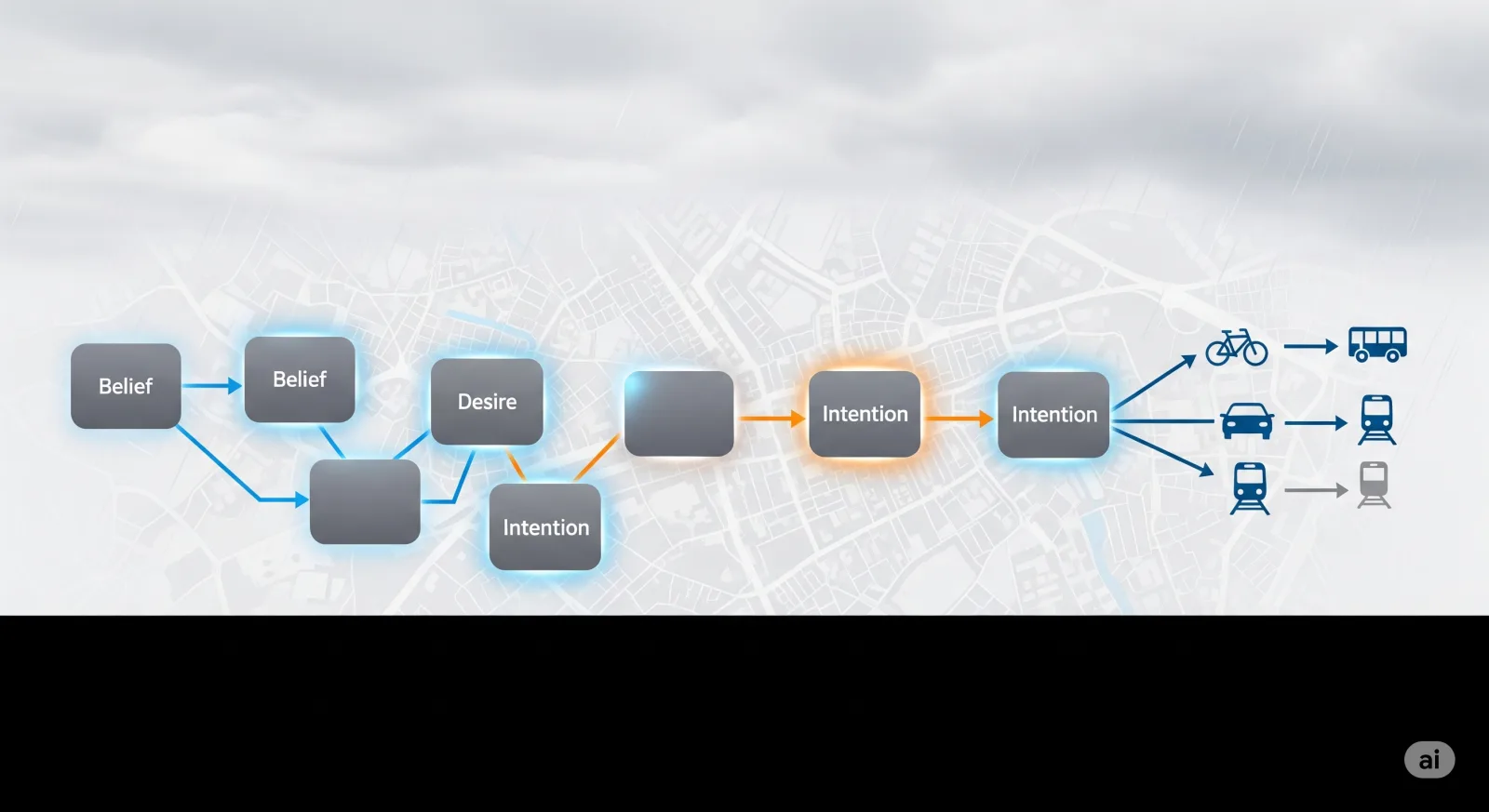
TL;DR for operators Cities rarely wait for perfect data. A new district still needs a transit plan, a campus still needs a shuttle model, and a developer still wants to know whether people will walk, drive, or quietly defeat the entire urban-design deck by ordering a car. The paper behind this article introduces Preference Chain, a method that uses a small sample of behavioural mobility data to guide an LLM agent’s transport choices.1 The important bit is not that it “adds Graph RAG” to an LLM. That phrase now covers everything from serious retrieval systems to someone throwing a Neo4j logo onto a slide. The real mechanism is narrower and more useful: Preference Chain turns sparse human travel records into structured priors over likely choices, then lets the LLM adjust those priors for context. ...

August 25, 2025 · 21 min · Zelina