Cover image

Confidence, Not Confidence Tricks: Statistical Guardrails for Generative AI

A product team launches an AI assistant. The demo works. The benchmark looks respectable. The model even says “I’m confident” with the serene authority of a consultant who has never owned a pager. Then the real users arrive. Some ask ambiguous questions. Some ask adversarial questions. Some ask perfectly normal questions that happen to sit outside the model’s competence. The assistant still answers. Sometimes it refuses too often. Sometimes it refuses too late. Sometimes its confidence score is less a forecast and more a decorative sticker. ...

September 13, 2025 · 14 min · Zelina
Cover image

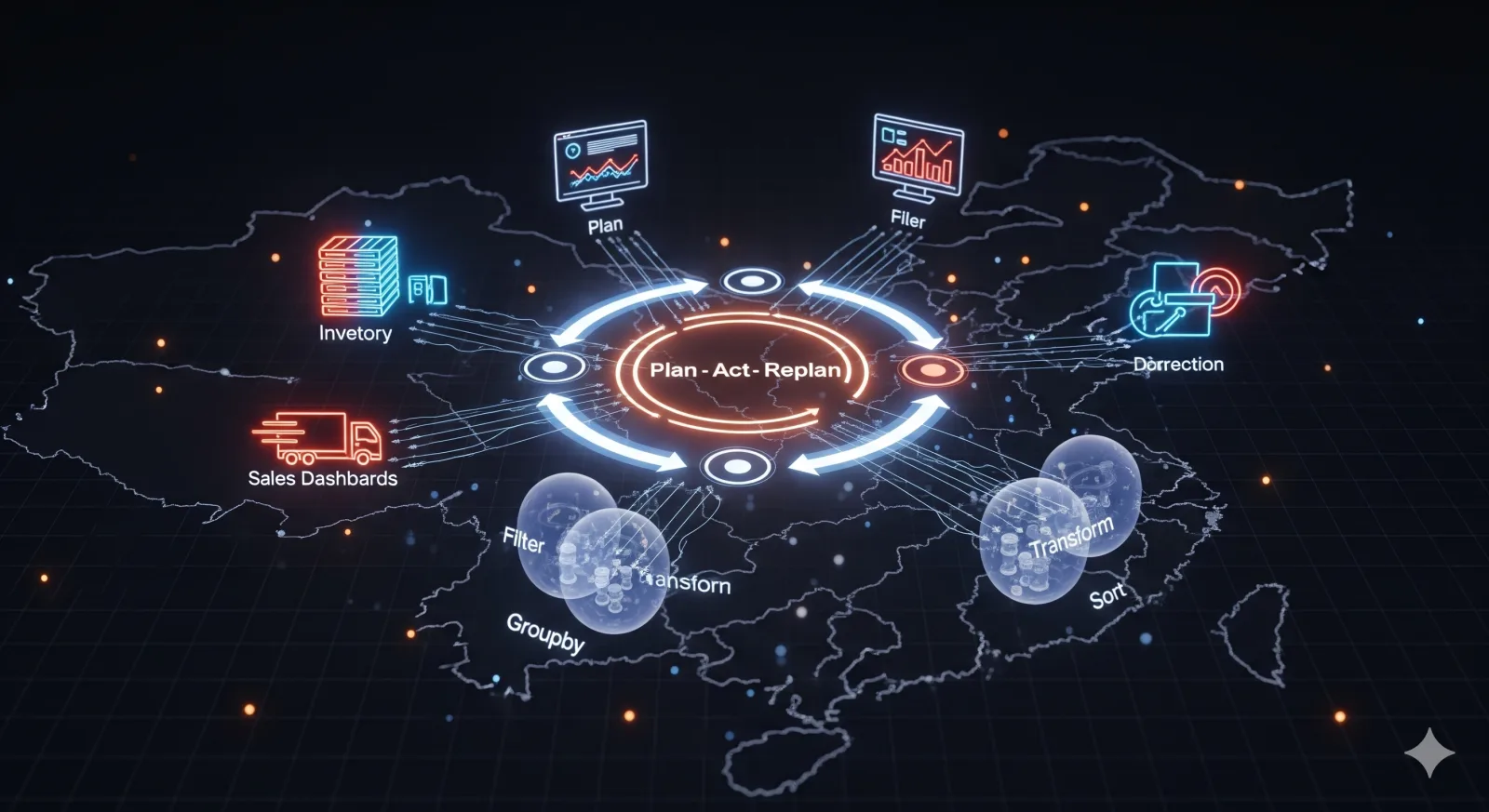
Plan, Act, Replan: When LLM Agents Run the Aisles

Retail planning usually fails in the hand-off. A sales team sets a target. Inventory planners translate it into stock positions. Procurement checks supplier feasibility. Operations discovers warehouse constraints. Someone exports a spreadsheet, someone else reworks the assumptions, and by the time the plan looks executable, the market has already wandered off with the innocence of a cat near an open laptop. ...

September 8, 2025 · 13 min · Zelina
Cover image

Faking It to Make It: When Synthetic Data Actually Works

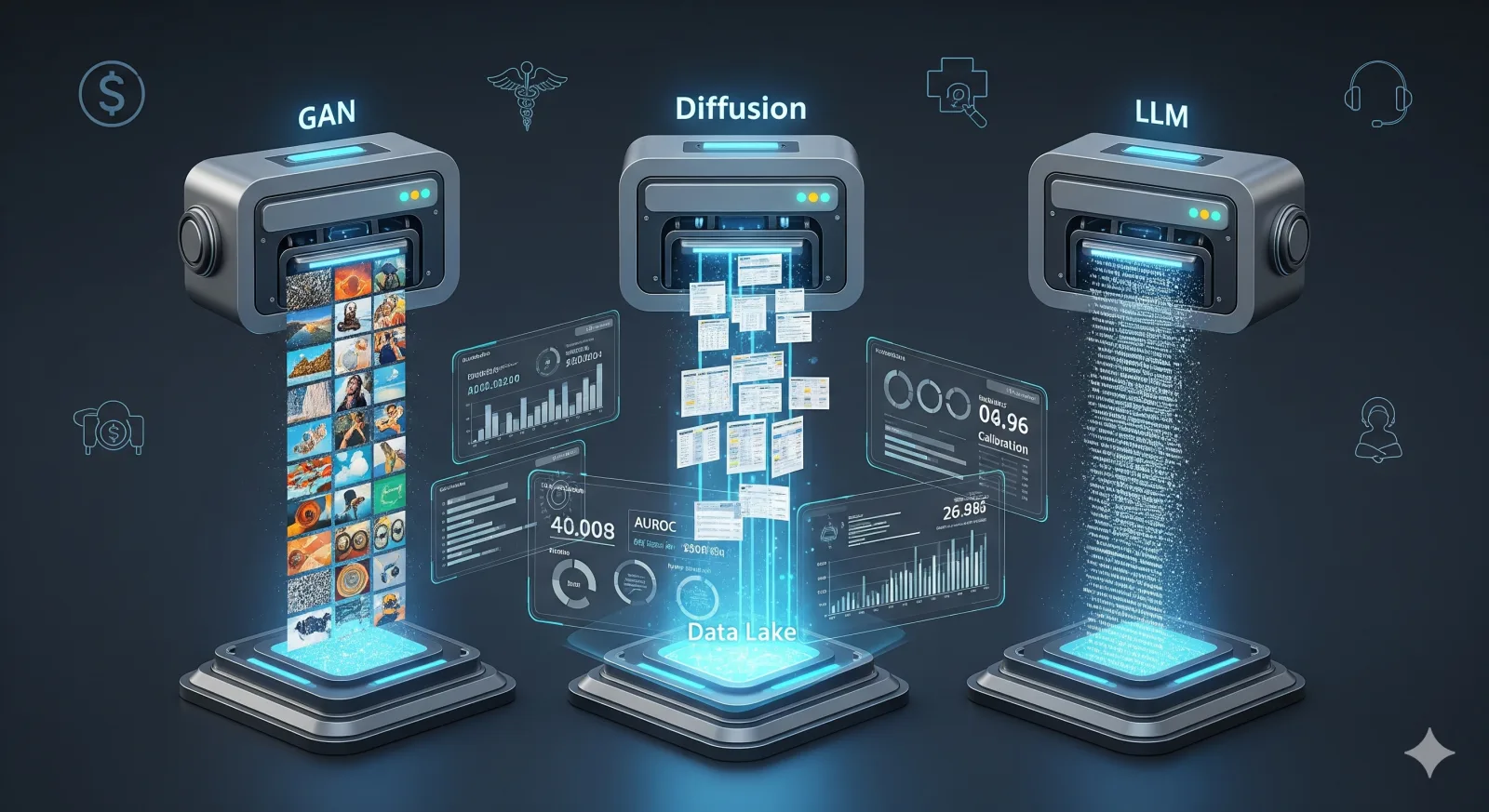
TL;DR for operators Synthetic data is not magic fake data that politely becomes real after a procurement cycle. It is a set of techniques for generating artificial records that imitate useful properties of real datasets, and its value depends on what bottleneck you are trying to remove. Li et al.’s tutorial proposal, Generative Models for Synthetic Data: Transforming Data Mining in the GenAI Era, is best read as a map of the modern synthetic-data stack: GANs, diffusion models, and LLMs; text, tabular, graph, sequential, visual, and multimodal data; evaluation criteria; and practical deployment settings in health, finance, and education.1 It is not a benchmark paper. It does not run a new experiment showing that synthetic data improves business outcomes by some conveniently rounded percentage. That is inconvenient, but also useful. The paper is trying to organise the field, not sell a miracle. ...

August 30, 2025 · 18 min · Zelina
Cover image

Lights, Camera, Agents: How MAViS Reinvents Long-Sequence Video Storytelling

TL;DR for operators Video teams do not usually fail because they cannot generate a clip. They fail because ten usable clips do not automatically become a coherent story. Characters drift. Backgrounds mutate. Voice-over runs too long. The “same room” becomes three rooms in a hat and moustache. Current generative models are very impressive; they are also terrible interns unless someone gives them a production process. ...

August 13, 2025 · 18 min · Zelina
Cover image

Synthetic Defenders: How Generative AI Reinvents Smart Grid Security

TL;DR for operators A digital substation does not need an AI poet. It needs a detector that notices when a GOOSE message behaves just wrong enough to matter. The paper behind this article makes two claims that should be kept separate. First, it proposes Advanced Adversarial Traffic Mutation, or AATM, as a way to generate synthetic IEC61850 GOOSE datasets that are more balanced and more protocol-realistic than a conditional GAN baseline. Second, it evaluates a GenAI-based task-oriented dialogue anomaly detection system, implemented with Anthropic Claude Pro, against FNN, RNN, and SVM baselines on 5,000 AATM-generated GOOSE datasets.1 ...

August 13, 2025 · 14 min · Zelina
Cover image

From Byline to Botline: How LLMs Are Quietly Rewriting the News

TL;DR for operators AI is not entering newsrooms as a dramatic robot columnist kicking down the front door. According to this paper, it is more likely arriving as a first-draft assistant, a lead generator, a style smoother, and occasionally a template machine wearing a press badge it probably printed itself. The study analyses more than 40,000 English-language news articles from 2020 to late 2024, using a majority vote across three AI-text detectors: Binoculars, GPTZero, and FastDetect-GPT.1 The authors find a post-ChatGPT rise in likely fully AI-generated articles, especially in local and college opinion media. Local opinion articles show a 10.07-fold increase from the pre-GPT period to the post-GPT period; college opinion articles show an 8.63-fold increase. Major outlets rise less sharply. ...

August 11, 2025 · 18 min · Zelina
Cover image

The Silent Skill Drain: How Entry-Level AI Automation Threatens Future Growth

TL;DR for operators Entry-level automation is usually discussed as a headcount issue. That is too crude. The sharper operational question is whether automation changes which juniors get access to which experts. A firm can keep the same number of junior roles and still damage its future skill pipeline if more of those roles move away from high-quality mentors. ...

August 10, 2025 · 17 min · Zelina
Cover image

Noisy by Nature: Rethinking Financial Time Series Generation with GBM-Inspired Diffusion

TL;DR for operators Financial time series generation has a surprisingly basic problem: many models corrupt market data as if prices were pixels. Add Gaussian noise, train a neural network to remove it, admire the architecture, and then wonder why the generated series behave like polite laboratory specimens rather than markets. Kim, Choi, and Kim’s paper proposes a more finance-native diffusion design: use geometric Brownian motion (GBM) as an inductive bias in the forward noising process.1 The point is not to revive Black–Scholes as a complete market simulator. The point is narrower and more useful: make the noising process respect the fact that asset prices move multiplicatively and volatility scales with price level. ...

August 2, 2025 · 16 min · Zelina
Cover image

Echoes in the Algorithm: How GPT-4o's Stories Flatten Global Culture

TL;DR for operators The paper does not merely say that GPT-generated stories contain national clichés. That would be mildly interesting, in the way that discovering a tourist brochure likes sunsets is mildly interesting. The sharper finding is structural. When Rettberg and Wigers prompted gpt-4o-mini to write 1,500-word “potential” stories for 236 demonyms, the model produced surface diversity—olive trees, fjords, forests, trains, village elders, festivals—but repeatedly returned to the same basic narrative machine: someone comes back to a small town or village, discovers that community or tradition has weakened, organises a symbolic event, and restores harmony.1 ...

July 31, 2025 · 16 min · Zelina
Cover image

Copilot at Work: How Generative AI is Quietly Rewriting Job Descriptions

TL;DR for operators A new Microsoft Research paper does something more useful than another round of “AI will change everything” bingo: it looks at roughly 200,000 anonymised U.S. Bing Copilot conversations and asks which work activities people actually use generative AI for.1 The result is not an automation forecast. It is a map of where AI already touches work. ...

July 11, 2025 · 19 min · Zelina