Cover image

The Detector Can’t See What Its Features Don’t Describe

TL;DR for operators When an anomaly detector misses events that matter, teams often look first at the model, the feature selector, or the score-combination rule. The results in LLM-Generated Feature Pools for Time Series Anomaly Detection1 point to an earlier constraint: what the detector is allowed to measure. In matched experiments on the univariate TSB-AD-U benchmark, changing the candidate feature pool spans 0.226 VUS-PR, compared with 0.031 across feature-selection strategies even after adding a hindsight oracle, and 0.096 across the full score-aggregation grid. A 10-feature hand-crafted pool reaches 0.529, while a stronger LLM-generated pool reaches 0.569 on average. Combining generated and hand-crafted features raises the corresponding result to 0.588. ...

October 8, 2026 · 7 min · Zelina
Cover image

When Tables Learn the Meaning Behind Their Columns

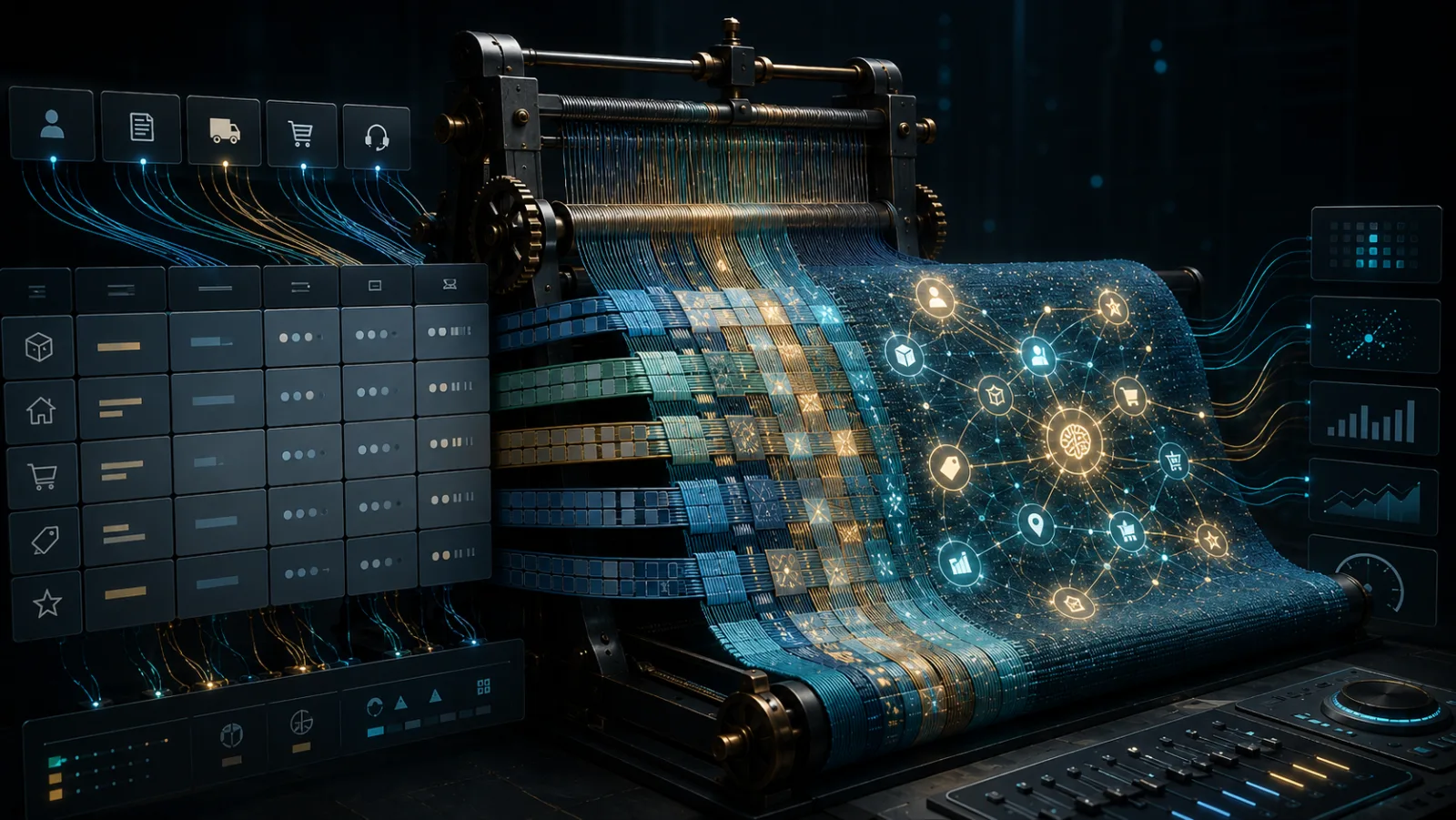
TL;DR for operators Many enterprise prediction systems already perform well on structured tables, but those tables often contain information that traditional pipelines treat as symbols rather than meaning: product categories, descriptions, labels, and domain-specific terminology. The CASE framework explores whether language-model-derived representations can add this missing semantic layer without replacing the tabular models already used in production. ...

August 31, 2026 · 6 min · Zelina
Cover image

Causal Brews: Why Your Feature Engineering Needs a Graph Before a Grid Search

Feature engineering has always had a faint smell of kitchen experimentation. Take the raw variables. Add ratios. Try logs. Multiply this by that. Remove the ones that look useless. Feed everything into XGBoost. Pretend the process was scientific because the final notebook has a clean cross-validation table. In many business analytics teams, this is not a caricature. It is Tuesday. ...

February 19, 2026 · 17 min · Zelina
Cover image

When FX Gets a Mind of Its Own: Cognitive ATS Meets the EUR/USD Mirage

Forex has a talent for humiliating confident people. The market looks orderly enough on a chart: waves, levels, retracements, clean little indicators pretending they know where Europe and America are about to disagree next. Then a central banker speaks, an inflation print surprises, liquidity thins, and yesterday’s elegant setup starts looking like astrology with candlesticks. ...

November 22, 2025 · 15 min · Zelina
Cover image

Hypotheses, Not Hunches: What an AI Data Scientist Gets Right

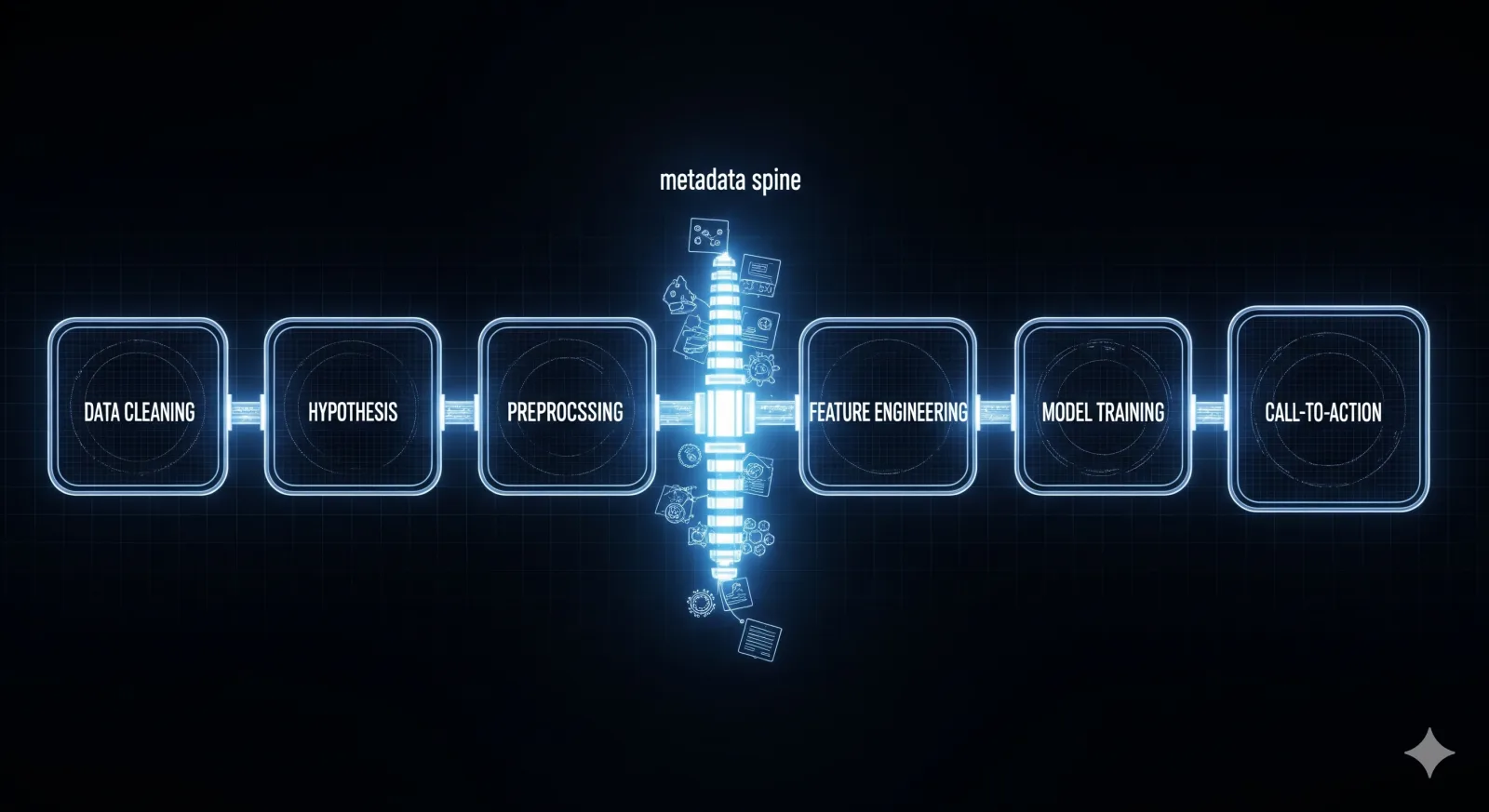
TL;DR for operators The paper introduces an “AI Data Scientist”: a six-subagent system that moves from raw tabular data to cleaned data, tested hypotheses, engineered features, trained models, and business-facing recommendations.1 The useful idea is not that another agent can write Python. Congratulations, we have met 2025. The useful idea is that hypothesis testing becomes the workflow’s organising rail. ...

August 26, 2025 · 18 min · Zelina