
Cover image

Lost in Translation: When Multilingual LLMs Miss the Medical Plot

Accuracy is a seductive number. It is tidy, executive-friendly, and easy to put in a slide deck. A model gets 82% accuracy, someone says “good enough,” and suddenly a clinical workflow is being “transformed.” Healthcare, as usual, has a way of punishing this kind of optimism. Not loudly at first. Quietly. Through false negatives, silent majority-class prediction, and a dashboard that looks reassuring until someone asks the rude question: what exactly did the model miss? ...

December 6, 2025 · 16 min · Zelina
Cover image

Bridging the Clinical Gap: When Bayesian Networks Meet Messy Medical Text

Hospitals already have the data. That is the annoying part. They have diagnosis codes, medications, lab results, visit histories, and structured fields that look reassuringly database-friendly. They also have clinical notes: dense, abbreviated, unevenly written, and occasionally allergic to neat categories. A patient can have a symptom implied by the record, described vaguely in the note, omitted entirely, or mentioned in a way that conflicts with everything else. ...

November 24, 2025 · 17 min · Zelina
Cover image

From Chaos to Care: Structuring LLMs with Clinical Guidelines

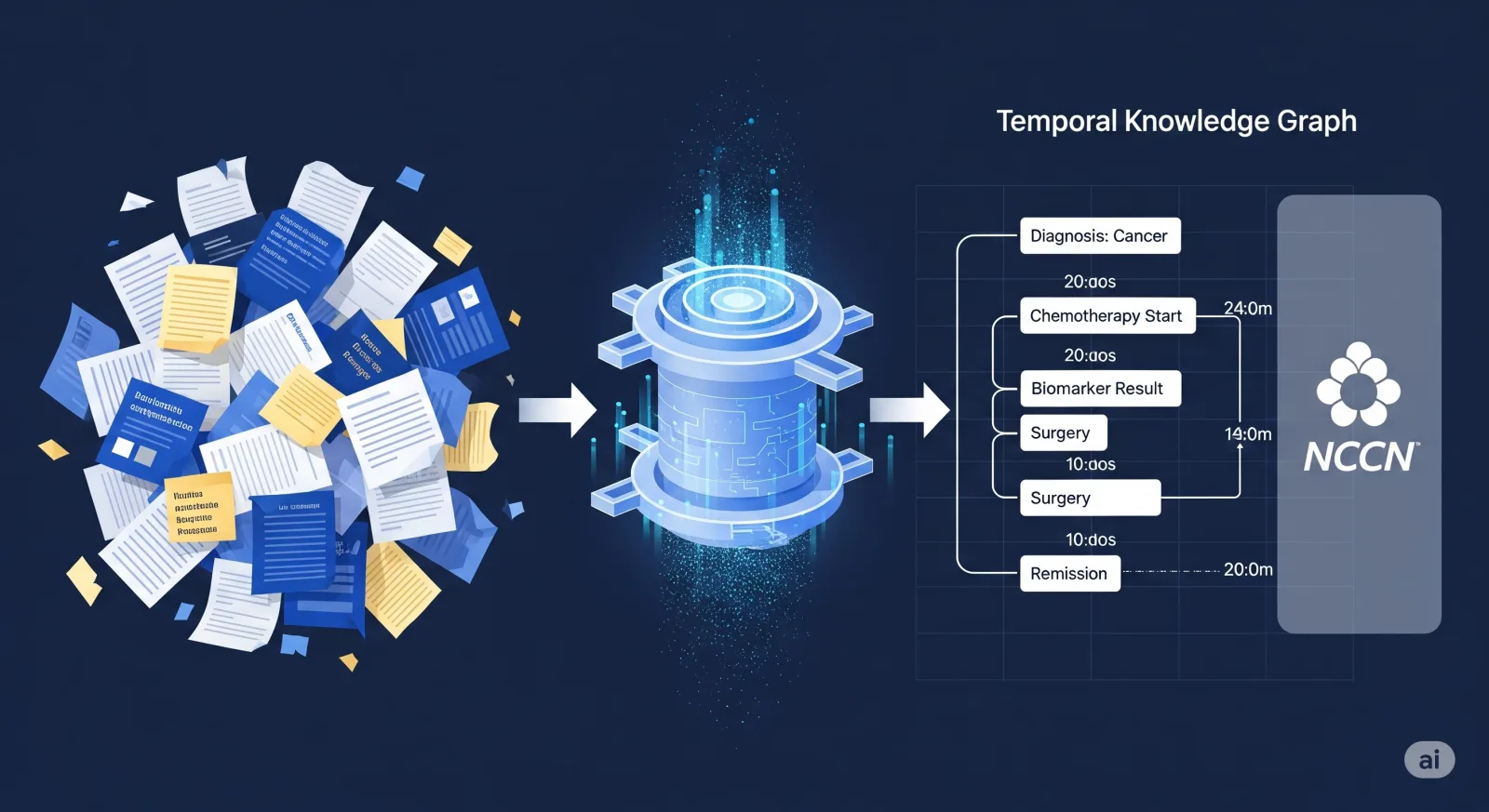
TL;DR for operators Patient records are not just long documents. They are timelines with consequences. CliCARE, the framework proposed in the paper, attacks that problem by turning longitudinal cancer EHRs into patient-specific temporal knowledge graphs, then aligning those patient trajectories with clinical guideline knowledge graphs before asking an LLM to generate a clinical summary and recommendation.1 That sounds architectural because it is. The useful lesson is not that “AI can help doctors,” a phrase now so overused it should probably be placed in quarantine. The lesson is that clinical AI improves when the model is given a structured representation of disease progression and a normative map of what should happen next. ...

July 31, 2025 · 16 min · Zelina