Cover image

Learning on Autopilot? Not Quite — How PAL Turns Passive Videos into Active Intelligence

Video is the most convenient format in education. It is also one of the laziest. A lecture video can be paused, replayed, accelerated, clipped, embedded, and repackaged into a course library with very little friction. Wonderful. The learner still sits there, mostly alone, while the platform pretends that a progress bar is a learning signal. Add a quiz at the end and suddenly we call it “interactive.” Education technology has always had a generous imagination. ...

April 15, 2026 · 14 min · Zelina
Cover image

Prompt Wars: When Pedagogy Beats Cleverness

A prompt review meeting usually sounds more scientific than it is. One person likes the “coach” version. Another prefers the “Socratic” version because it sounds more educational. Someone says the prompt should mention metacognition. Someone else adds “be concise,” because apparently every prompt eventually becomes a corporate email with anxiety issues. Then the team ships the one that feels best. ...

January 23, 2026 · 15 min · Zelina
Cover image

ExaCraft and the Missing Layer of AI Education: When Examples Finally Adapt

Examples are where learning either lands or dies. A student can read a clean definition of machine learning, nod politely, and still have no usable mental picture. A manager can ask an AI tutor for “a simpler explanation,” receive the same abstraction with softer adjectives, and remain exactly as confused as before. This is one of the less glamorous failures of AI education: the model can explain almost anything, but often explains it to no one in particular. ...

December 13, 2025 · 16 min · Zelina
Cover image

Compression, But Make It Pedagogical: Rate–Distortion KGs for Smarter AI Learning Assistants

Training teams know the ritual. Someone uploads lecture slides, notebooks, policy manuals, onboarding decks, or certification material into an AI tool. The system dutifully produces quiz questions. Some are useful. Some are bland. Some include giveaway answers. Some test trivia. Some hallucinate just enough to be annoying but not enough to be obviously illegal. Everyone nods, calls it “AI-assisted learning,” and then quietly sends the outputs to a human reviewer. Automation, but with adult supervision. So, normal Tuesday. ...

November 20, 2025 · 19 min · Zelina
Cover image

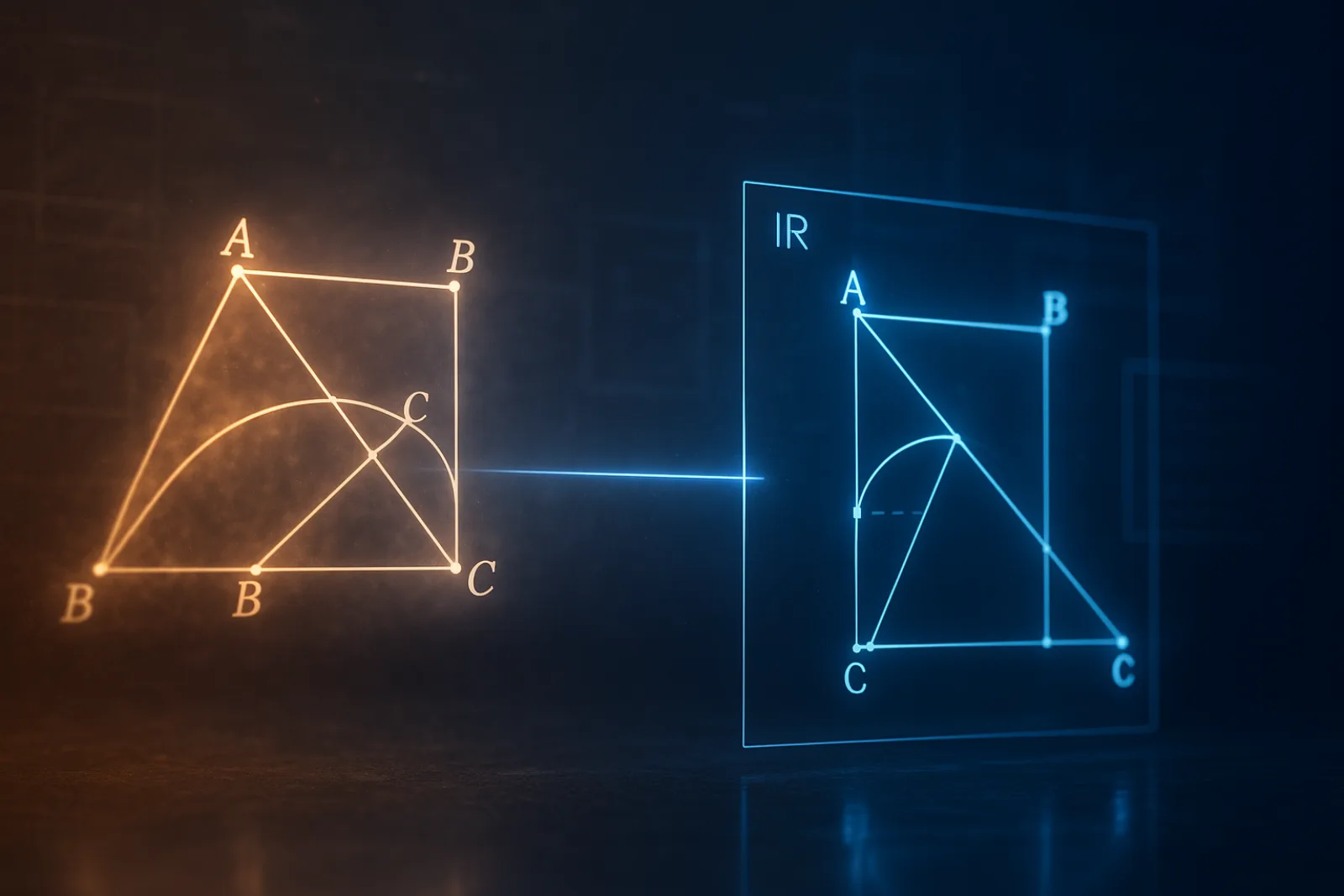
Back to the Drawing Board: How DiagramIR Quietly Fixes Math Diagrams for AI

A diagram is not a paragraph with lines attached. That sounds obvious, which is usually where software product teams get into trouble. Text can be judged by fluency, relevance, and whether the answer has wandered into confident nonsense. A geometry diagram has extra obligations. The side marked 8 should look longer than the side marked 3. The angle labelled $90^\circ$ should not be having an identity crisis. Labels should sit near the thing they label. The image should not be half outside the frame, unless the product strategy is “modern art, but for sixth grade”. ...

November 15, 2025 · 14 min · Zelina
Cover image

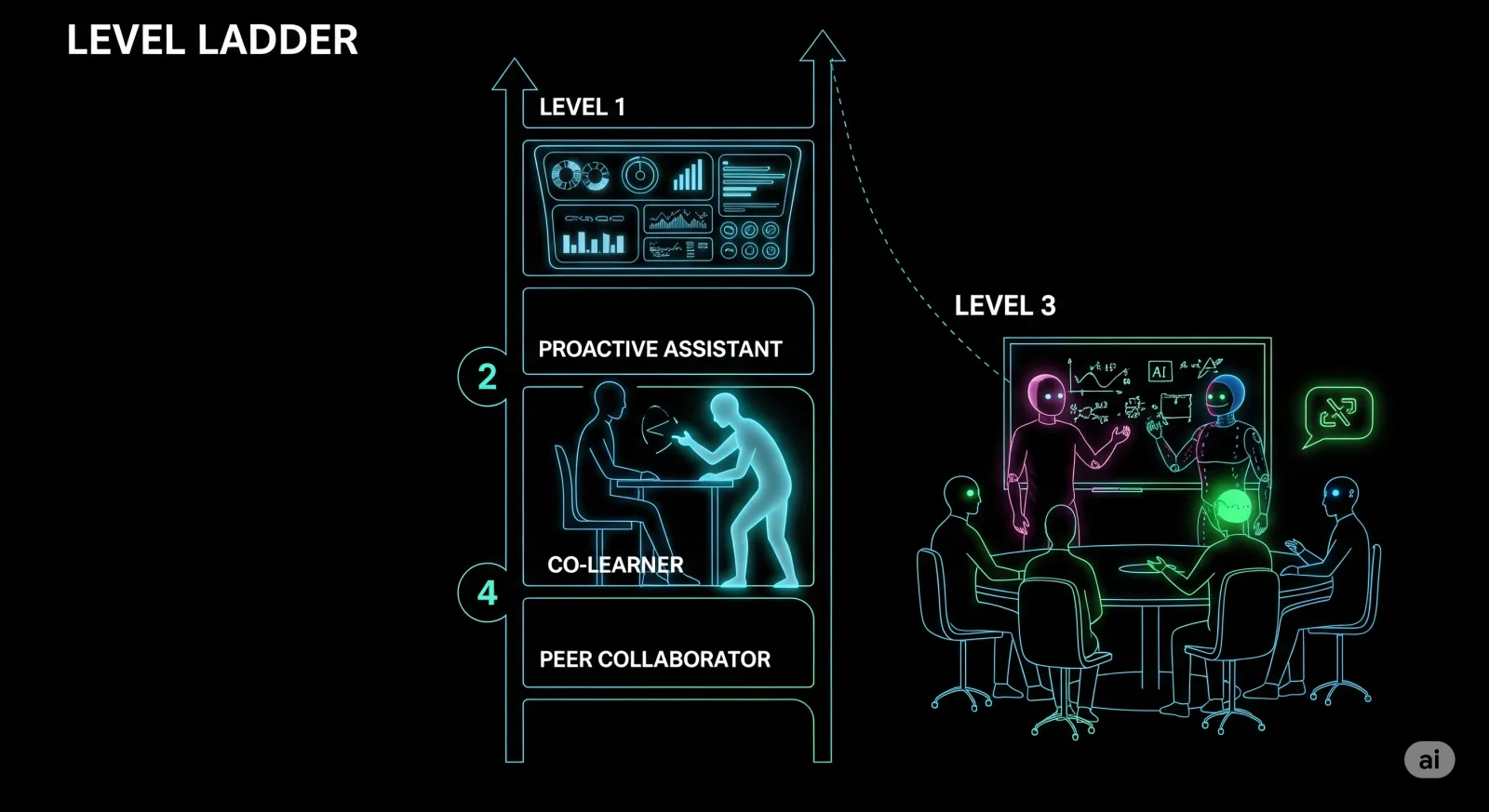
From Copilot to Colleague: The APCP Ladder for Agentic Learning

TL;DR for operators The useful part of the APCP framework is not that it gives AI another grand title. We already have enough of those. Its value is that it separates four very different product promises that are often mashed together under “AI learning assistant”: an AI that executes commands, an AI that nudges, an AI that shares cognitive work, and an AI that behaves like a peer collaborator.1 ...

August 23, 2025 · 20 min · Zelina
Cover image

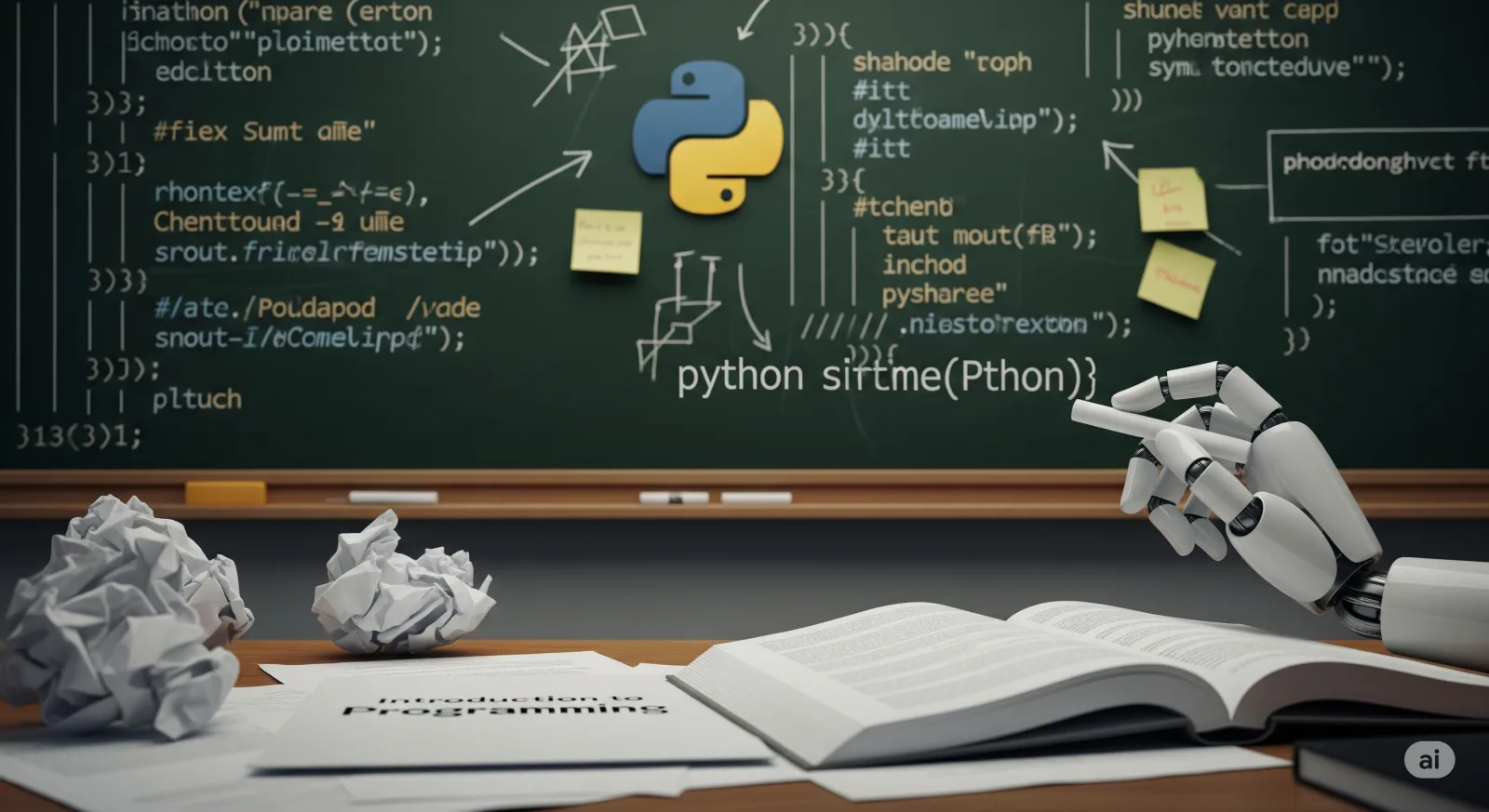
Learning to Struggle: Teaching LLMs to Code Like Real Students

TL;DR for operators ParaStudent asks a sharper question than “Can an LLM solve programming homework?” It asks whether an LLM can generate code that looks like it came from a real novice: incomplete, inconsistent, stylistically awkward, and improving over time.1 The key empirical surprise is that GPT-4.1 is often too competent to be realistic. In the high-resolution experiment, GPT-4.1 produces pass rates of 96.7% on familiar problems and 100.0% on new problems, while real student submissions average 9.8% and 12.1% respectively at the evaluated next-submission points. A fine-tuned Qwen-2.5 Coder 7B model, called qwen-student, comes much closer to real student behaviour across pass rate, PEP 8 violations, style score, embedding distance, and incremental edit patterns. The paper’s business relevance is not “AI will replace students,” which would be a rather grim product roadmap. The useful pathway is synthetic student behaviour for training tutor agents, testing feedback systems, building benchmarks, and stress-testing interventions where real student data is scarce or sensitive. The boundary is material. ParaStudent works best when the model has seen related problems from the same course. Generalisation to new problems is weaker, and the high-resolution setup predicts the next submission using real prior attempts rather than generating an entire student journey from scratch. For edtech teams, the takeaway is simple: if the product depends on modelling learners, correctness is the wrong north star. The right question is whether the system can represent how learners fail, revise, and partially recover. Homework code is supposed to look a little broken Student code is not merely worse professional code. It has its own texture. ...

July 19, 2025 · 17 min · Zelina
Cover image

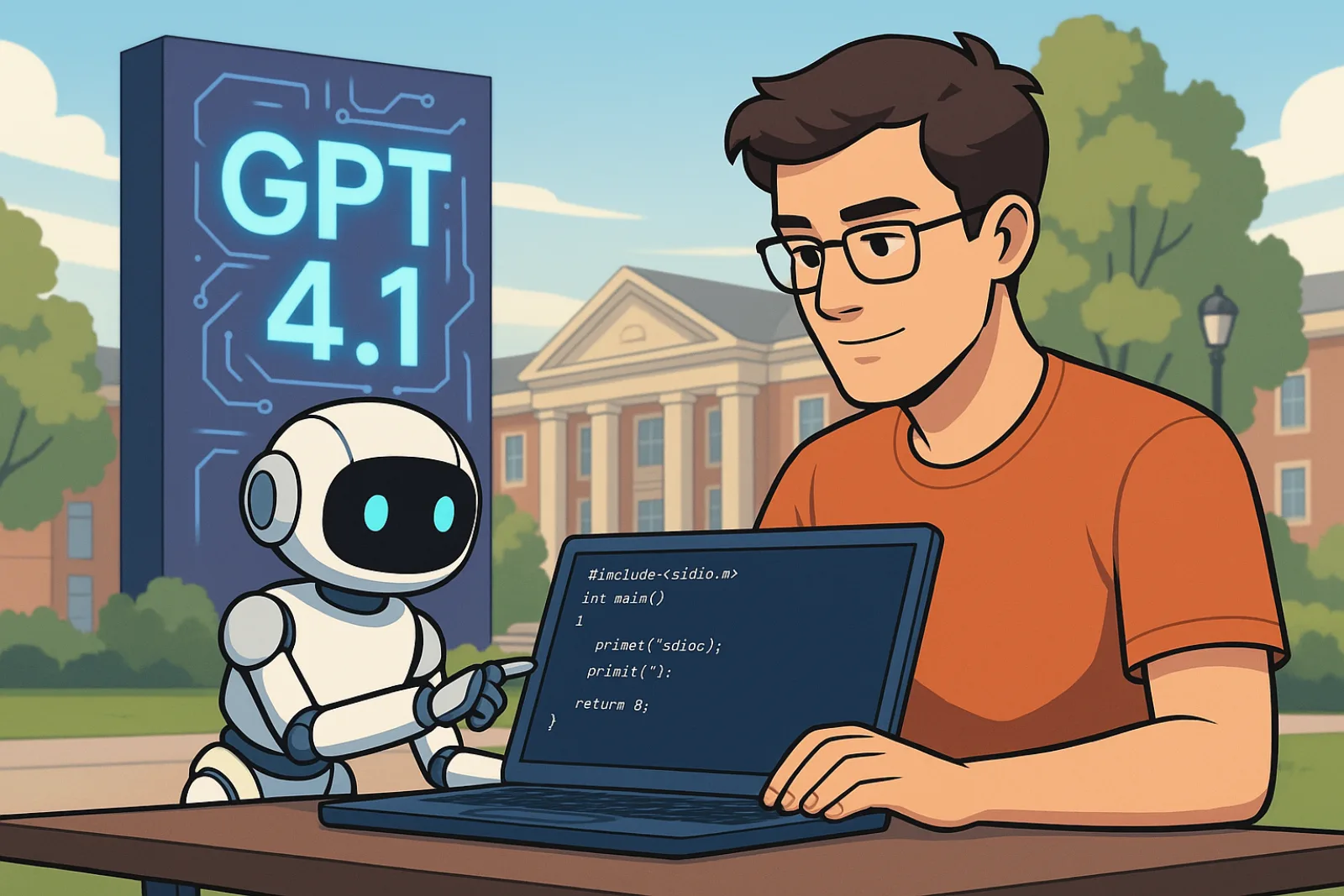
School of Thought: How Fine-Tuned Open LLMs Are Challenging the Giants in Education

TL;DR for operators A useful AI education product does not always need the largest model in the room. Sometimes it needs a smaller model that has been taught one job properly and then told, firmly, not to hand students the answer on a silver platter. The paper behind this article studies exactly that: whether supervised fine-tuning can make open-source models good enough to explain C programming errors for novice students. The authors use real CS1/2 error logs from DCC Help, generate 40,000 structured explanations with GPT-4.1, fine-tune Qwen3-4B, Llama-3.1-8B, and Qwen3-32B using QLoRA, then compare them against base models, GPT-4.1, and the original deployed DCC Help responses. ...

July 9, 2025 · 18 min · Zelina