Cover image

Frame Before You Aim: Why AI Needs the Right Reference Point

Business AI has acquired a slightly dangerous reflex: when a system underperforms, reach for a stronger model, a faster pipeline, or a more elaborate scoring function. Very enterprise. Very expensive. Occasionally useful. The more interesting failure mode is quieter. A system may have enough intelligence, enough data, and enough compute, yet still be solving the wrong version of the problem because it inherited the wrong reference frame. It reads a wearable signal as if it were clinical instrumentation. It schedules network traffic as if packets only matter after they announce themselves. It ranks alternatives as if the best and worst items in the current dataset were the same thing as business aspiration and business refusal. ...

June 14, 2026 · 15 min · Zelina
Cover image

Pills, Protocols, and Parameters: When LLMs Sit the Pharmacist Exam

Exam rooms are wonderfully unsentimental. They do not care whether a model has a charming interface, a dramatic launch story, or a fan base that treats benchmark tables like sports scores. They ask a question, demand an answer, and mark it right or wrong. That makes professional licensing exams tempting AI benchmarks. A pharmacist licensure exam, in particular, looks like a clean test of whether a large language model can handle the kind of knowledge society actually cares about: drugs, laws, prescriptions, clinical judgment, and the delicate art of not confidently recommending something dangerous. Minor detail. ...

November 26, 2025 · 15 min · Zelina
Cover image

Drift Happens: Why AI Needs a Memory for People, Not Just Patterns

Reminders are supposed to be boring. Take medication. Drink water. Attend an appointment. Confirm the task is done. The whole point of a reminder system is that it sits quietly in the background, nudging daily life along without demanding a board meeting. But in dementia care, the reply to a reminder can become more important than the reminder itself. A person who once replied warmly may become brief and flat. Someone who usually answers the question may begin drifting around it. The change may not arrive as a dramatic failure. It may arrive as a slope. ...

November 23, 2025 · 15 min · Zelina
Cover image

Doctor, Interrupted: How Multi-Agent AI Revives the Lost Art of Pre‑Consultation

TL;DR for operators This paper is best read as a workflow paper, not a miracle-doctor paper. It shows that pre-consultation AI becomes more useful when it stops behaving like a polite symptom box and starts behaving like an intake coordinator with a checklist, memory, and a sense of unfinished business. The system decomposes pre-consultation into triage, history of present illness, past history, and chief complaint generation. A Controller agent decides what still needs to be asked. A Monitor agent checks whether subtasks are complete. A Prompter and Inquirer convert those gaps into the next clinical question. This is less theatrical than “AI doctor,” which is precisely why it matters. ...

November 6, 2025 · 13 min · Zelina
Cover image

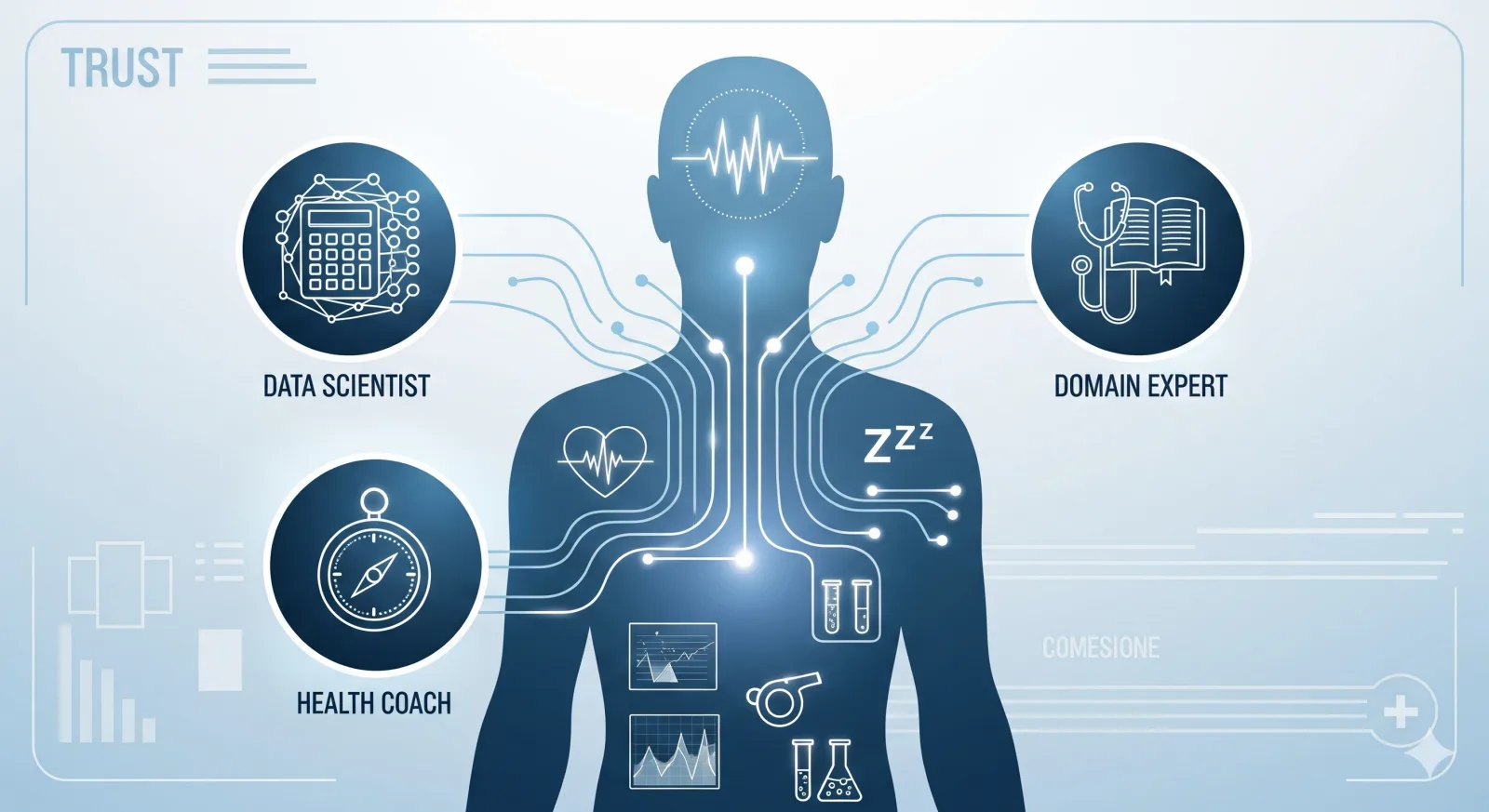
Vitals, Not Vibes: Inside the New Anatomy of Personal Health Agents

TL;DR for operators Personal health AI is usually sold as a friendly chatbot with a fitness tracker bolted on. This paper argues for something more awkward, more expensive, and much more plausible: a coordinated system of specialised agents. One agent analyses longitudinal wearable and health-record data. One grounds advice in health knowledge and user context. One handles coaching, goal-setting, and behaviour change. An orchestrator decides who should act, who should support, what should be remembered, and how the final answer should be assembled.1 ...

August 31, 2025 · 15 min · Zelina