Cover image

Faking It to Make It: When Synthetic Data Actually Works

TL;DR for operators Synthetic data is not magic fake data that politely becomes real after a procurement cycle. It is a set of techniques for generating artificial records that imitate useful properties of real datasets, and its value depends on what bottleneck you are trying to remove. Li et al.’s tutorial proposal, Generative Models for Synthetic Data: Transforming Data Mining in the GenAI Era, is best read as a map of the modern synthetic-data stack: GANs, diffusion models, and LLMs; text, tabular, graph, sequential, visual, and multimodal data; evaluation criteria; and practical deployment settings in health, finance, and education.1 It is not a benchmark paper. It does not run a new experiment showing that synthetic data improves business outcomes by some conveniently rounded percentage. That is inconvenient, but also useful. The paper is trying to organise the field, not sell a miracle. ...

August 30, 2025 · 18 min · Zelina
Cover image

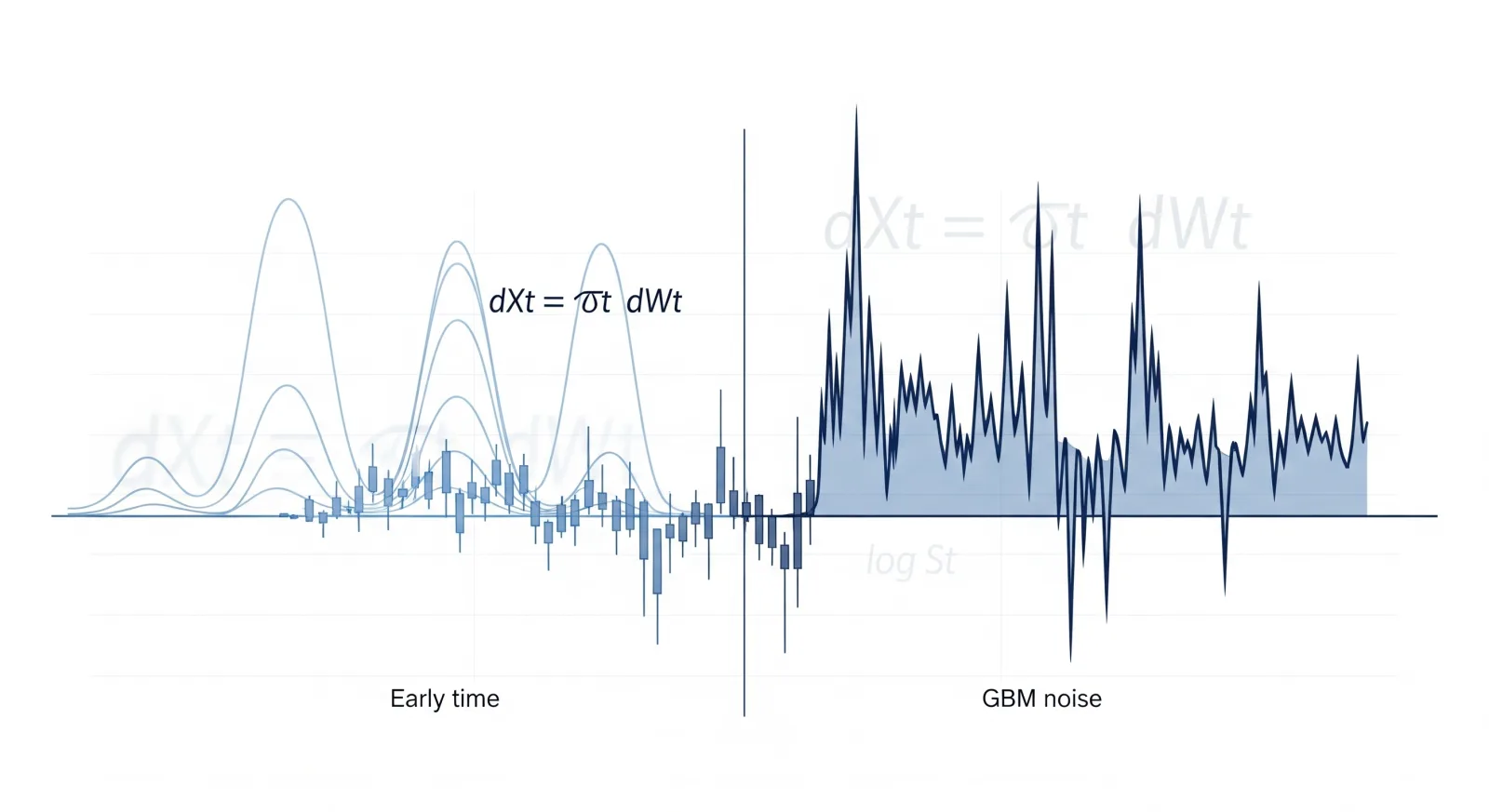
Noisy by Nature: Rethinking Financial Time Series Generation with GBM-Inspired Diffusion

TL;DR for operators Financial time series generation has a surprisingly basic problem: many models corrupt market data as if prices were pixels. Add Gaussian noise, train a neural network to remove it, admire the architecture, and then wonder why the generated series behave like polite laboratory specimens rather than markets. Kim, Choi, and Kim’s paper proposes a more finance-native diffusion design: use geometric Brownian motion (GBM) as an inductive bias in the forward noising process.1 The point is not to revive Black–Scholes as a complete market simulator. The point is narrower and more useful: make the noising process respect the fact that asset prices move multiplicatively and volatility scales with price level. ...

August 2, 2025 · 16 min · Zelina
Cover image

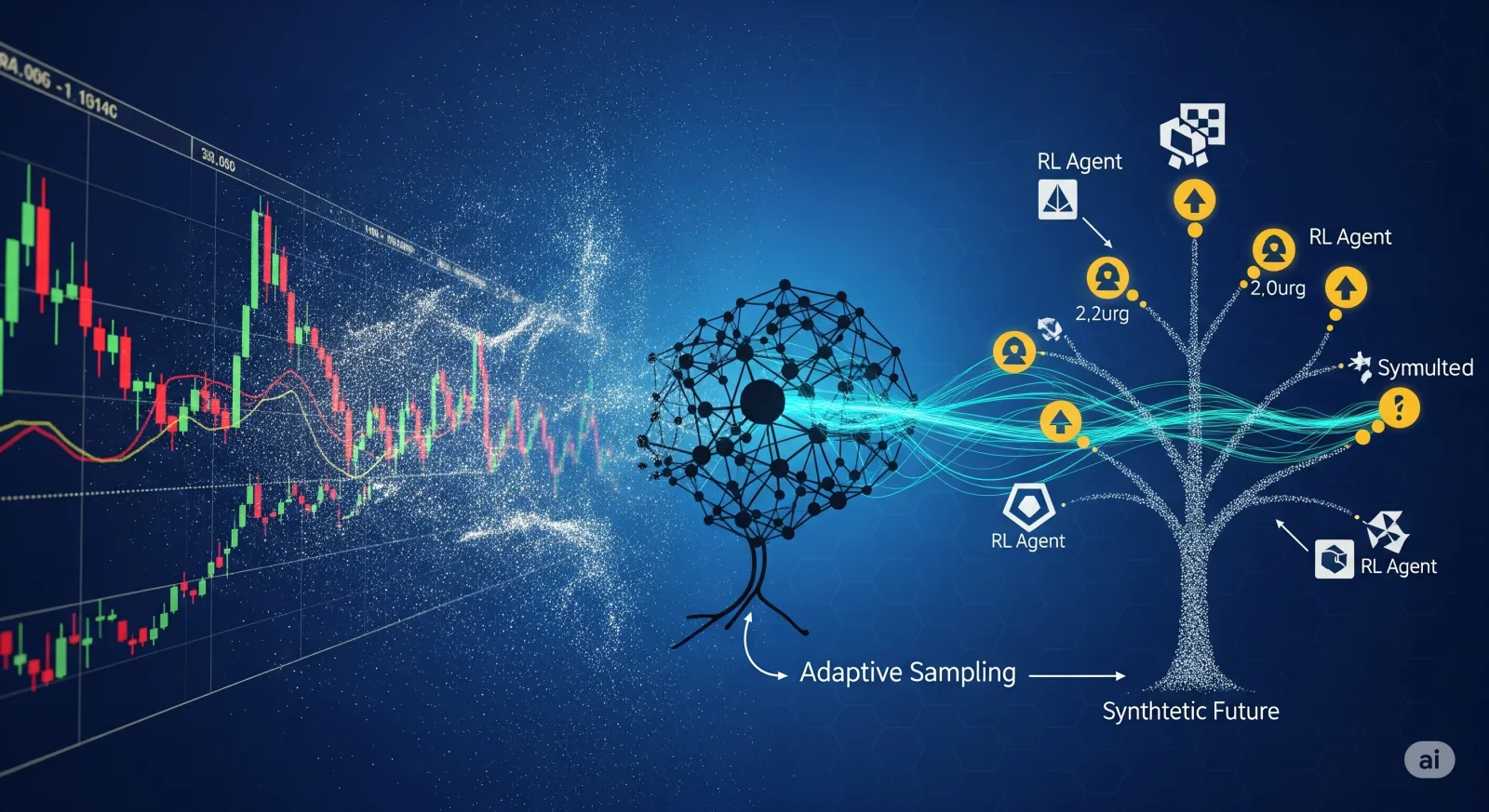
Simulate First, Invest Later: How Diffusion Models Are Reinventing Portfolio Optimization

TL;DR for operators Portfolio teams do not lack optimisation formulas. They lack enough relevant future scenarios. That is the problem this paper attacks. The paper proposes a diffusion-based market simulator that learns from historical time-series data, then generates conditional future paths based on the current market state.1 Those generated paths become the training environment for a reinforcement-learning portfolio agent. In plain terms: instead of asking an RL policy to learn from a thin archive of market history, the system first builds a synthetic scenario engine and lets the policy practise there. Sensible. Also dangerous, if the simulator hallucinates a market that conveniently rewards your model. ...

July 20, 2025 · 16 min · Zelina