Cover image

Brains Meet Brains: When LLMs Sit on Top of Supply Chain Optimizers

TL;DR for operators The paper is useful because it gets the hierarchy right: the optimizer decides; the LLM explains, configures, contextualizes, and packages the decision for humans.1 That is not a small distinction. It is the difference between a supply chain system that can be audited and a chatbot confidently waving at a warehouse. ...

September 1, 2025 · 17 min · Zelina
Cover image

Stackelbergs & Stakeholders: Turning Bits into Boardroom Moves

TL;DR for operators BusiAgent is best read as a blueprint for governed AI work, not as proof that LLMs have learned to run companies. The paper proposes a multi-agent framework where business roles—CEO, CFO, CTO, Marketing Manager, Product Manager, HR, and others—coordinate through delegation, peer discussion, tool use, memory, and quality checks.1 ...

August 24, 2025 · 18 min · Zelina
Cover image

The Lion Roars in Crypto: How Multi-Agent LLMs Are Taming Market Chaos

TL;DR for operators MountainLion is best understood as a crypto research operating system, not a mystical trading lion that eats volatility for breakfast. The paper introduces a multi-modal, multi-agent LLM framework that combines technical analysis, news retrieval, on-chain signals, chart interpretation, price forecasting, GraphRAG-style semantic reasoning, and user feedback into a structured investment-reporting pipeline.1 ...

August 3, 2025 · 17 min · Zelina
Cover image

Planners, Meet Your Smart Sidekick

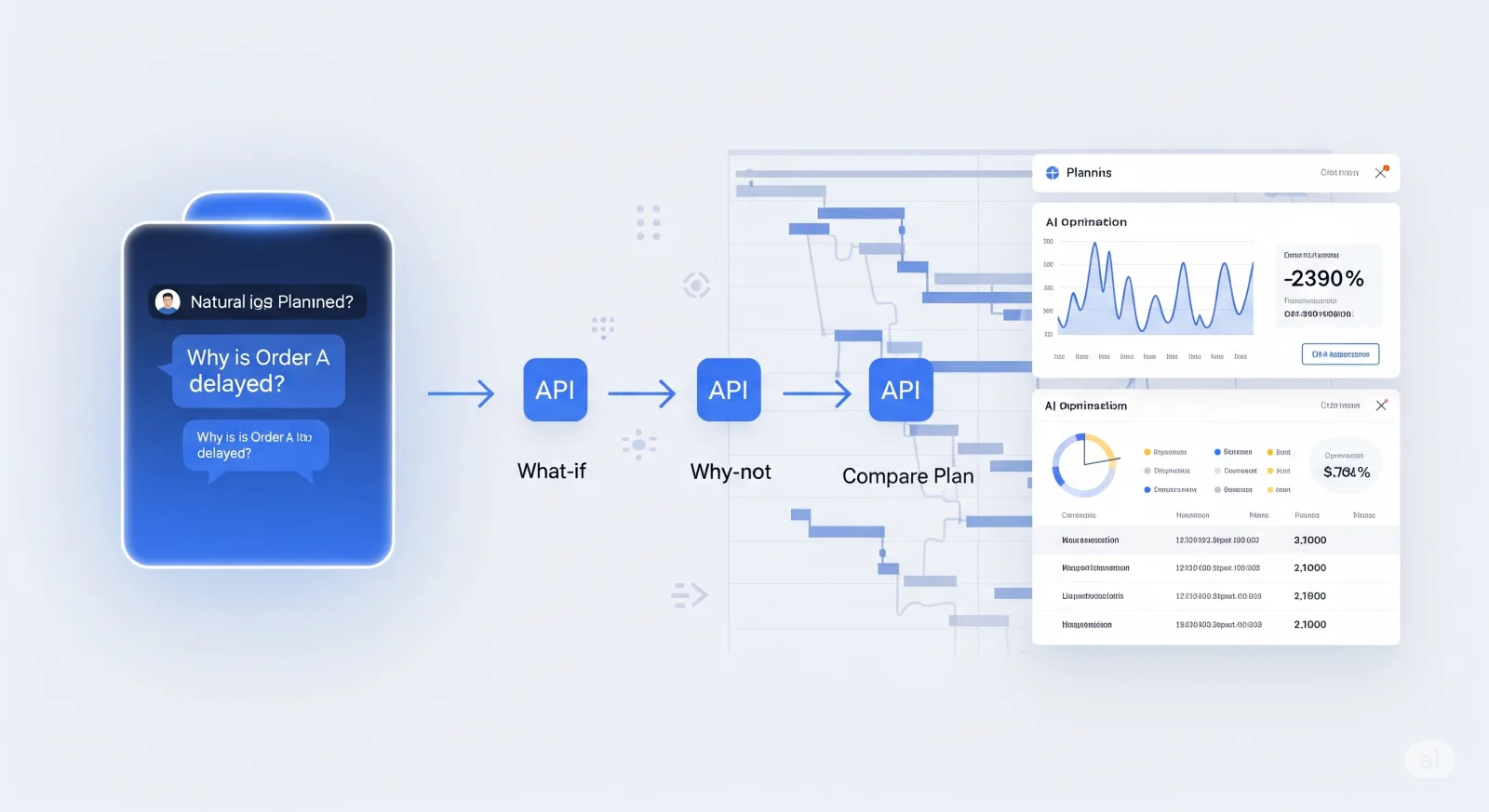
TL;DR for operators SMARTAPS is not another chatbot sprinkled over enterprise software like parsley on a mediocre buffet. It is a tool-augmented interface for advanced planning systems: planners ask natural-language questions, the system detects the planning intent, retrieves the right expert-built API, extracts the necessary parameters, runs the tool, and turns the raw result into a readable answer.1 ...

July 26, 2025 · 14 min · Zelina
Cover image

Divide and Model: How Multi-Agent LLMs Are Rethinking Real-World Problem Solving

TL;DR for operators Real business problems do not arrive as tidy exam questions. They arrive as “Can we optimise this logistics network?”, “Which markets should we prioritise?”, “How many clinics do we need?”, or “What happens if the subsidy disappears?” The annoying part is not the equation. The annoying part is deciding what the equation should even represent. ...

May 23, 2025 · 17 min · Zelina
Cover image

The Crossroads of Reason: When AI Hallucinates with Purpose

TL;DR for operators Do not ask, “Can the model do the task?” Ask, “Does the model use the capabilities it already has when the task becomes messy?” Hallucination is not one thing. In a medical, legal, financial, or investment workflow, it is a defect. In a labelled creative mode, it can be a feature. Revolutionary stuff: context matters. Goal-directedness is also not one thing. More goal pursuit can improve execution, but it also raises safety and governance questions. The sensible business pattern is not “deploy an autonomous AI analyst and hope it behaves”. It is mode governance: separate factual, creative, and decision-support modes with different metrics, interfaces, and controls. High-stakes workflows need scaffolding: memory, rule extraction, refinement loops, ensemble checks, scoring, audit trails, and humans who can edit policy rather than merely admire the model’s prose. AI products are currently being sold with a suspiciously convenient promise: one conversational interface will reason, search, write, create, decide, advise, analyse, and maybe spiritually support the quarterly planning meeting if procurement approves the invoice. ...

April 18, 2025 · 16 min · Zelina
Cover image

From Gomoku AI to Boardroom Breakthroughs: How Generative AI Can Transform Corporate Strategy

TL;DR for operators A Gomoku-playing LLM is not going to walk into your Monday strategy meeting and outperform the CFO. The interesting part is more useful than that. Hui Wang’s LLM-Gomoku paper shows a language model being turned into a strategic game player by surrounding it with structure: board-state representation, explicit rules, strategy prompts, local position scoring, self-play, reinforcement learning, state-action-reward storage, and visualisation.1 That is the part worth stealing. Not the board game. Not the romance of “AI intuition.” The machinery. ...

March 28, 2025 · 15 min · Zelina

AI-Enhanced E-Commerce Growth for a Cross-Border Business

A China-based apparel seller running Shopee, Lazada, and TikTok stores in the Philippines moved from a manual, communication-heavy operating model to an agentic AI overlay on top of its existing commerce stack, reducing low-value coordination work while improving inventory execution, support throughput, marketing optimization, and management decision quality.

March 15, 2025 · 9 min · Vox