Cover image

When LLMs Read the Room: Predictive Process Monitoring Without the Data Buffet

Back office teams rarely suffer from a shortage of opinions. They suffer from a shortage of completed cases. A bank wants to know whether a loan application will require costly rework. A hospital wants to know whether an emergency-department case will need laboratory processing. An operations manager wants to know how long a running case will take before it becomes tomorrow’s apology email. Predictive Process Monitoring, or PPM, is supposed to help with exactly this kind of question. It looks at event logs and predicts what will happen next: total completion time, future activities, process outcomes, delays, exceptions. ...


January 19, 2026 · 12 min · Zelina
Cover image

When the Paper Talks Back: Lost in Translation, Rejected by Design

A PDF is supposed to sit quietly. It may contain claims, equations, tables, and occasionally an appendix long enough to test a reviewer’s commitment to science. It is not supposed to negotiate with the system judging it. That assumption becomes unreliable once a document enters an LLM-based workflow. To the human reader, a sentence rendered in white text may be invisible. To a text-extraction pipeline, it can remain perfectly legible—and potentially indistinguishable from an instruction the model is expected to follow. ...

December 31, 2025 · 13 min · Zelina
Cover image

MIRAGE-VC: Teaching LLMs to Think Like VCs (Without Drowning in Graphs)

Deal flow is rarely scarce. Attention is. A venture-capital team may receive hundreds of startup introductions, each surrounded by founder biographies, investor histories, comparable companies, co-investment relationships, sector narratives, and enthusiastic claims about an inevitable Series A. The practical problem is not obtaining more evidence. It is deciding which fragments deserve serious attention before the partnership meeting begins. ...

December 30, 2025 · 16 min · Zelina
Cover image

Many Minds, One Decision: Why Agentic AI Needs a Brain, Not Just Nerves

Approval meetings exist for a reason. An analyst proposes an investment. Legal identifies a compliance problem. Operations notices that the promised delivery date is fictional. Someone with decision authority compares the evidence, resolves what can be resolved, and escalates what cannot. Now remove that final decision-maker. Give every participant access to APIs, databases, payment systems, and customer communications. Allow them to act autonomously. Then ask the same participant who proposed the decision to explain why it was sensible. ...

December 29, 2025 · 14 min · Zelina
Cover image

When More Explanation Hurts: The Early‑Stopping Paradox of Agentic XAI

A farmer does not need ninety-three charts before deciding what to do next. That sounds obvious. Unfortunately, “obvious” is where many agentic AI workflows go to die. Give an LLM a model explanation, ask it to improve the explanation, let it generate more analysis, feed the results back, and repeat. The process feels responsible. More checks. More plots. More reasoning. More “depth.” Somewhere in the background, a product manager begins to hear the soft music of enterprise automation. ...

December 25, 2025 · 16 min · Zelina
Cover image

Painkillers with Foresight: Teaching Machines to Anticipate Cancer Pain

A patient says the pain is manageable. The medication chart looks stable. The latest score is not alarming. Then, sometime before the next formal reassessment, the pain breaks through. That is the operational problem behind Zhuang et al.’s study on predicting lung-cancer pain episodes with a hybrid machine-learning and large-language-model pipeline.1 The paper is not really about whether “AI can predict pain,” a sentence that sounds impressive until one remembers that dashboards have been predicting things since before consultants discovered the word “agentic.” The more interesting question is narrower and more useful: when should a hospital trust structured data, and when should it ask a language model to read the messy clinical story around the data? ...

December 19, 2025 · 15 min · Zelina
Cover image

When the AI Becomes the Agronomist: Can Chatbots Really Replace the Literature Review?

A farmer does not need a literature review. She needs to know what works. That simple sentence is why AI agronomy is so tempting. Somewhere inside thousands of papers are useful answers: which microbial agents suppress whitefly, whether botanicals work outside the lab, how much pest control disappears when a method leaves a greenhouse and meets weather, soil, and actual insects with their own little business plans. The evidence exists, but it is fragmented, multilingual, paywalled, and written in the soothing dialect of “further research is warranted.” ...

December 15, 2025 · 15 min · Zelina
Cover image

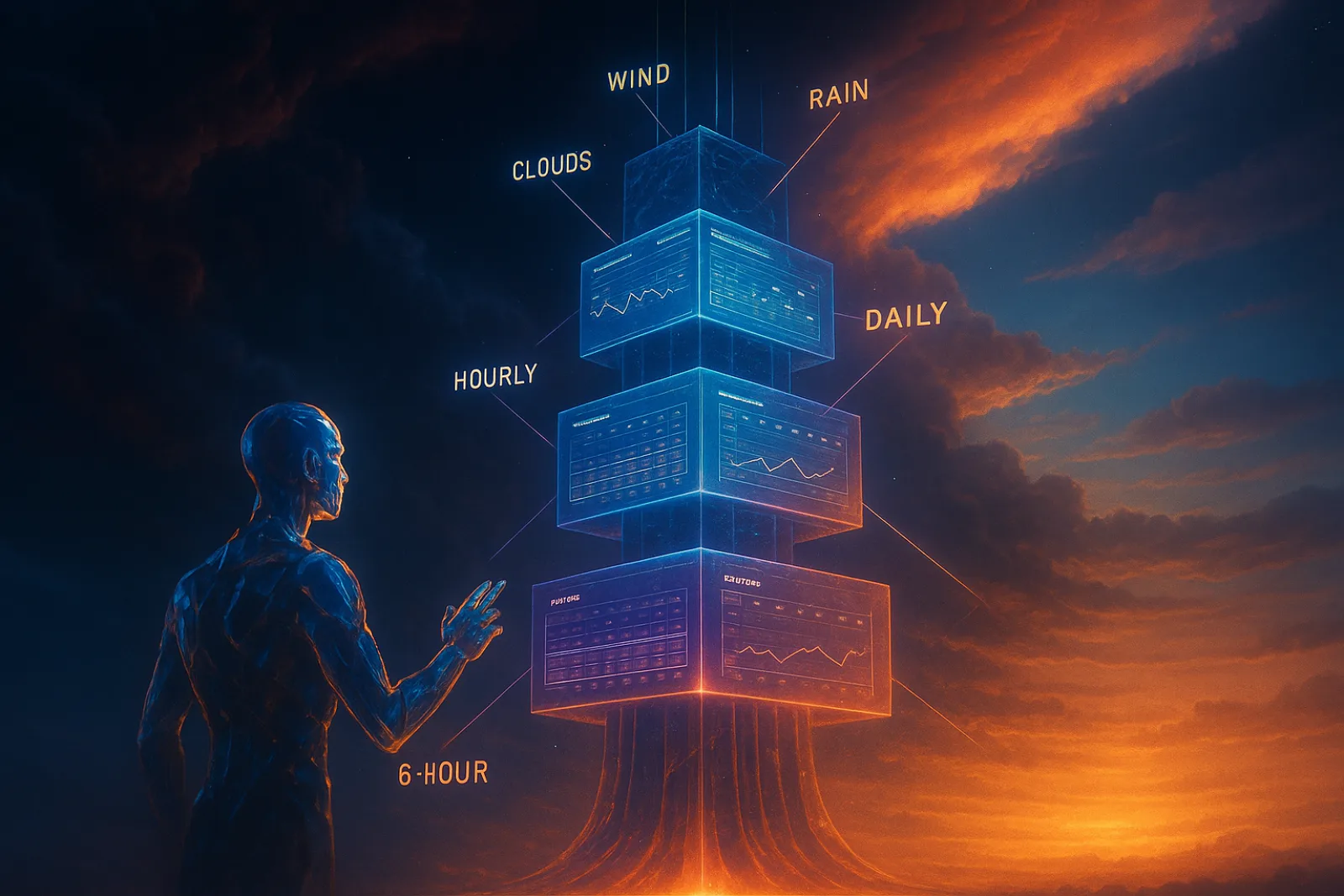
Forecasting the Forecasters: How Hierarchical LLM Meteorologists Rewrite Weather Reasoning

Weather reports look simple only after someone has already done the hard part. A forecast table can tell you that temperature drops, rain appears, wind direction shifts, humidity stays high, and visibility changes. That is data. A useful report tells you whether this is a mild autumn transition, a tropical shower pattern, a frontal passage, a flood warning, or merely Tuesday being dramatic again. ...

December 1, 2025 · 16 min · Zelina
Cover image

Ghostwriters in the Machine: How Multi‑Agent LLMs Turn Raw Transport Data Into Decisions

A bus operator does not usually suffer from a shortage of charts. It suffers from the more irritating problem: charts that explain themselves only to the person who made them. The fuel-efficiency analyst has a histogram. The data scientist has a clustering plot. The operations manager has a timetable to defend, a fuel bill to reduce, and perhaps a driver-training programme to justify. Somewhere between those roles, insight quietly evaporates into a PDF appendix. ...

November 18, 2025 · 14 min · Zelina
Cover image

Choosing Wisely: How MACHOP Turns Logic Puzzles into Preference Machines

A schedule looks reasonable until someone asks why. Why did this nurse get the night shift? Why was this invoice routed for manual review? Why did the configuration engine reject one product bundle and approve another? In many operational systems, the answer is not a single rule. It is a chain of constraints: availability, capacity, dependencies, exclusions, thresholds, and the occasional policy clause someone wrote in 2017 and nobody wants to touch. ...

November 14, 2025 · 16 min · Zelina