Cover image

The One-Weird-Trick Era of LLM Efficiency Is Over

TL;DR for operators The useful lesson from Unifying Data, Memory, and Compute Efficiency in LLM Training: A Survey is not that one efficiency method is about to save everyone’s GPU bill. That would be charming, in the same way procurement decks are charming. The paper’s real contribution is to show why LLM efficiency has become a coupled operating problem: what data you train on changes the compute you spend; how you fit training into memory changes the optimization path; and when you stop, refresh, or reallocate compute depends on both.1 ...


June 21, 2026 · 18 min · Zelina
Cover image

Scaling Smarter, Not Larger: Why Your AI Dataset Is Probably Wasting Money

The expensive habit of feeding the machine Data teams have a familiar ritual. The model disappoints. Someone asks for more data. Another person asks for cleaner data. A third person, usually with a spreadsheet and a suspiciously calm face, asks whether the extra labeling budget is approved. Then the pipeline expands. More driving clips. More corner cases. More annotated scenes. More storage. More training runs. More dashboards explaining why the latest model is still not quite where it should be. ...

April 12, 2026 · 17 min · Zelina
Cover image

When Data Decides What Matters: The Quiet Economics of LLM Data Selection

Budgets have a charming way of making AI strategy less philosophical. In the demo room, the question is usually whether a model can reason, code, summarize, plan, and sound pleasantly harmless while doing so. In the finance room, the question becomes simpler: how many tokens, how many GPUs, how many weeks, and why exactly are we paying to teach the model another version of the same web page? ...

April 8, 2026 · 15 min · Zelina
Cover image

From Static Models to Living Systems: When AI Stops Predicting and Starts Adapting

Training data used to be treated like warehouse inventory: collect enough of it, clean the worst parts, stack it neatly, and feed it to the model. That worked well enough when the main question was scale. More tokens, more compute, more parameters, more dashboards announcing progress with the confidence of a quarterly sales deck. But production AI is beginning to run into a less convenient truth: data is not only an input. It is an allocation decision. ...

February 21, 2026 · 14 min · Zelina
Cover image

When Models Forget on Purpose: Why Data Selection Matters More Than Data Volume

Training data has become the AI industry’s favorite comfort blanket. When performance stalls, add more tokens. When a benchmark looks stubborn, add more tokens. When the model behaves badly, add more tokens and call it a roadmap. This worked well enough to become a reflex. Unfortunately, reflexes are not strategies. The uncomfortable question is no longer whether data matters. Of course it matters. The better question is whether every token deserves the same vote during training. ...

December 31, 2025 · 17 min · Zelina
Cover image

When Data Comes in Boxes: Why Hierarchies Beat Sample Hoarding

Data rarely arrives as loose sand Data teams like to speak as if training data arrives one sample at a time: one image, one row, one document, one carefully chosen datapoint. Procurement departments, research consortia, hospitals, vendors, and public repositories are less poetic. They ship data in boxes. A box might be a dataset from one partner institution. A folder from a public repository. A domain-specific archive. A vendor package. A department export. It arrives with source, license, schema, quirks, and hidden failure modes already attached. The operational question is not only “Which samples should we keep?” It is also “Which boxes are worth opening?” ...

December 13, 2025 · 15 min · Zelina
Cover image

Weight Watchers for LLMs: Dynamic Dieting Beats Static Selection

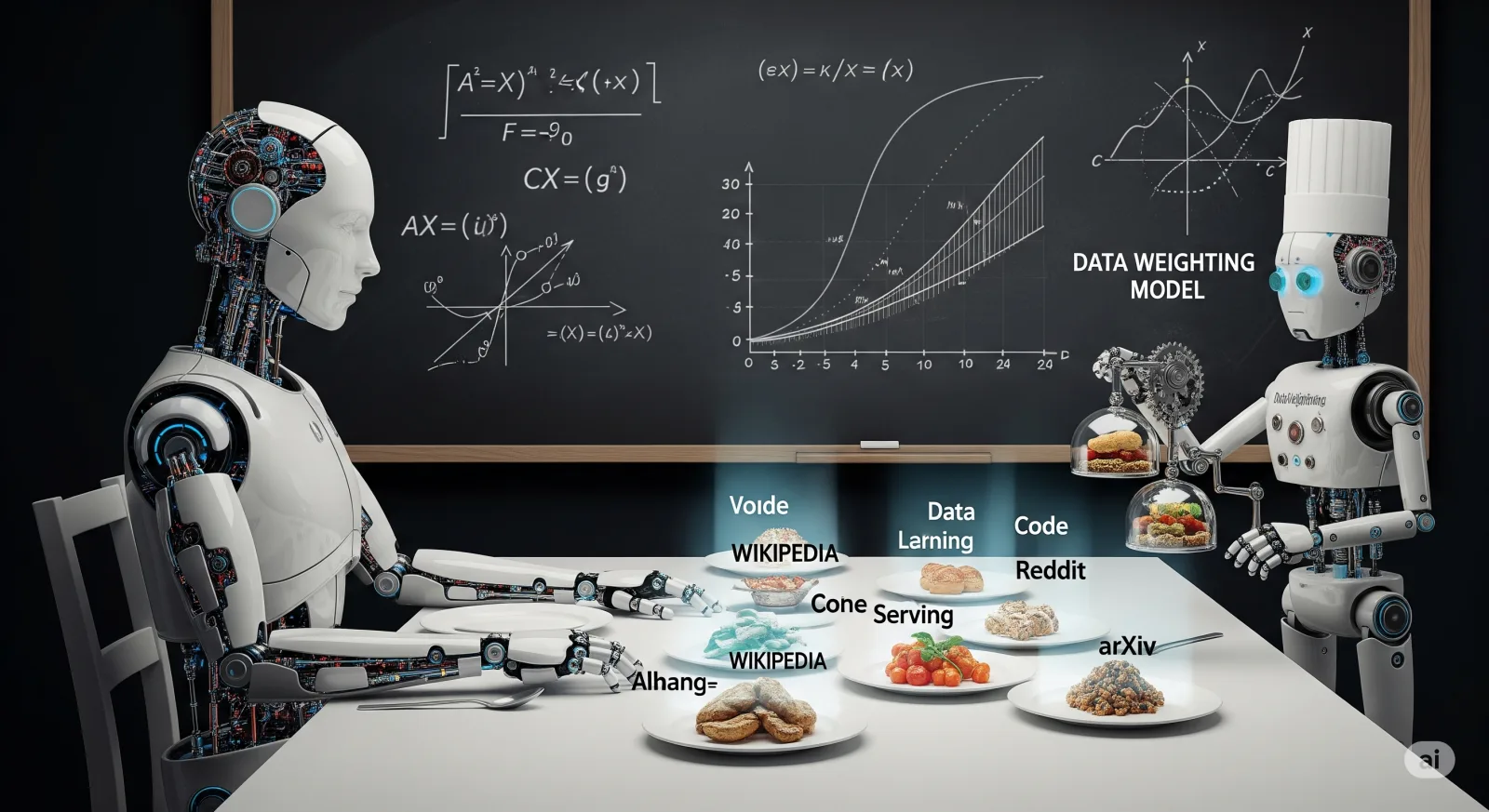
TL;DR for operators Training data is not a warehouse inventory problem. It is closer to nutrition. What helps a model early in pretraining may not be what helps it later, and a sample’s value can depend on the other samples sitting in the same batch. Obvious, perhaps. Operationalised? Less often. The paper behind this article, LLM Data Selection and Utilization via Dynamic Bi-level Optimization, proposes a Data Weighting Model, or DWM, that does not merely decide which data enters training. It assigns weights to samples within each batch, freezes those weights while the language model trains for a stage, then updates the weighting model using validation performance through a bi-level optimisation loop.1 ...

July 23, 2025 · 17 min · Zelina