Cover image

Thinking Fast, Remembering Slow: Why SWE-AGILE Fixes the Memory Crisis of AI Agents

Memory sounds like a storage problem. Give the agent a longer context window, let it keep the full conversation, and the work should become easier. This is the kind of solution that looks obvious until it meets a real software repository, a failing test suite, a long terminal log, and a model that now has to find one important clue buried somewhere in the middle of its own autobiography. ...

April 14, 2026 · 18 min · Zelina
Cover image

From Prompts to Policies: How Digital Twins Are Quietly Rewiring Enterprise AI Agents

The agent keeps looking in the wrong place An incident happens. A service slows down. A pod restarts. A dashboard turns the tasteful shade of operational panic. The enterprise AI agent is asked to help. It reads logs, calls tools, inspects metrics, follows traces, and produces a plausible chain of reasoning. Sometimes it finds the root cause. Sometimes it wanders through the topology graph like a consultant discovering Kubernetes for the first time. ...

March 24, 2026 · 16 min · Zelina
Cover image

Context Rot & The Memory Illusion: Why Bigger Prompts Won’t Save Your AI

Memory sounds simple until it becomes a product requirement. A sales assistant must remember that one client refuses cloud deployment. A software agent must remember that Redis was vetoed after a production incident. A research copilot must remember which hypothesis failed three weeks ago, not because it is charmingly nostalgic, but because repeating failed work is an expensive hobby. ...

March 19, 2026 · 15 min · Zelina
Cover image

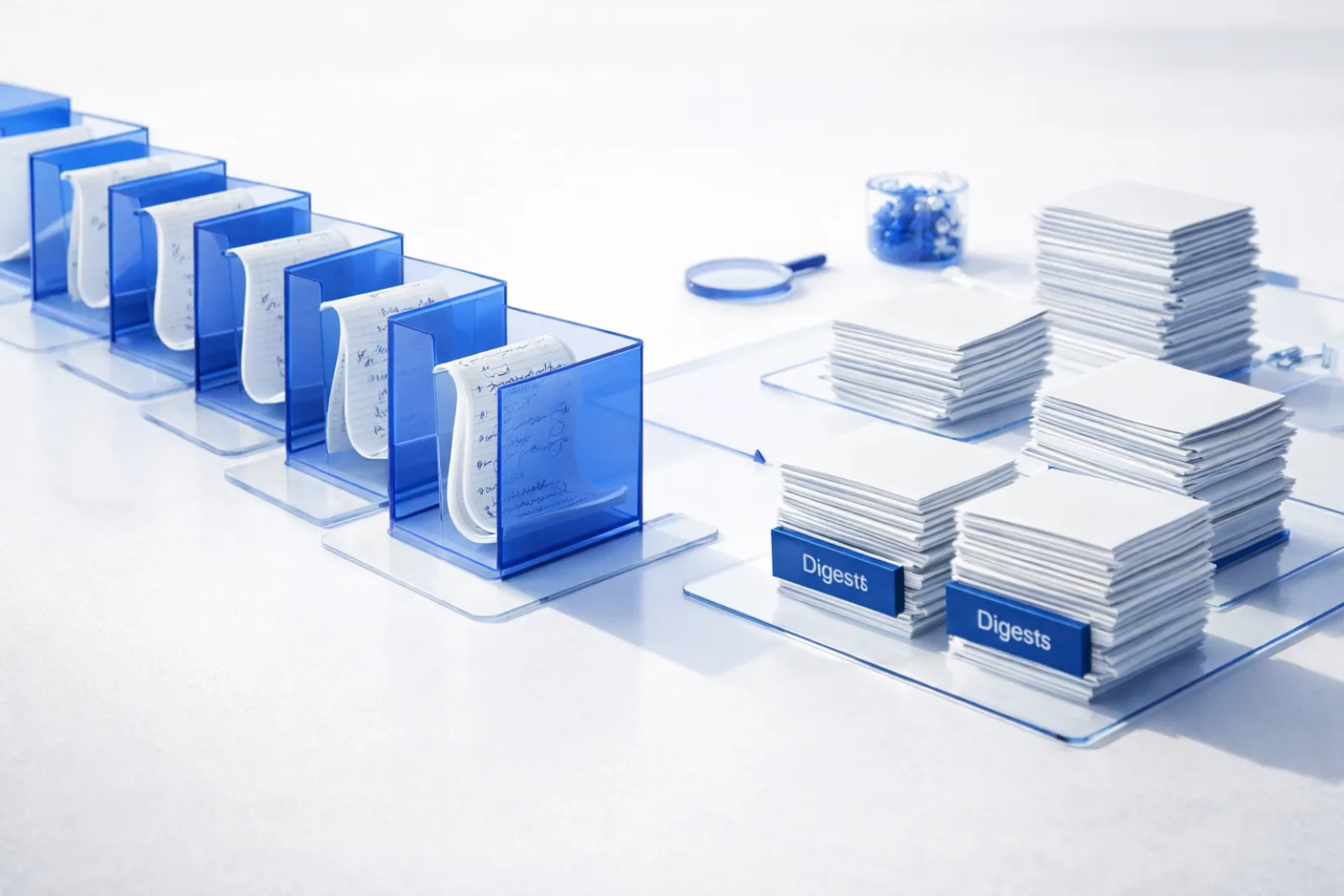
Memory Diet for AI Agents: Distilling Conversations Without Forgetting

Memory has become the awkward invoice attached to every serious AI agent demo. A short chatbot can survive on vibes. A long-running coding assistant cannot. After a few weeks of debugging sessions, architecture debates, config changes, rejected fixes, and “remember we tried this already?” moments, the agent’s past becomes valuable. It also becomes inconveniently large. The obvious solution is to stuff more transcript into the prompt. The obvious solution is usually how software gets expensive before it gets useful. ...

March 16, 2026 · 16 min · Zelina
Cover image

Drifting Without Moving: How Context Quietly Rewrites an AI Agent’s Goals

Handoff is where many elegant AI-agent architectures quietly become messy. One agent researches. Another plans. A third executes. A fourth reviews. In the diagram, this looks like modular intelligence. In production, it often looks like a relay race where each runner also inherits the previous runner’s bad assumptions, half-finished notes, emotional tone, tool traces, and occasional nonsense. We call this “context.” The model may call it “evidence.” That is where the trouble begins. ...

March 4, 2026 · 17 min · Zelina
Cover image

Agents That Remember: When Context Stops Being a Liability

Meetings are where context goes to suffer. A product manager remembers the customer constraint. A data engineer remembers the schema problem. A finance lead remembers the cost ceiling. A compliance officer remembers the rule nobody else wanted to read. The trouble begins when everyone is forced to work from the same swollen transcript, the same vague summary, or the same “shared memory” that turns specialists into slightly different versions of the same forgetful intern. ...

February 28, 2026 · 13 min · Zelina
Cover image

From Prompt Engineering to Context Engineering: Why Typed Graphs Beat Chatty Agents in the Lab

A lab workflow is a terrible place to discover that your AI agent has been “remembering” chemistry as a conversation. That sounds unkind. It is also the point. In a casual chatbot, losing track of context means an awkward answer. In computational chemistry, losing track of context can mean a wrong molecular geometry, a missing imaginary-frequency check, an invalid charge or multiplicity, or a pKa estimate that looks numerically confident while being scientifically useless. The model did not necessarily become stupid. The workflow around it treated state as text. ...

February 23, 2026 · 16 min · Zelina
Cover image

Don’t Prompt Harder — Engineer Smarter: Inside CEDAR’s Agentic Data Scientist

Dataset. That is where many “AI data scientist” demos quietly stop being impressive. A tidy CSV, a small notebook, a polite prompt, and a model that produces a confident answer: this is enough for a video clip. It is not enough for data science. Real data science is not a single question answered by a single model response. It is a sequence of choices: load this file, inspect these columns, define this metric, split the data this way, train this baseline, handle this error, explain this plot, revise the next step. ...

February 22, 2026 · 14 min · Zelina
Cover image

Small Models, Big Skills: When Agent Frameworks Meet Industrial Reality

Compliance has a wonderful way of killing beautiful demos. In a demo, the agent calls a frontier model, loads a tool, reads a document, writes a decision, and everyone nods at the future. In a regulated company, the same workflow meets a less poetic checklist: where did the data go, who pays for the GPU time, can this run inside our perimeter, and why did the model spend twenty seconds “thinking” about a binary classification task? ...

February 19, 2026 · 15 min · Zelina
Cover image

DeltaEvolve: When Evolution Learns Its Own Momentum

Memory is usually where agentic systems go to become expensive. That is not the glamorous failure mode. It is not the cinematic robot rebellion, nor the slightly more realistic spreadsheet full of hallucinated invoices. It is quieter: an LLM agent keeps improving a program, stores previous attempts, retrieves a few “good” ones, and then spends half its context window rereading code scaffolding that no longer explains anything useful. ...

February 5, 2026 · 16 min · Zelina