Cover image

No Structure, No Glory: Why AI Cognition Has to Be Shown, Not Named

TL;DR for operators AI systems are now sold with labels that sound increasingly cognitive: reasoning, planning, agency, memory, autonomy, sometimes even the more theatrical hints of machine consciousness. Lovely. The marketing department has discovered philosophy. The useful question is not whether the label feels exciting. It is whether the system realizes an internal organization that could actually support the claimed capability. ...


June 29, 2026 · 18 min · Zelina
Cover image

Template Thinking: Why Your Next AI Agent Should Steal from Cognitive Science

Architecture is usually where AI enthusiasm goes to become expensive. A team starts with a capable model. Then it adds a planner. Then memory. Then a tool router. Then a critic. Then a second critic because the first critic was apparently too polite. A few weeks later, the “agent” works on the demo path, fails on the second edge case, and nobody can explain whether the problem is the prompt, the retrieval layer, the tool schema, the memory policy, or the small parliament of LLM calls now debating inside the workflow. ...

February 28, 2026 · 22 min · Zelina
Cover image

Lost Without a Map: Why Intelligence Is Really About Navigation

Lost Without a Map: Why Intelligence Is Really About Navigation Map. That is the word most AI product teams should probably put above their dashboards, agent logs, evaluation suites, and occasionally their office coffee machine. Not because maps are poetic. Because when an AI system fails in a live workflow, the failure often does not look like “the model forgot a fact.” It looks like the system was navigating the wrong space. ...

January 21, 2026 · 18 min · Zelina
Cover image

Mind the Model: When Generative AI Teaches Neuroscience New Tricks

Mind the Model: When Generative AI Teaches Neuroscience New Tricks A model is not a mind. This should not need saying, but then again, neither should “do not use benchmark scores as a personality test,” and here we are. The more useful point is subtler. Modern generative AI does not matter to neuroscience because transformers are secretly brains in a hoodie. It matters because machine learning has turned several once-vague ideas about cognition into working engineering mechanisms. Not perfect mechanisms. Not biological mechanisms by default. But mechanisms clear enough to test, stress, reject, adapt, or steal with appropriate academic manners. ...

November 23, 2025 · 16 min · Zelina
Cover image

Mind the Gaps: Why LLMs Reason Like Brilliant Amnesiacs

A model can write a flawless explanation, check its own work, announce a correction, and then make the same mistake three paragraphs later. This is the familiar enterprise horror show: the AI appears to reason, but its reasoning has no working memory of its own commitments. It is articulate, capable, and sometimes genuinely useful. It is also, in the wrong setting, a brilliant amnesiac. ...

November 22, 2025 · 16 min · Zelina
Cover image

The Clock Inside the Machine: How LLMs Construct Their Own Time

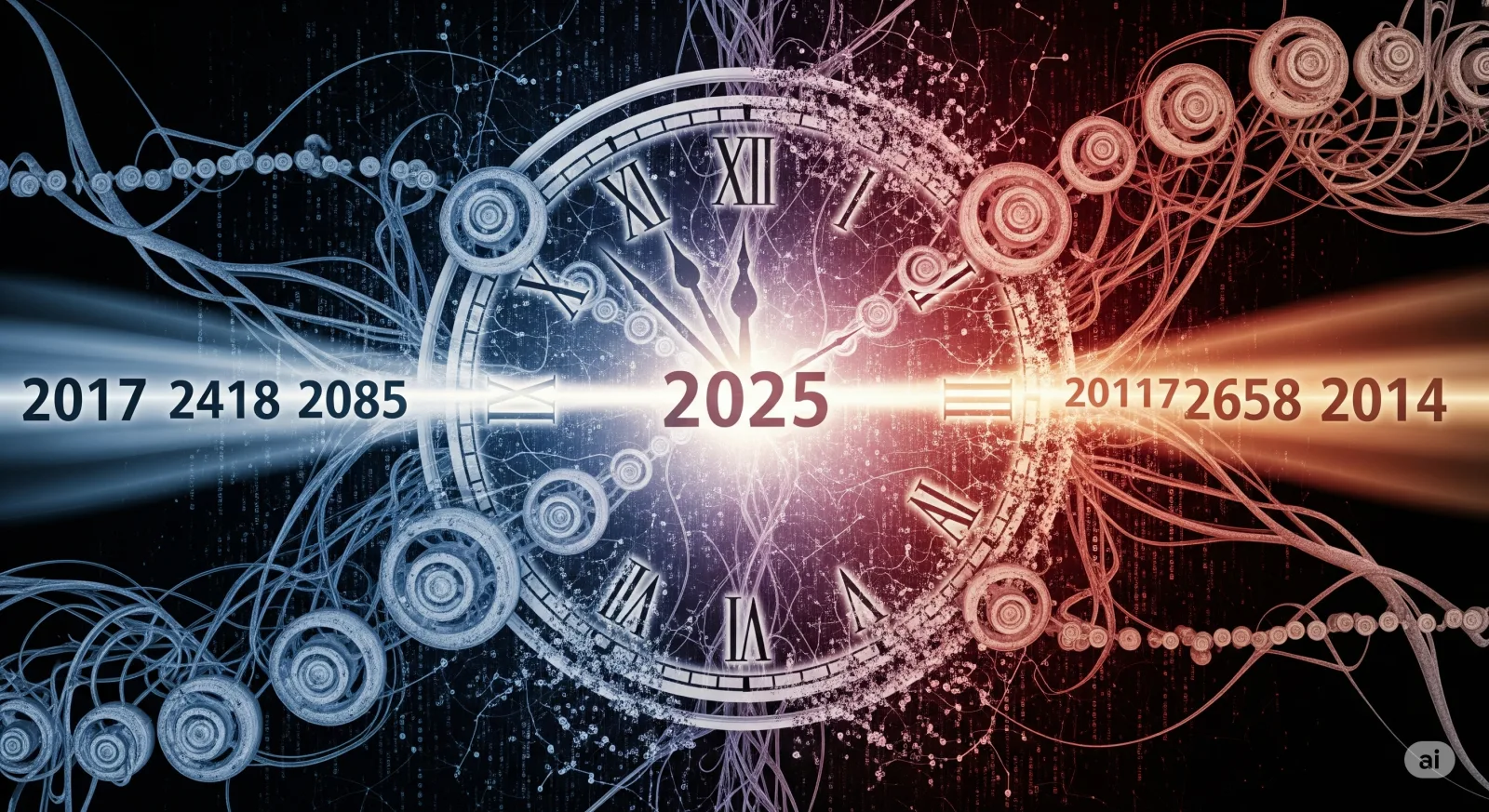
TL;DR for operators Dates look harmless. They sit in spreadsheets, contracts, forecasts, audit trails, delivery plans, and board decks pretending to be objective little integers. The problem is that a language model may not treat them as just integers. A new paper, The Other Mind: How Language Models Exhibit Human Temporal Cognition, studies how 12 large language models judge similarity between years from 1525 to 2524.1 The authors find that larger models often organise years around a subjective reference point near the recent present, rather than simply comparing numerical distance. The models also show logarithmic compression: years farther from that reference point become less finely distinguished, in a pattern reminiscent of the Weber-Fechner law in human perception. ...

July 22, 2025 · 16 min · Zelina