Cover image

Thresholds, Trade-offs, and the Art of Not Overthinking Your Robot

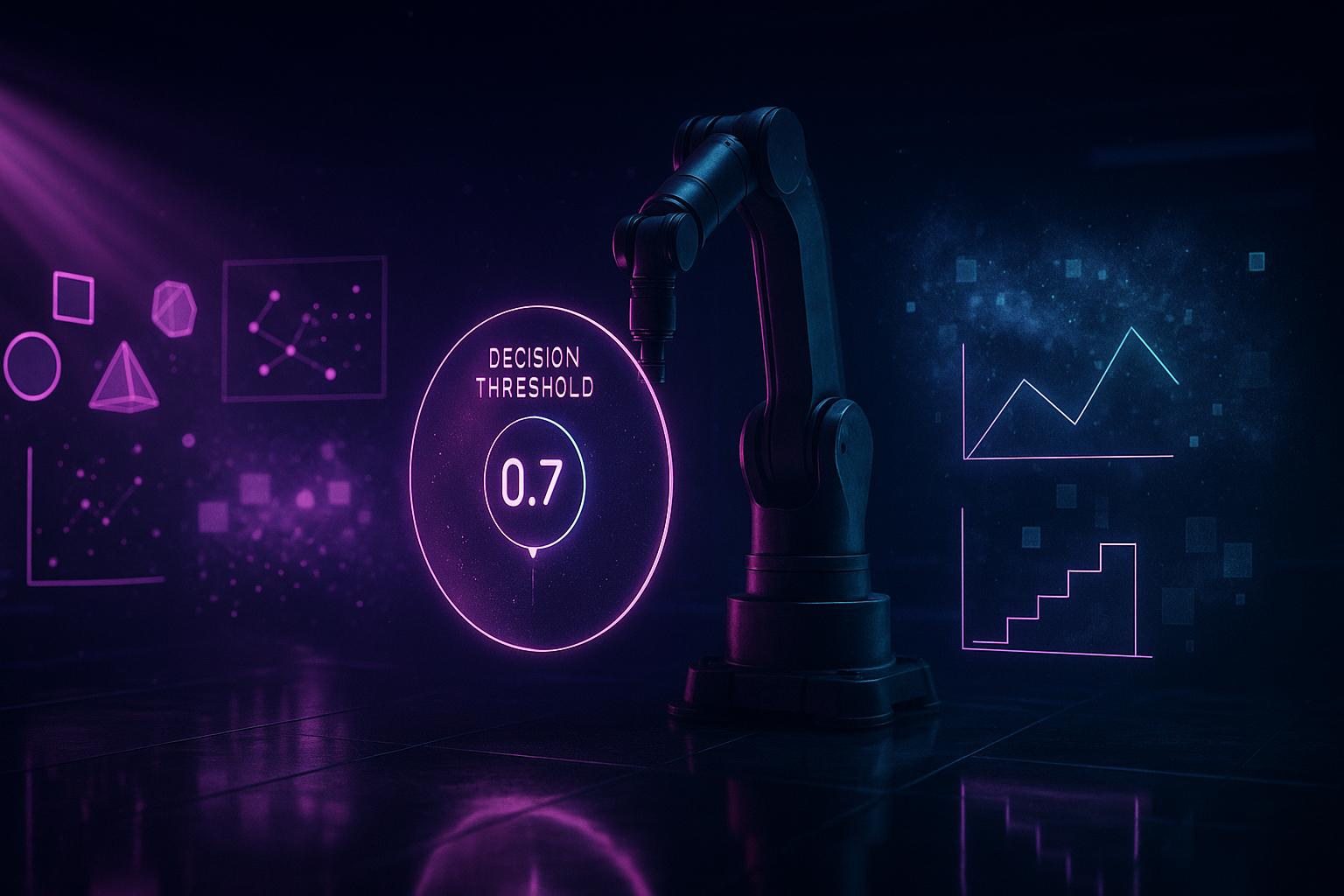
Opening — Why this matters now The current wave of robotics and agentic AI is colliding with a familiar enemy: uncertainty. You can train a visual model to spot a cup, a box, or an inexplicably glossy demo object—but when those predictions get fed into a planner, the whole pipeline begins to wobble. Businesses deploying AI agents in warehouses, kitchens, labs, or digital environments need systems that don’t fold the moment the camera blinks. ...


November 20, 2025 · 4 min · Zelina
Cover image

Tools of Habit: Why LLM Agents Benefit from a Little Inertia

Tools of Habit: Why LLM Agents Benefit from a Little Inertia Opening — Why this matters now LLM agents are finally doing real work—querying APIs, navigating unstructured systems, solving multi-step tasks. But their shiny autonomy hides a quiet tax: every tool call usually means another LLM inference. And when you chain many of them together (as all interesting workflows do), latency and cost balloon. ...

November 20, 2025 · 4 min · Zelina
Cover image

Value Collision Course: When LLM Alignment Plays Favorites

Opening — Why this matters now The industry is finally waking up to an uncomfortable truth: AI alignment isn’t a monolithic engineering task—it’s a political act wrapped in an optimization problem. Every time we say a model is “safe,” we’re really saying it is safe for whom. A new empirical study puts hard numbers behind what many practitioners suspected but lacked the data to prove: the way we collect, compress, and optimize human feedback implicitly privileges certain groups over others. And in a world where LLMs increasingly mediate customer service, financial advice, hiring flows, and mental-health interactions, this is not an academic quibble—it’s a governance risk hiding in plain sight. ...

November 20, 2025 · 5 min · Zelina
Cover image

Ask, Navigate, Repeat: Why Socially Aware Agents Are the Next Frontier

Opening — Why this matters now The AI industry has spent the past two years obsessing over what large models can say. Less attention has gone to what they can do—and, more importantly, how they behave around humans. As robotics companies race to deploy humanoid form factors and VR environments inch closer to training grounds for embodied agents, we face a new tension: agents that can follow instructions aren’t necessarily agents that can ask, adapt, or navigate socially. ...

November 18, 2025 · 4 min · Zelina
Cover image

Benchmarked Brilliance: How CreBench Rewrites the Rules of Machine Creativity

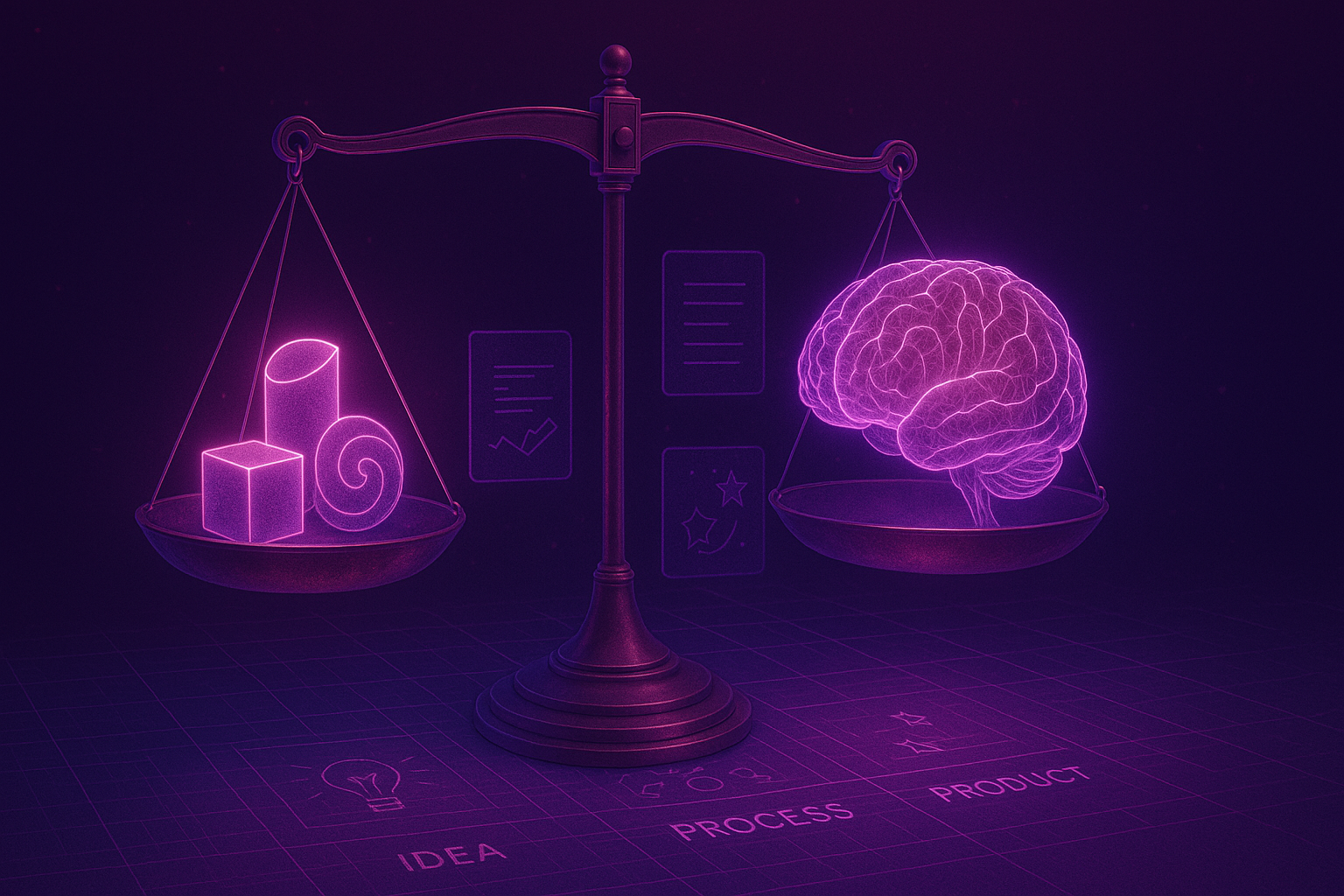
Opening — Why This Matters Now Creativity has finally become quantifiable—at least according to the latest wave of multimodal models promising artistic flair, design reasoning, and conceptual imagination. But here’s the problem: no one actually agrees on what “machine creativity” means, much less how to measure it. Enter CreBench, a benchmark that doesn’t just test if models can invent shiny things—it evaluates whether they understand creativity the way humans do: from the spark of an idea, through the messy iterative process, to the final visual output. In a world where AI increasingly participates in ideation and design workflows, this shift isn’t optional; it’s overdue. ...

November 18, 2025 · 4 min · Zelina
Cover image

Ghostwriters in the Machine: How Multi‑Agent LLMs Turn Raw Transport Data Into Decisions

Opening — Why this matters now Public transport operators are drowning in telemetry. Fuel logs, route patterns, driver behavior metrics—every dataset promises “efficiency,” but most decision-makers receive only scatterplots and silence. As AI sweeps through industry, the bottleneck is no longer data generation but data interpretation. The paper we examine today argues that multimodal LLMs—when arranged in a disciplined multi‑agent architecture—can convert analytical clutter into credible, consistent, human-ready narratives. Not hype. Not dashboards. Actual decisions. ...

November 18, 2025 · 3 min · Zelina
Cover image

Graph Medicine: When RAG Stops Guessing and Starts Diagnosing

Opening — Why this matters now Healthcare is drowning in information yet starving for structure. Every major medical society produces guidelines packed with nuance, exceptions, and quietly conflicting definitions. Meanwhile, hospitals want AI—but safe, explainable AI, not a model hallucinating treatment plans like a caffeinated intern. The paper at hand proposes a pragmatic middle path: use retrieval-augmented LLMs to turn clinical guidelines into semantically consistent knowledge graphs, with human experts validating the edges where it matters. It is less glamorous than robotic surgeons and more necessary than yet another diagnostic chatbot. ...

November 18, 2025 · 4 min · Zelina
Cover image

LLMs, Trade-Offs, and the Illusion of Choice: When AI Preferences Fall Apart

Opening — Why This Matters Now The AI industry has a habit of projecting agency onto its creations. Every week, a new headline hints that models “prefer,” “choose,” or “resist” something. As systems become more integrated into high-stakes environments—from customer operations to quasi-autonomous workflows—the question isn’t whether AI is conscious, but whether its actions reflect any stable internal structure at all. ...

November 18, 2025 · 5 min · Zelina
Cover image

Scaling Intelligence: Why Kardashev Isn’t Just for Civilizations Anymore

Opening — Why this matters now The AI world is busy arguing over whether we’ve reached “AGI,” but that debate usually floats somewhere between philosophy and marketing. What’s been missing is a testable, falsifiable way to measure autonomy—not in poetic metaphors, but in operational metrics. A recent proposal introduces exactly that: a Kardashev-inspired, multi‑axis scale for Autonomous AI (AAI). Instead of guessing whether a system is “smart enough,” this framework measures how much real work an AI can independently do, how fast it improves itself, and whether that improvement survives real-world drift. Businesses, regulators, and investors will need this level of clarity sooner than they think. ...

November 18, 2025 · 5 min · Zelina
Cover image

Wired for Symbiosis: How AI Turns Wearables Into Health Allies

Opening — Why this matters now Wearables promised a revolution. What we got instead were step counters, sleep‑guessers, and the occasional false alarm that sends your heart rate — and your cardiologist’s revenue — soaring. But the next wave is different. AI is quietly dissolving the boundary between “device” and “health partner.” The academic paper behind this article argues for a future where wearables don’t merely measure; they co‑evolve with you. And if that sounds dramatic, that’s because it is. ...

November 18, 2025 · 4 min · Zelina