Cover image

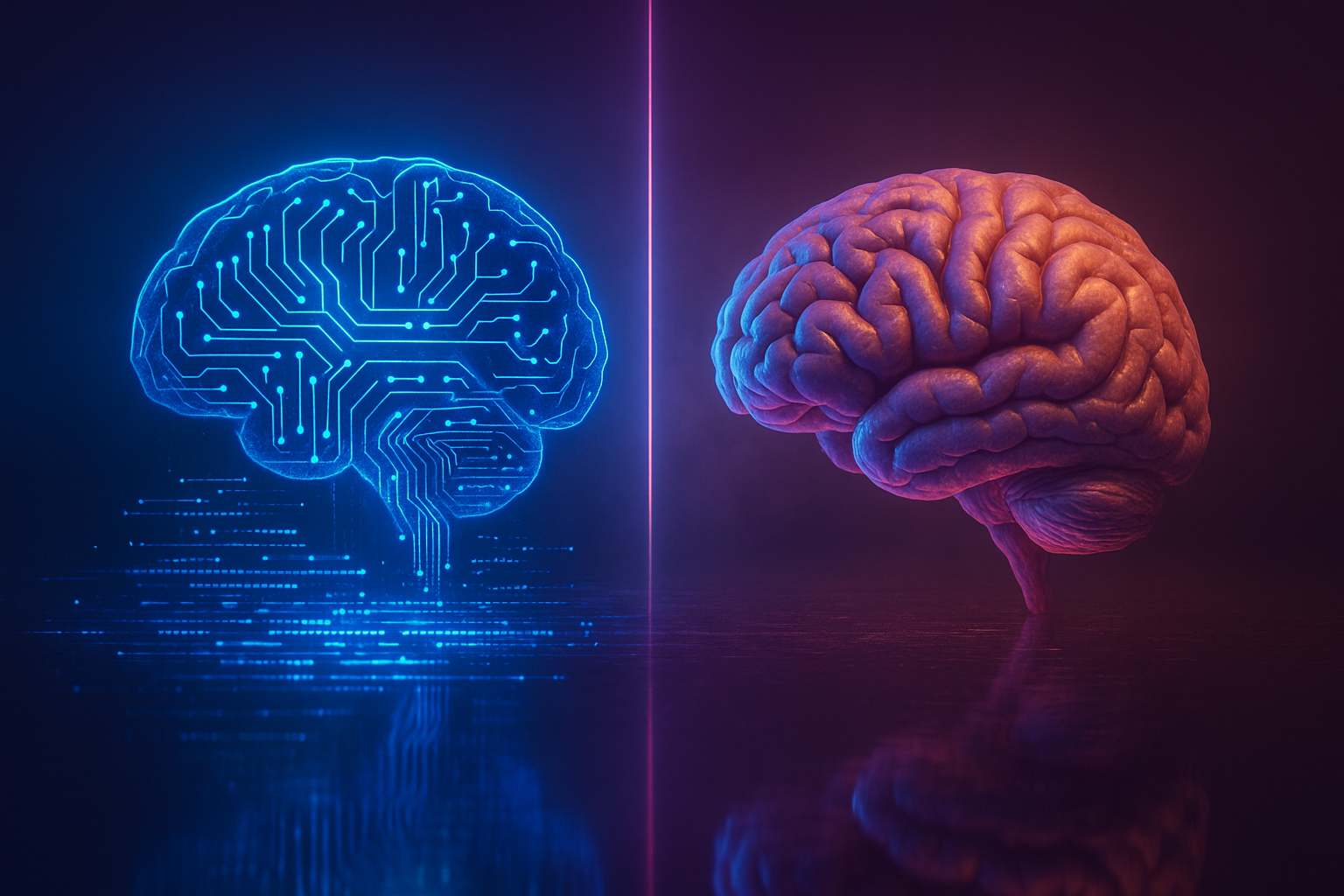
Mind the Model: When Generative AI Teaches Neuroscience New Tricks

Opening — Why this matters now Generative AI didn’t merely improve in the past decade — it swerved into entirely new conceptual territory. Techniques once confined to machine learning benchmarks are now implicit metaphors for cognition. And while AI researchers sprint forward, neuroscience has barely begun to digest the implications. The uploaded paper — From generative AI to the brain: five takeaways fileciteturn0file0 — makes a deceptively simple argument: modern ML has evolved strong, testable generative principles. If brains are information‑processing systems, we should expect at least some of these principles to surface in biology. ...


November 23, 2025 · 5 min · Zelina
Cover image

One-Shot, No Drama: Why Training-Free Federated VLMs Might Actually Work

Opening — Why this matters now Federated learning has been fighting a long war against its two eternal enemies: communication overhead and client devices that are—charitably—weak. Now add massive vision–language models (VLMs) into the mix, and the whole system collapses under its own ambition. The industry needs adaptation methods that are light enough to deploy but still competent enough to matter. ...

November 23, 2025 · 4 min · Zelina
Cover image

Mind the Gaps: Why LLMs Reason Like Brilliant Amnesiacs

Opening — Why this matters now LLMs are dazzling—until they trip over something embarrassingly simple. This paradox isn’t just a meme; it’s a commercial, regulatory, and engineering liability. As enterprises rush toward AI-driven automation, they face a dilemma: models that solve Olympiad problems but stumble on first-grade logic steps are not trustworthy cognitive workers. ...

November 22, 2025 · 4 min · Zelina
Cover image

One Pass to Rule Them All: YOFO and the Rise of Compositional Judging

Opening — Why this matters now AI systems are drowning in their own verbosity. Every year, models get bigger, context windows get wider, and inference pipelines get slower. Meanwhile, businesses demand faster, more explainable, and more fine‑grained decision systems—especially in recommendation, retrieval, and automated evaluation. The industry’s current bottleneck isn’t intelligence; it’s latency and interpretability. And the paper You Only Forward Once (YOFO) introduces a deceptively simple but quietly radical idea: stop forcing generative models to monologue. Instead, make them answer everything in one shot. ...

November 22, 2025 · 4 min · Zelina
Cover image

Pop-Ups, Pitfalls, and Planning: Why GUI Agents Break in the Real World

Opening — Why this matters now The AI industry has an uncomfortable habit: it trains models in sanitized, interruption-free fantasylands, then deploys them into messy, notification‑ridden reality and wonders why they panic. GUI agents are the latest example. We celebrate their fluent tapping through static benchmarks, only to discover they crumble the moment a battery warning barges in. The new D‑GARA framework fileciteturn0file0 exposes this fragility—methodically, dynamically, and with just enough real‑world chaos to make the point sting. ...

November 22, 2025 · 4 min · Zelina
Cover image

Practice Makes Agents: How DPPO Turns Failure into Embodied Intelligence

Opening — Why this matters now Robot brains are finally getting interesting. Not because they’re bigger—though Pelican-VL’s 72B parameters certainly don’t hurt—but because researchers are starting to realize something embarrassingly human: skill doesn’t come from data volume; it comes from correcting your own mistakes. In other words, practice, not just pretraining. And if embodied AI is going to leave the simulation lab and actually manipulate the physical world, we need smarter practice loops, not larger datasets. ...

November 22, 2025 · 4 min · Zelina
Cover image

The Latent Truth: Why Prototype Explanations Need a Reality Check

The Latent Truth: Why Prototype Explanations Need a Reality Check Opening — Why this matters now Prototype-based neural networks have enjoyed a comfortable reputation in the XAI world: interpretable by design, or so the pitch goes. Their tidy habit of pointing at learned prototypes—“this looks like that”—has made them poster children for explainability. But 2025’s regulatory mood is unforgiving. In safety‑critical domains, interpretability must mean guarantees, not vibes. A model that gestures vaguely at a prototype while internally depending on dozens of unacknowledged signals is not interpretable. It is merely polite. ...

November 22, 2025 · 4 min · Zelina
Cover image

Uncertainty, But Make It Clinical: How MedBayes‑Lite Teaches LLMs to Say 'I Might Be Wrong'

Opening — Why this matters now Healthcare is allergic to overconfidence. Yet today’s clinical large language models (LLMs) routinely deliver it in spades—issuing crisp diagnostic statements even when the evidence reads more like a shrug. In a moment when health systems are experimenting with autonomous triage, automated interpretations, and AI clinical scribes, the cost of misplaced certainty is not theoretical; it is systemic. ...

November 22, 2025 · 4 min · Zelina
Cover image

When FX Gets a Mind of Its Own: Cognitive ATS Meets the EUR/USD Mirage

Opening — Why this matters now Foreign exchange markets have always enjoyed a certain illusion of efficiency: trillions in daily volume, institutional dominance, and a near‑mythical reputation for being unforecastable. And yet, as systematic trading quietly absorbs more niches of discretionary decision‑making, one question keeps resurfacing: Is Forex genuinely uncrackable, or have we simply been looking with the wrong instruments? ...

November 22, 2025 · 5 min · Zelina
Cover image

Diversity Pays: Why AI Research Agents Need More Than One Good Idea

Opening — Why this matters now AI research agents are having a moment. With every new benchmark topped and every fresh claim of “autonomous scientific discovery,” it’s becoming harder to tell which systems are genuinely improving and which are just getting better at polishing the same old tricks. As enterprises rush to build internal research agents—often with more ambition than design discipline—the question emerges: what actually separates a good AI research agent from a mediocre one? ...

November 21, 2025 · 5 min · Zelina