Cover image

Policy Has to Run Somewhere: What Policy-as-Skill Changes in Governed LLM Systems

TL;DR for operators A policy-aware LLM has to do more than retrieve the right document. It must know what evidence is mandatory, when evidence is insufficient, when a case requires human review, which policy version governed the decision, and what information must be retained so the decision can later be reconstructed. Policy-as-Skill: Governed LLM Decision Support with Evidence, Deterministic Control, and Audit1 turns those obligations into explicit runtime components rather than leaving them inside prompts or application glue code. ...


October 9, 2026 · 6 min · Zelina
Cover image

After the Robot Stops: Building an Audit Trail Into Autonomous Decisions

TL;DR for operators When an autonomous robot brakes, reroutes, or stops near a person, the operational question after an incident is larger than “which input features influenced the model?” Investigators may need the supporting sensor evidence, the state the system inferred, the alternatives it considered, why one action won, and whether execution matched the intended command. ...

October 4, 2026 · 7 min · Zelina
Cover image

Make the Structure Survive: Forma Turns Synthetic Clinical Cases Into Auditable Outputs

TL;DR for operators If synthetic cases are going to support training or evaluation, surface plausibility is a weak control objective. The harder requirement is preserving the relationships that make each case meaningful. Forma tests that idea by specifying a person-specific psychological structure before generation and asking whether those directional relationships can be recovered afterward. In the full condition, an external probe reaches MCC +0.41 and AUC 0.70 for directed-edge recovery. When the structural formulation is removed, performance falls close to chance: MCC +0.03/AUC 0.52 with demographics and self-report still present, and +0.01/0.50 under zero-shot generation. ...

September 25, 2026 · 7 min · Zelina
Cover image

Passing Tests Is Not an Audit Trail

TL;DR for operators When a coding agent changes a production-bound function after a failed test, a reviewer should be able to determine which failure caused each changed region to exist. Final code, passing tests, logs, and commits may show that the program works now, but they can lose the construction history needed to explain individual repairs. ...

August 7, 2026 · 8 min · Zelina
Cover image

Commit Issues: Why Multi-Agent AI Needs Typed Finality, Not Another Vote

Vote counts are cheap; finality is expensive Vote. That is the comfortable answer whenever multiple AI agents disagree. Ask ten agents, collect ten outputs, pick the majority, maybe weight by confidence, then call the result “robust.” It has the pleasant managerial smell of a committee decision. Everyone participated, something won, a spreadsheet can be made. ...

June 11, 2026 · 16 min · Zelina
Cover image

The Audit of Autonomy: When AI Agents Need More Than Intelligence

Audit is a boring word until the system being audited can move money, approve a refund, escalate a medical triage queue, book logistics capacity, or quietly call six APIs before breakfast. That is the mood shift around AI agents. The question is no longer whether a model can produce a clever answer. It often can. Congratulations to the stochastic parrot; it has learned to use tools. The harder question is whether an organization can prove, after the fact and preferably before disaster, that the agent acted within its assigned authority. ...

February 20, 2026 · 18 min · Zelina
Cover image

Recommendations With Receipts: When LLMs Have to Prove They Behaved

A recommendation list is rarely just a list. On the surface, it says: “Here are ten movies, products, articles, songs, creators, or courses you may like.” Underneath, it often carries a second instruction: “Also do not bury long-tail items, do not over-concentrate exposure, do not violate diversity rules, do not create an audit nightmare, and please do all of this while still looking personalized.” ...

January 17, 2026 · 13 min · Zelina
Cover image

RAGulating Compliance: When Triplets Trump Chunks

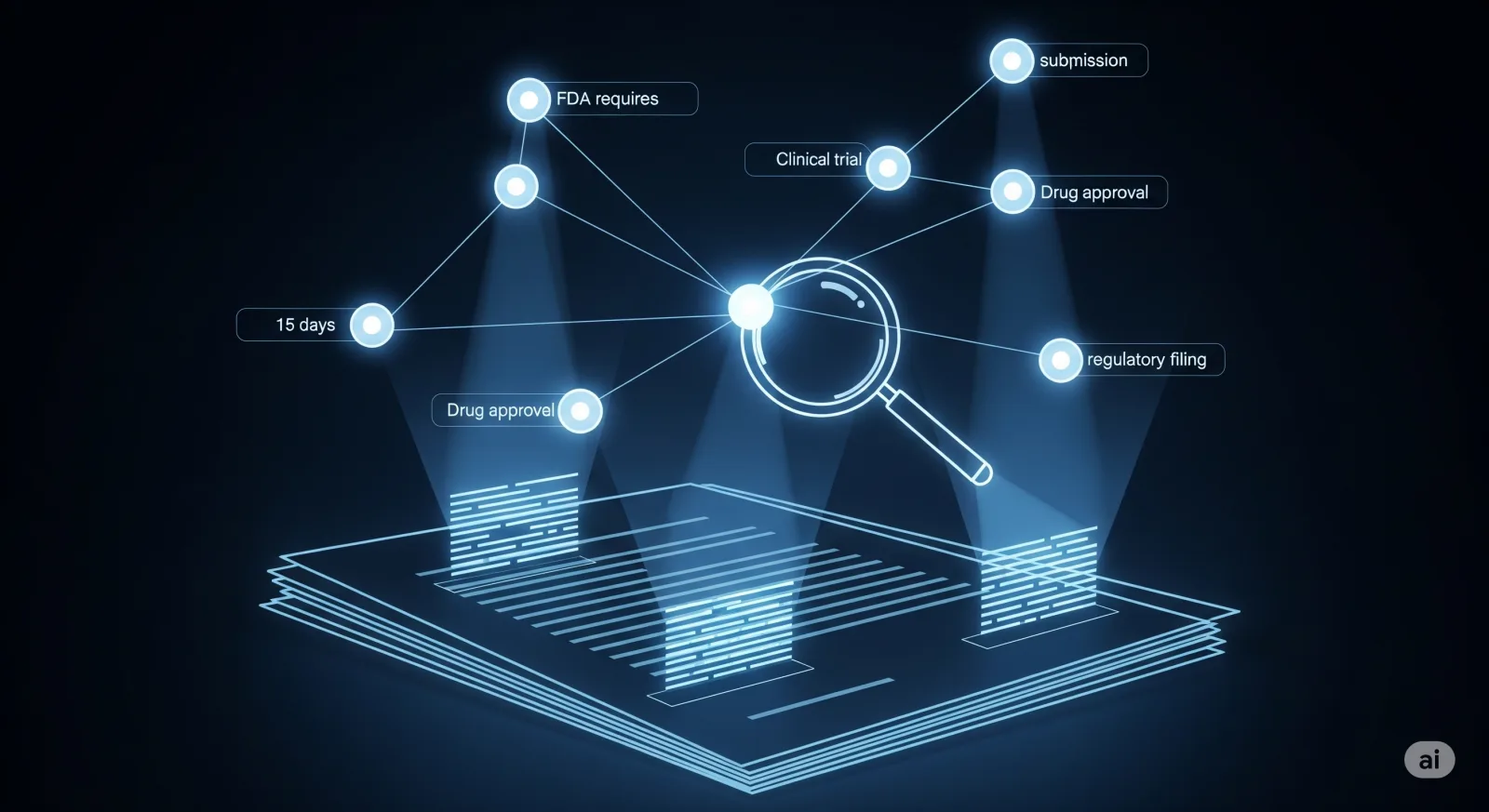
TL;DR for operators Compliance teams do not mainly need a chatbot that sounds more confident. They already have enough people sounding confident in meetings. They need answers that can be traced back to the rule text, checked against related provisions, and updated when the regulatory corpus changes. The paper behind this article proposes a multi-agent system that turns regulatory documents into subject–predicate–object triplets, embeds those triplets alongside their source sections, retrieves triplets for question answering, and shows users the relevant subgraph behind the answer.1 That matters because regulatory work is not just “find me a paragraph.” It is “show me the applicable rule, the linked requirement, the exception, the deadline, and the neighbouring clause that will embarrass us later.” ...

August 16, 2025 · 14 min · Zelina

From Client Conversations to Audit-Ready Compliance Records

A boutique financial advisory firm restructured its meeting-to-compliance-record workflow with an AI documentation agent that drafts, checks, and source-links records while preserving advisor and compliance-officer control.

July 30, 2025 · 8 min · Vox