Cover image

Error Bars for the Algorithmic Mind: What ReasonBench Reveals About LLM Instability

A demo is not a deployment. In a demo, the model answers once. The answer looks correct. The cost looks tolerable. The team nods, the slide deck gains a green checkmark, and someone says the usual fatal sentence: “This seems reliable enough.” Then production happens. The same prompt goes through the same provider endpoint. The same workflow runs again. Sometimes the answer changes. Sometimes the reasoning trace wanders. Sometimes the bill is higher. Sometimes a supposedly more “thoughtful” strategy spends extra tokens to become confidently less useful. Beautiful. The machine has developed not consciousness, but variance. ...


December 9, 2025 · 18 min · Zelina
Cover image

Prototypes, Not Guesswork: Rethinking Trust in Multi‑View Classification

Pizza. The image says pizza. The text description says baklava. A human sees the contradiction immediately. A multi-view classifier may not. It may average the views, let one noisy modality dominate, or produce a confident answer from evidence that should have triggered suspicion. Very impressive, in the same way a committee can be impressive while approving the wrong invoice. ...

November 30, 2025 · 15 min · Zelina
Cover image

Error Hunting Season: Why Pessimism Makes LLMs Smarter at Math

Review is not a democracy. That sounds unpleasant, which is why it is useful. In many business settings, we like consensus because it feels stable. Three analysts agree, five reviewers approve, the dashboard turns green, and everyone can pretend the risk has been domesticated. Mathematics is less polite. One invalid theorem application, one hidden assumption, one algebraic step that does not follow, and the whole proof may collapse. The majority does not get to vote a contradiction out of existence. ...

November 27, 2025 · 17 min · Zelina
Cover image

Memory, But Make It Multimodal: How ViLoMem Rewires Agentic Learning

Memory is easy to oversell. Give an AI agent a database, a longer context window, and a few inspirational phrases about “learning from experience,” and suddenly everyone in the room starts talking as if the system has developed institutional wisdom. It has not. At best, it has a slightly more organized attic. ...

November 27, 2025 · 17 min · Zelina
Cover image

Fault Lines & Safety Nets: How RAFFLES Finds the First Domino in Agent Failures

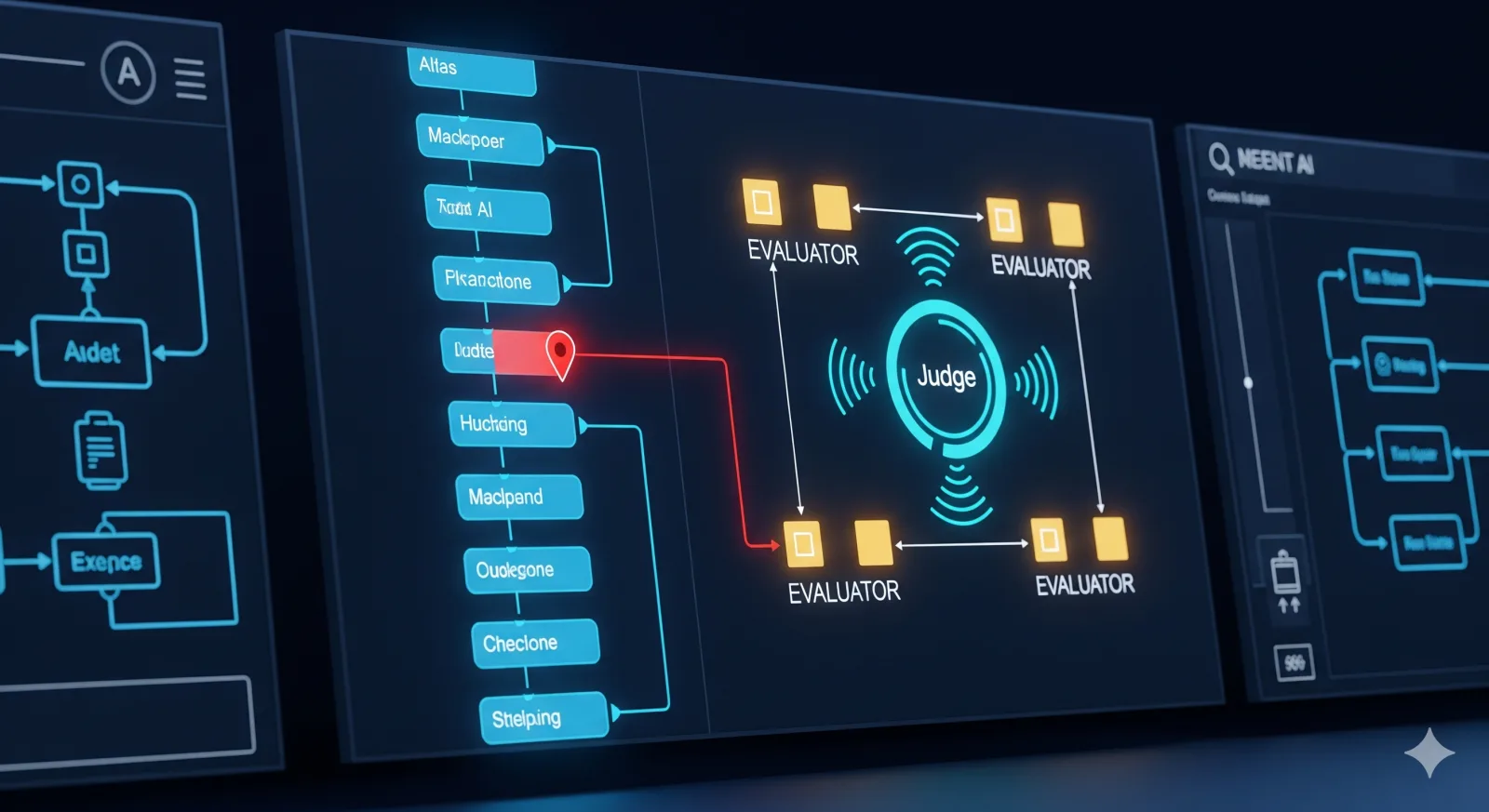
A failed agent run rarely fails politely. It does not raise its hand at step 4 and say, “Here is the causal error; please patch the planner.” It drifts. A web agent grabs the wrong source. A coding agent trusts a bad assumption. A verifier rubber-stamps a plausible-looking answer. Twenty steps later the final output is wrong, the dashboard says “failed,” and the team is left doing digital archaeology with a very expensive shovel. ...

September 12, 2025 · 16 min · Zelina
Cover image

Rules of Engagement: How Meta‑Policy Reflexion Turns Agent Memory into Guardrails

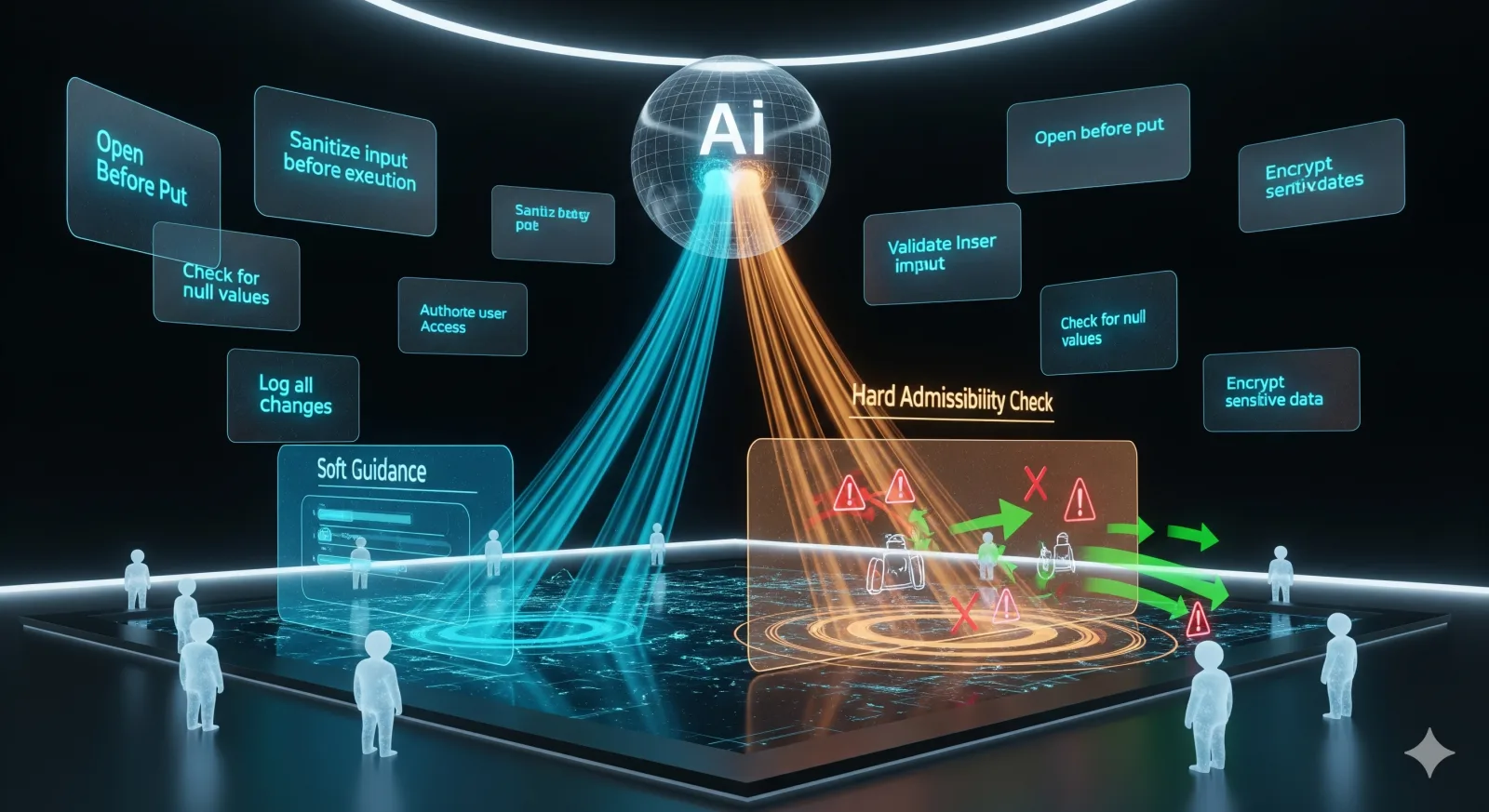
A support bot forgets the same refund exception every Monday. A procurement agent keeps calling the wrong API before checking vendor status. A workflow assistant learns, apologises, retries, then makes the same mistake next quarter because the lesson lived only in the chat transcript. Very human. Also not especially useful. That is the practical problem behind Meta-Policy Reflexion, a paper that asks whether LLM agents can keep the benefit of verbal self-reflection without turning every failure into a one-off therapy session.1 The authors propose Meta-Policy Reflexion (MPR), a training-free framework that distils failed-trajectory reflections into a structured Meta-Policy Memory (MPM), then uses that memory in two ways: softly, by putting relevant rules into the agent’s prompt; and hard, by checking generated actions against admissibility constraints before execution. ...

September 8, 2025 · 14 min · Zelina
Cover image

When AI Knows It Doesn’t Know: Turning Uncertainty into Strategic Advantage

TL;DR for operators A model that says “I don’t know” is not automatically trustworthy. It may be cautious. It may be badly calibrated. It may be uncertain for the wrong reasons. It may also be using uncertainty as a very elegant trapdoor. Polite refusal, unfortunately, is still refusal. Stephan Rabanser’s thesis, Uncertainty-Driven Reliability: Selective Prediction and Trustworthy Deployment in Modern Machine Learning, is useful because it treats uncertainty not as a philosophical mood, but as an operational control layer.1 The key question is not whether a model can emit a confidence score. Most models can emit something confidence-shaped. The harder question is whether that score can decide which cases should be automated, deferred, reviewed, rejected, routed to a larger model, or audited. ...

August 12, 2025 · 20 min · Zelina
Cover image

The Diligent but Brittle Student Inside Every LLM

TL;DR for operators LearnerAgent puts LLM-based “students” through a simulated year of high-school English learning: weekly lessons, exercises, monthly exams, memory retrieval, self-reflection, confidence updates, and peer debate.1 The point is not to cosplay a classroom because AI research apparently needed more homework. The point is to observe learning as a process, not merely as a final benchmark score. ...

August 8, 2025 · 15 min · Zelina
Cover image

Longer Yet Dumber: Why LLMs Fail at Catching Their Own Coding Mistakes

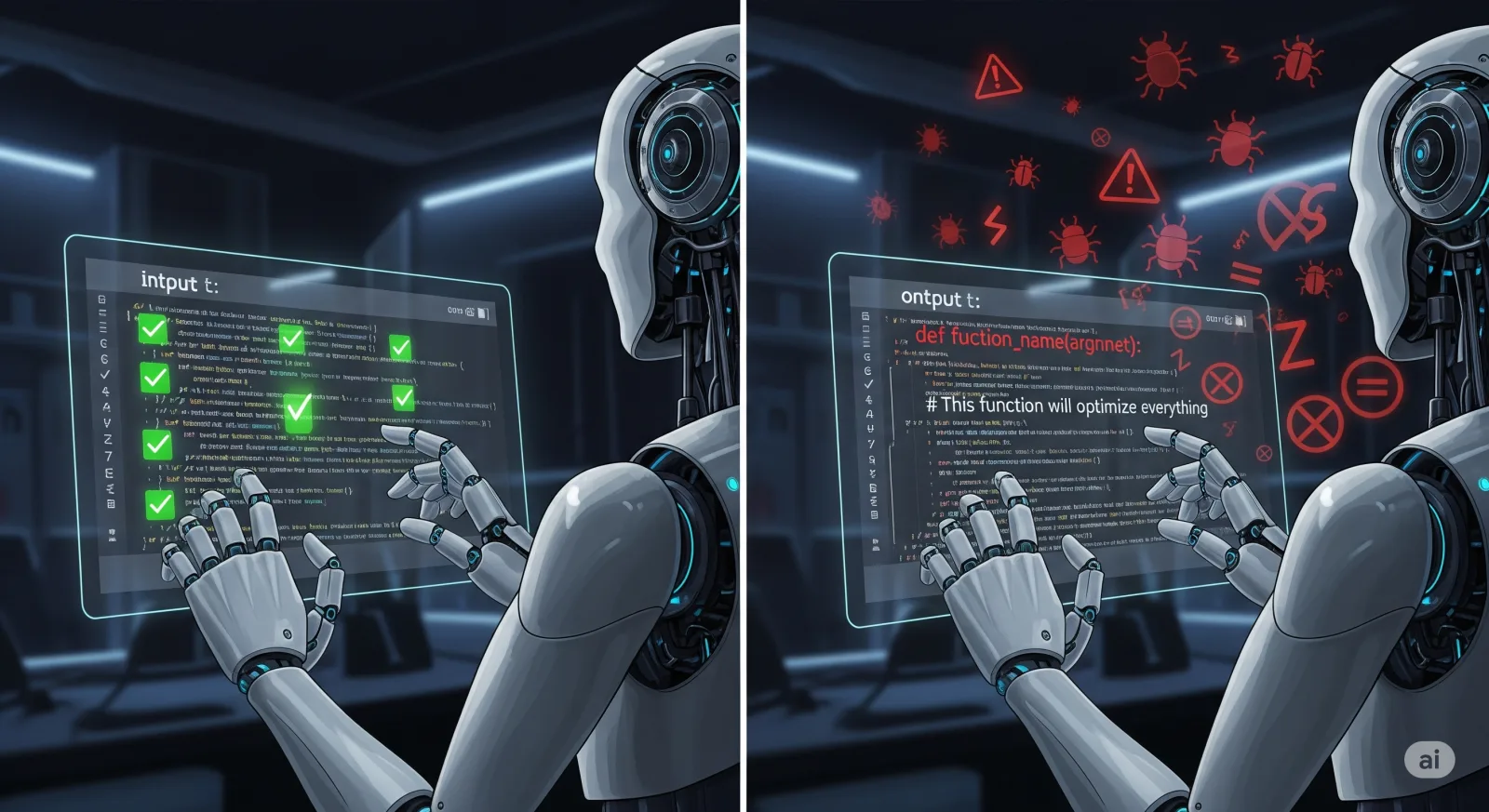
TL;DR for operators Code review usually starts after code exists. FPBench argues that this is already too late. The paper behind FPBench tests whether large language models can detect faulty premises in code-generation requests before obediently producing code from them.1 The answer is awkward. Many models can identify the flaw when explicitly told to check the question first, but most do not do so proactively. They behave less like careful engineers and more like very fast interns with a tragic respect for bad tickets. ...

August 6, 2025 · 14 min · Zelina
Cover image

Think Twice, Then Speak: Deliberative Searcher and the Future of Reliable LLMs

TL;DR for operators Search-augmented LLMs are not safe merely because they can look things up. They can still retrieve relevant documents, stitch together a plausible answer, and then express high confidence in something wrong. That is the failure mode this paper targets: not hallucination in the abstract, but the operationally poisonous state of being both false and certain. ...

July 23, 2025 · 16 min · Zelina