Cover image

Wait, Let Me Check: Why Long-CoT AI Can Still Verify the Wrong Thing

Checking is supposed to calm people down. In business, a second review makes a financial model feel safer. A compliance checklist makes a release feel governed. A senior analyst saying “let me double-check that” gives the room a small dopamine hit of procedural seriousness. Long Chain-of-Thought models have learned the same theatre. They pause. They reconsider. They say “wait.” They verify arithmetic. They sometimes generate reasoning traces so long that one begins to feel the model must be thinking deeply, if only because wasting that many tokens while being shallow seems rude. ...

June 9, 2026 · 19 min · Zelina
Cover image

Protocol Over Hype: Why AI Drug Discovery Agents Need Memory, Not Just Models

Drug discovery is a wonderful place for AI demos. The model proposes a molecule, the molecule looks plausible, a docking score improves, and the slide deck starts to glow with that familiar color: almost-commercial blue. Then the evaluation protocol arrives and ruins the party. The problem is simple, and therefore easy to underestimate. A drug discovery agent is rarely asked to return one impressive molecule. It is asked to return a set of molecules that jointly satisfies several requirements: enough candidates, enough diversity, acceptable binding proxies, drug-likeness, synthetic accessibility, novelty, and other threshold-style constraints. One molecule can look good. A few molecules can look good. The final returned pool can still fail. ...

April 13, 2026 · 15 min · Zelina
Cover image

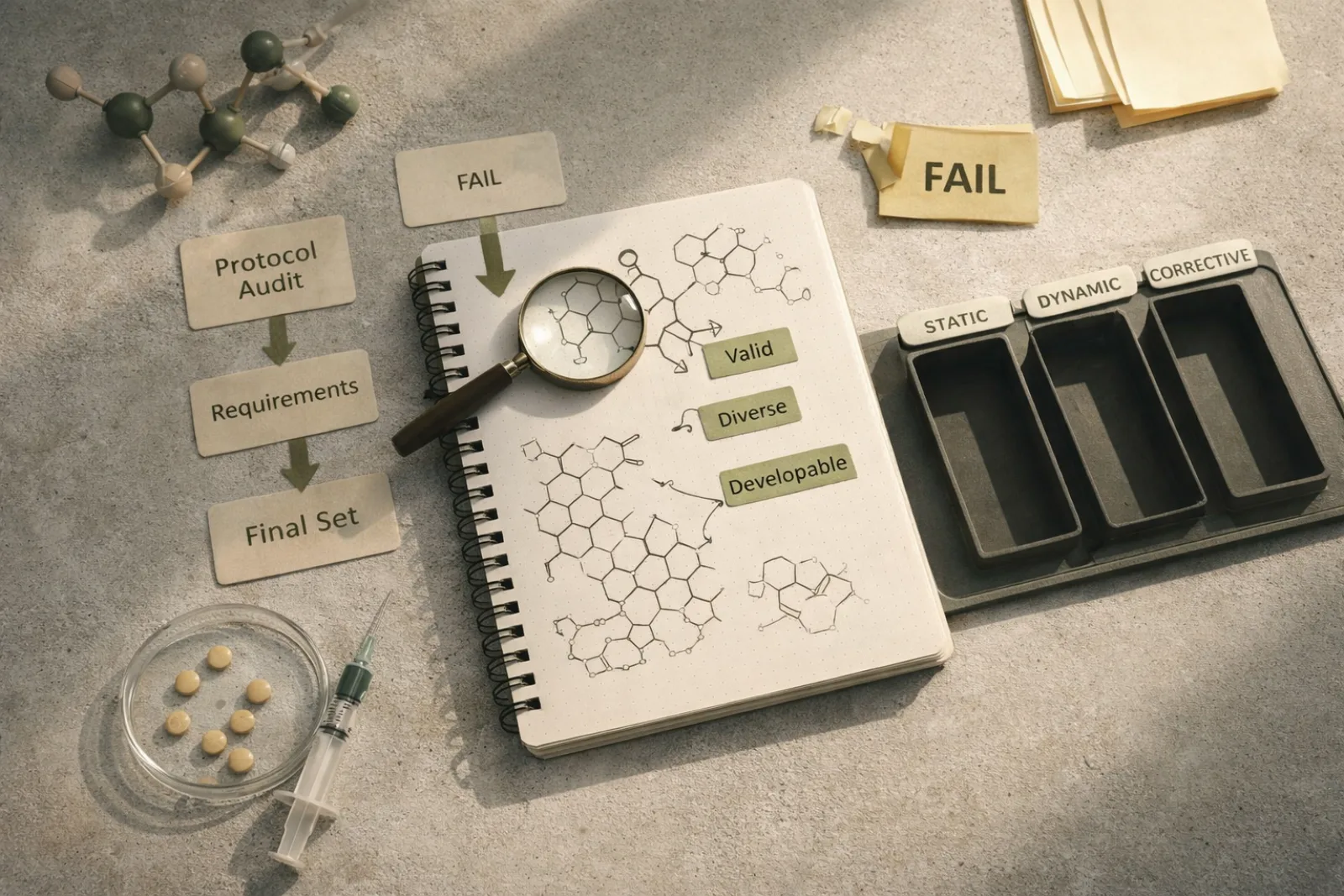
Verify Before You Automate: Why AI Agents Need an Internal Audit Function

A number is a small thing. One integer in one answer. A seating capacity, a contract limit, a delivery quantity, a tax threshold, a credit exposure. Nothing dramatic. Certainly not the sort of thing that should become an architecture problem. Then an AI agent guesses it, sounds confident, stores the guess, and uses it again later. ...

April 10, 2026 · 18 min · Zelina
Cover image

Middleware Matters: Why Your AI Agent Needs a Lifecycle (Not Just a Brain)

Agent demos are easy to like because nothing important is attached to them. A demo agent can call the wrong tool, misread a JSON response, or politely announce that an API failure is actually a useful answer. Everyone smiles, someone says “interesting,” and the team adds another item to the backlog. Very innovative. Very safe. Very far from production. ...

March 17, 2026 · 19 min · Zelina
Cover image

Mirror, Mirror on the Agent: Teaching LLMs to Judge Their Own Actions

The agent did exactly what it was taught. That was the problem. A familiar business agent failure does not look dramatic. It looks boring. The agent searches the database, clicks the wrong record, receives an error, retries the same action, receives the same error, retries again, and then politely informs the user that it has encountered “temporary difficulty.” Very professional. Completely useless. ...

March 12, 2026 · 16 min · Zelina
Cover image

Consistency Is Not a Coincidence: When LLM Agents Disagree With Themselves

A support ticket arrives. The agent reads the same customer history, sees the same policy document, and has access to the same tools. On Monday, it searches for the refund rule, retrieves the correct clause, and gives a clean answer. On Tuesday, with the same input, it searches for a different phrase, retrieves a less relevant document, wanders through two extra steps, and ends with a confident answer that is only approximately useful. ...

February 14, 2026 · 16 min · Zelina
Cover image

Root Cause or Root Illusion? Why AI Agents Keep Missing the Real Problem in the Cloud

A cloud incident does not arrive politely. It does not say, “Hello, I am a memory leak in service X, beginning at 14:03, propagating through service Y, and pretending to be a latency spike somewhere else.” That would be useful. Naturally, production systems prefer theatre. So when companies imagine AI agents taking over cloud Root Cause Analysis (RCA), the promise sounds almost unfairly attractive. Give the agent logs, metrics, traces, a Python executor, and a large enough model. Let it inspect the evidence, reason through the causal chain, and return the faulty component, incident time, and failure reason before the human on-call engineer has finished the second coffee. ...

February 11, 2026 · 18 min · Zelina
Cover image

Graph Before You Leap: How ComfySearch Makes AI Workflows Actually Work

Pipelines break at the seams Pipelines look simple when drawn on a slide. A user asks for an image. A model generates it. A workflow saves it. Somewhere in the middle, a few helpful boxes connect to a few other helpful boxes, and the whole thing becomes “automation.” Lovely. Very managerial. Then someone opens the real workflow. ...

January 8, 2026 · 17 min · Zelina
Cover image

Model First, Think Later: Why LLMs Fail Before They Reason

The schedule looked reasonable. That was the problem. Imagine asking an AI agent to build a weekly medical schedule. It produces a neat plan. The steps are numbered. The tone is confident. The explanation is calm enough to sedate a committee. Then someone checks the details. A medication interval is violated. A resource is assigned twice. A prerequisite appears after the action that depends on it. Nothing looks absurd sentence by sentence, but the plan is broken as a system. ...

December 17, 2025 · 12 min · Zelina
Cover image

Bench to the Future: Why E-commerce Is the Real Final Boss for Foundation Agents

Shopping looks easy until someone has to calculate the customs duty. That is roughly the lesson of EcomBench, a new benchmark designed to evaluate foundation agents on realistic e-commerce tasks.1 The paper’s most useful finding is not that one model ranks above another. Leaderboards are entertaining, in the same way airport departure boards are entertaining when your flight is already delayed. The useful finding is the shape of failure. ...

December 10, 2025 · 15 min · Zelina