Cover image

The Debugger Awakens: Why Kodezi Chronos Leaves GPT-4 in the Dust

When it comes to software development, coding is optional — debugging is inevitable. And yet, most AI code tools today act like overconfident interns: quick to suggest, but clueless when the system breaks. Kodezi Chronos flips that script. Instead of trying to stretch token windows to a million and hoping for the best, Chronos builds an entirely new foundation for debugging: persistent memory, adaptive retrieval, and autonomous iteration. Beyond Token Stuffing: Why Context Windows Miss the Point Large Language Models like GPT-4 and Claude 3 boast massive context windows — 128K, 200K, even a million tokens. But real-world debugging rarely needs to read the whole repository at once. It needs to find the right needle in a messy, multi-decade haystack, then trace its thread through historical commits, CI logs, and edge-case test failures. ...

July 19, 2025 · 3 min · Zelina
Cover image

When to Speak, When to Stay Qubit: How Sporadic Updates Tame Quantum Noise

If quantum computing is the future, then quantum federated learning (QFL) is its decentralized heartbeat — promising data privacy, distributed intelligence, and unparalleled computing power. But like a high-performance car with faulty brakes, QFL’s potential is hindered by one chronic issue: quantum noise. A new paper introduces a deceptively simple yet powerful idea to address it — sporadic learning. In doing so, it doesn’t just offer a technical tweak — it reframes how we think about contribution and silence in distributed AI. ...

July 19, 2025 · 3 min · Zelina
Cover image

Fine-Tuning Isn’t Just Supervised: Why SFT Is Really RL in Disguise

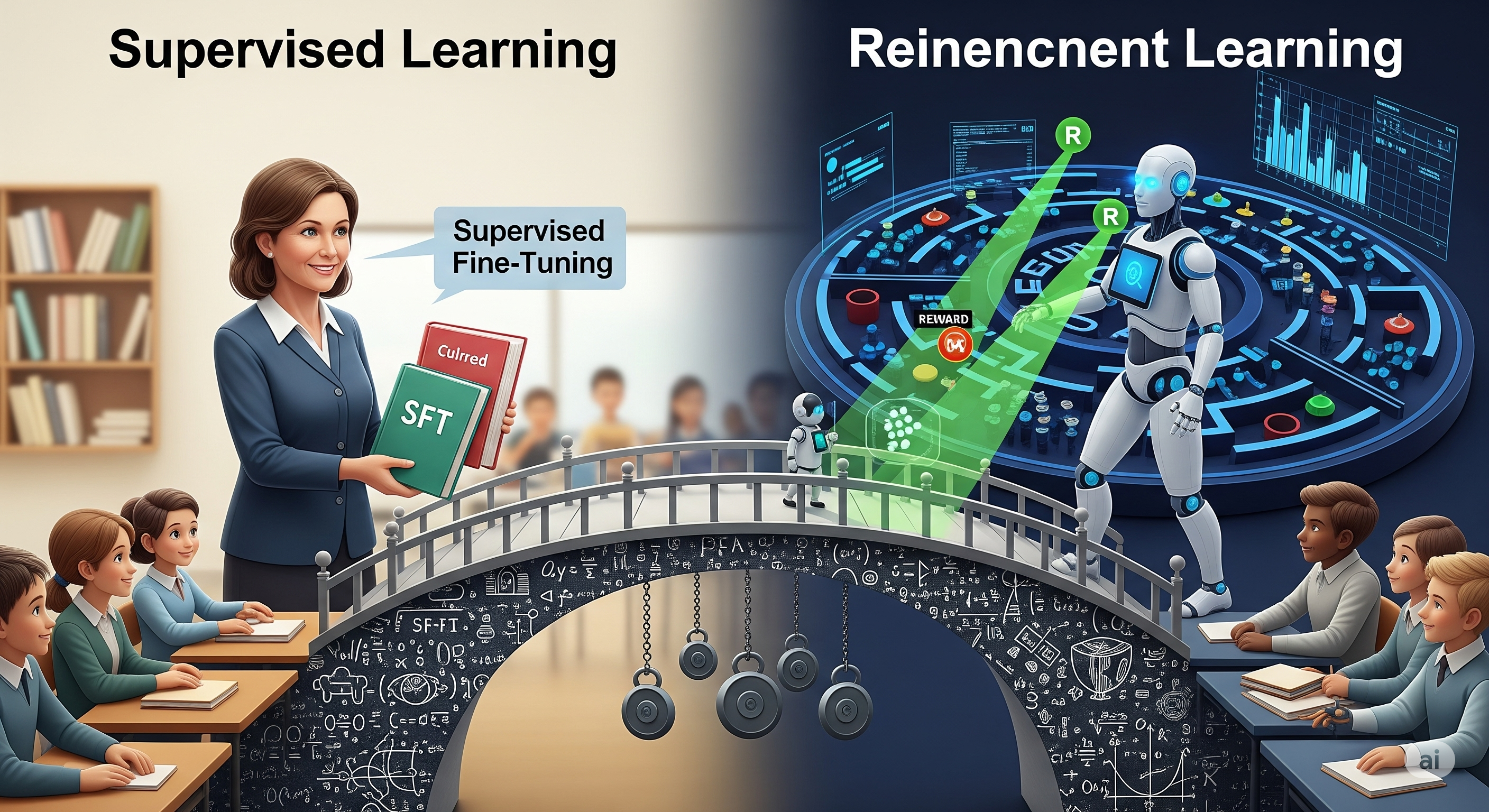
In the arms race to align large language models (LLMs), supervised fine-tuning (SFT) and reinforcement learning (RL) are often painted as competing paradigms. SFT is praised for its stability and simplicity; RL is heralded for its theoretical soundness and alignment fidelity. But what if this dichotomy is an illusion? A recent preprint from Chongli Qin and Jost Tobias Springenberg makes a bold and elegant claim: SFT on curated data is not merely supervised learning—it is actually optimizing a lower bound on the RL objective. ...

July 18, 2025 · 4 min · Zelina
Cover image

Red Flag on the Track: Why LLMs Still Struggle with Real Algorithmic Reasoning

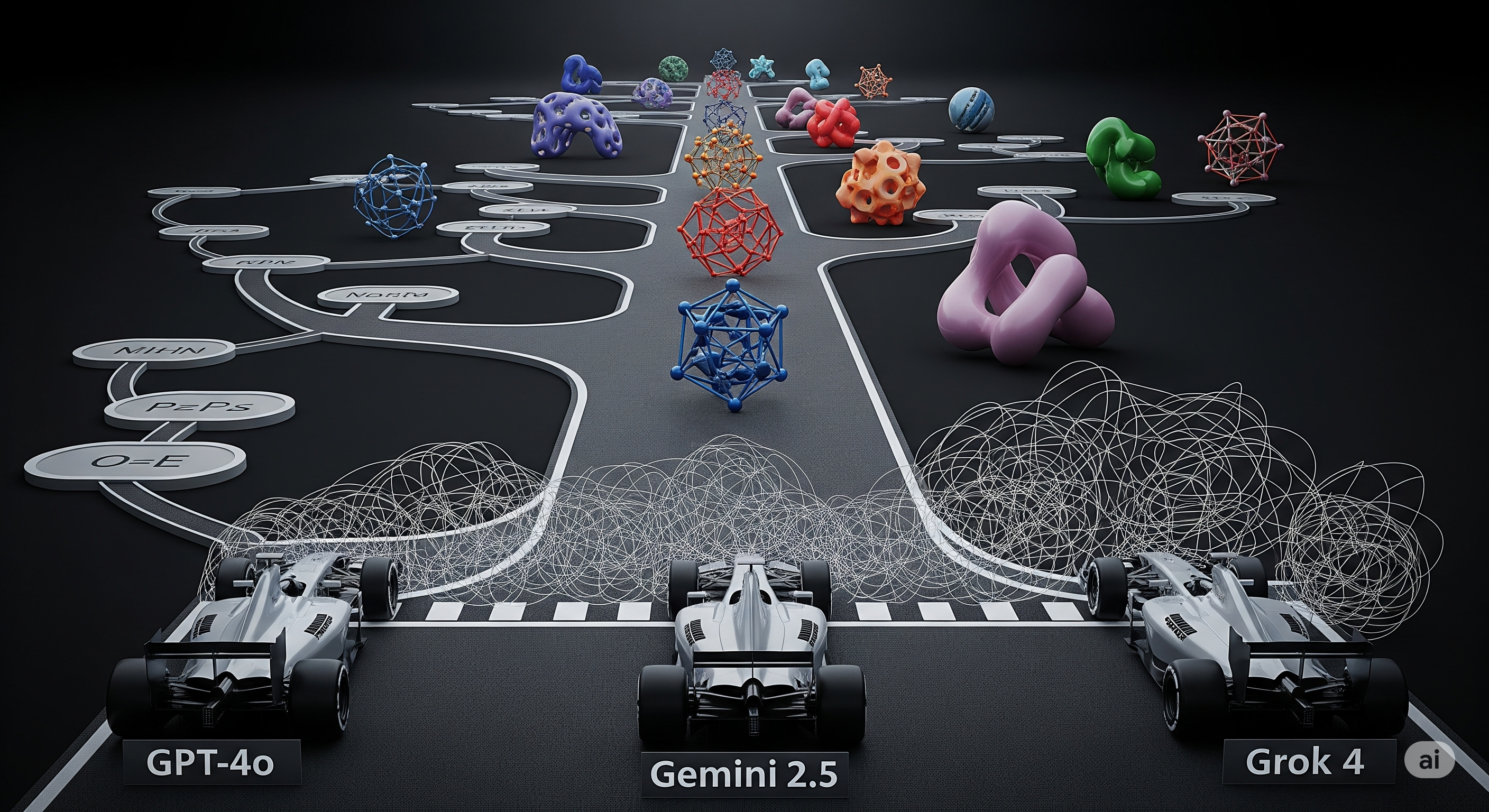
In the world of AI benchmarks, most roads lead to flashy competitions: solving coding puzzles, climbing Codeforces ratings, or passing Olympiad-level problems. But a new benchmark — FormulaOne — changes the race. It doesn’t ask, “Can you win a medal?” It asks, “Can you think like a researcher?” And the answer from today’s frontier LLMs? A resounding no. From Codeforces Champs to Research Rookies The authors of FormulaOne strip away the glitz of competitive programming and delve into something far more consequential: research-grade algorithmic problems grounded in Monadic Second-Order (MSO) logic over graphs. These aren’t out-of-distribution visual puzzles like ARC. They’re in-distribution, theoretically tractable problems designed with precision to demand multi-step symbolic reasoning, mathematical insight, and clean implementation. ...

July 18, 2025 · 4 min · Zelina
Cover image

Sketching a Thought: How Mental Imagery Could Unlock Autonomous Machine Reasoning

From Reaction to Reflection Modern AI models, especially language models, are stunningly capable at answering our queries. But what happens when there is no query? Can an AI reason about the world not just in reaction to prompts, but proactively — triggered by internal goals, simulated futures, and visual imagination? That’s the central question Slimane Larabi explores in his latest paper: “Can Mental Imagery Improve the Thinking Capabilities of AI Systems?” ...

July 18, 2025 · 3 min · Zelina
Cover image

Train of Thought: How Long-Haul RL Unlocks LLM Reasoning Diversity

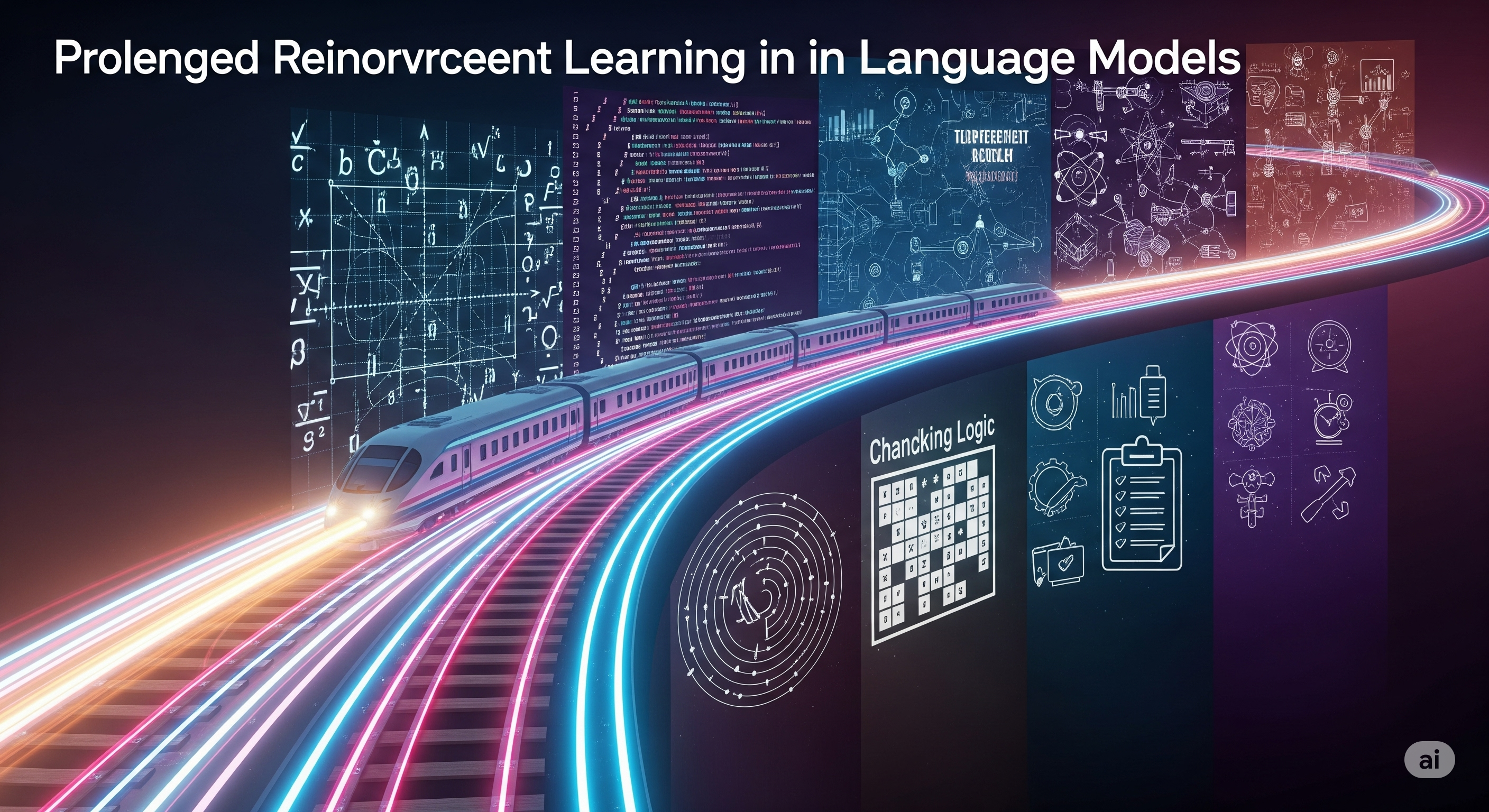
In the race to make Large Language Models (LLMs) reason like humans—or better—most researchers obsess over one thing: prompting. Chain-of-thoughts, few-shot demos, scratchpads, tools. But a new study from NVIDIA suggests something even more fundamental: it’s not just how you prompt them—it’s how long you train them. Their paper, Scaling Up RL: Unlocking Diverse Reasoning in LLMs via Prolonged Training, explores how stretching reinforcement learning (RL) over time unlocks broader, more stable, and more versatile reasoning in LLMs. This isn’t just about incremental gains—it’s about escaping reasoning ruts. ...

July 18, 2025 · 3 min · Zelina
Cover image

Beyond Search: RAG’s Awakening to Enterprise Spreadsheets

Retrieval-Augmented Generation (RAG) systems are fast becoming the connective tissue between Large Language Models (LLMs) and real-world business data. But while RAG systems excel at fetching relevant passages from documents, they often stumble when the data isn’t narrative but numerical. In enterprise environments, where structured formats like HR tables, policy records, or financial reports dominate, this mismatch has become a bottleneck. The paper “Advancing Retrieval-Augmented Generation for Structured Enterprise and Internal Data” by Chandana Cheerla proposes a much-needed upgrade: a RAG system that treats structured and tabular data as first-class citizens. It doesn’t just flatten tables into linear strings or hope LLMs can reason through semi-garbled inputs. It restructures the entire RAG pipeline to respect and preserve the meaning of tables, rows, and metadata. ...

July 17, 2025 · 4 min · Zelina
Cover image

Pricing Plans, Meet Prompt Engineering: LLMs and the Future of SaaS Monetization

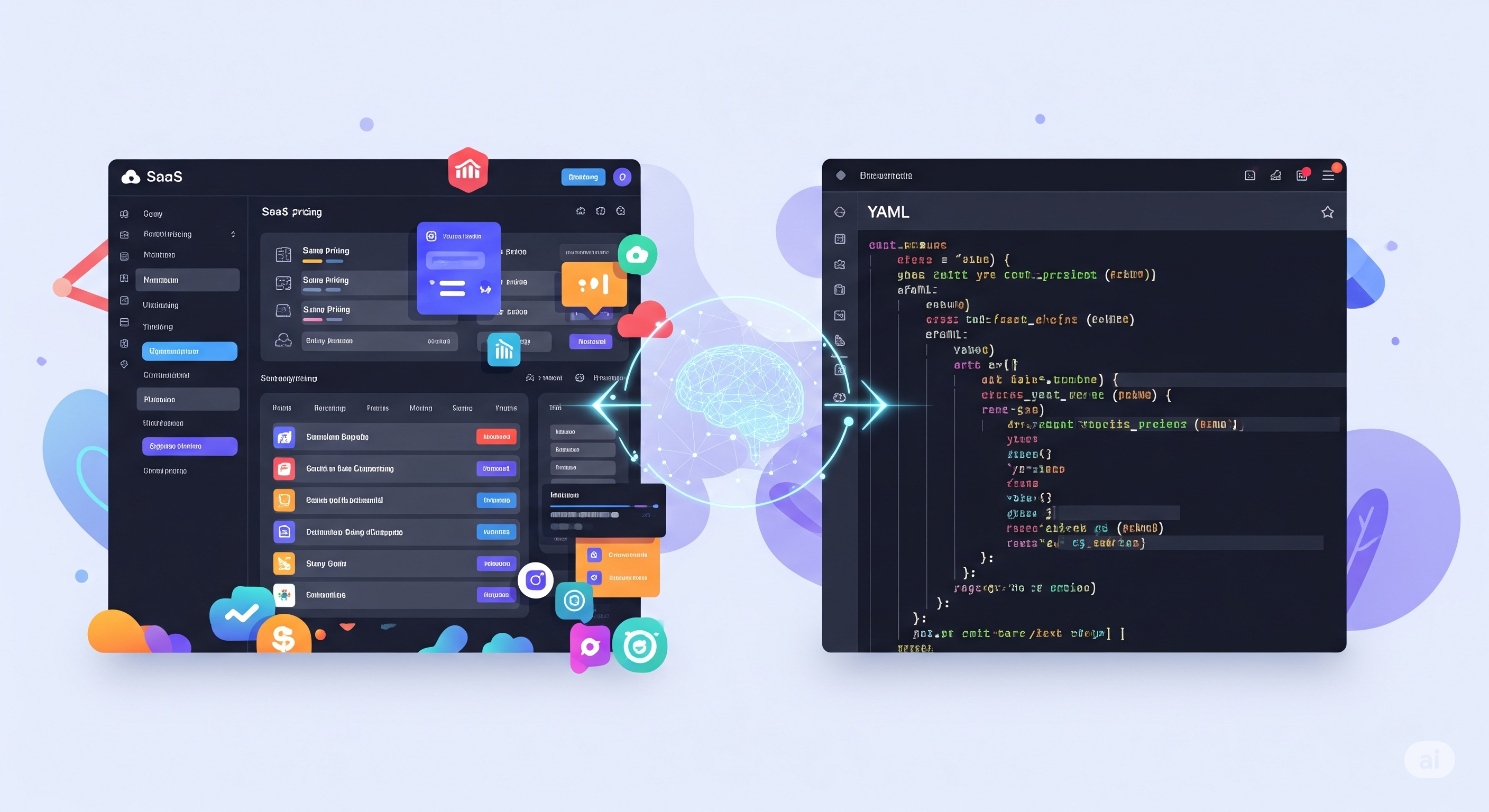
It’s no secret that SaaS pricing pages are often a tangled mess of human-made tables, unclear add-ons, and marketing jargon masquerading as feature distinctions. What was once a differentiator—flexible, modular pricing—is now a liability for scale. In this increasingly complex landscape, a new concept is emerging: intelligent pricing (or iPricing), where SaaS pricing becomes a machine-readable, dynamically evolving artifact. The paper “From Static to Intelligent: Evolving SaaS Pricing with LLMs” by Cavero et al. proposes a concrete path toward this transformation. At its core is AI4Pricing2Yaml, an LLM-driven pipeline that scrapes, parses, and restructures SaaS pricing pages into a standardized YAML format. This isn’t just about scraping HTML; it’s about turning pricing into a software component—one that can be audited, version-controlled, and analyzed like any other part of the stack. ...

July 17, 2025 · 3 min · Zelina
Cover image

Truth, Beauty, Justice, and the Data Scientist’s Dilemma

As AI systems become more capable of automating every stage of the data science workflow—from formulating hypotheses to summarizing results—it might seem we’re inching toward a world where “data scientist” becomes just another automated job title. But Timpone and Yang’s new framework, presented in their paper AI, Humans, and Data Science (2025), offers a powerful antidote to this narrative: a structured way to evaluate where humans are indispensable—not by resisting automation, but by rethinking our roles within it. ...

July 17, 2025 · 3 min · Zelina
Cover image

Beyond Stack Overflow: CodeAssistBench Exposes the Real Gaps in LLM Coding Help

The Trouble With Stack Overflow-Style Benchmarks Large language models (LLMs) have been hailed as revolutionizing programming workflows. But most coding benchmarks still test them like they’re junior devs solving textbook exercises. Benchmarks such as HumanEval, MBPP, and even InfiBench focus on code synthesis in single-turn scenarios. These tests make models look deceptively good — ChatGPT-4 gets 83% on StackEval. Yet in real development, engineers don’t just ask isolated questions. They explore, revise, troubleshoot, and clarify — all while navigating large, messy codebases. ...

July 16, 2025 · 4 min · Zelina