Cover image

Forecast First, Ask Later: How DCATS Makes Time Series Smarter with LLMs

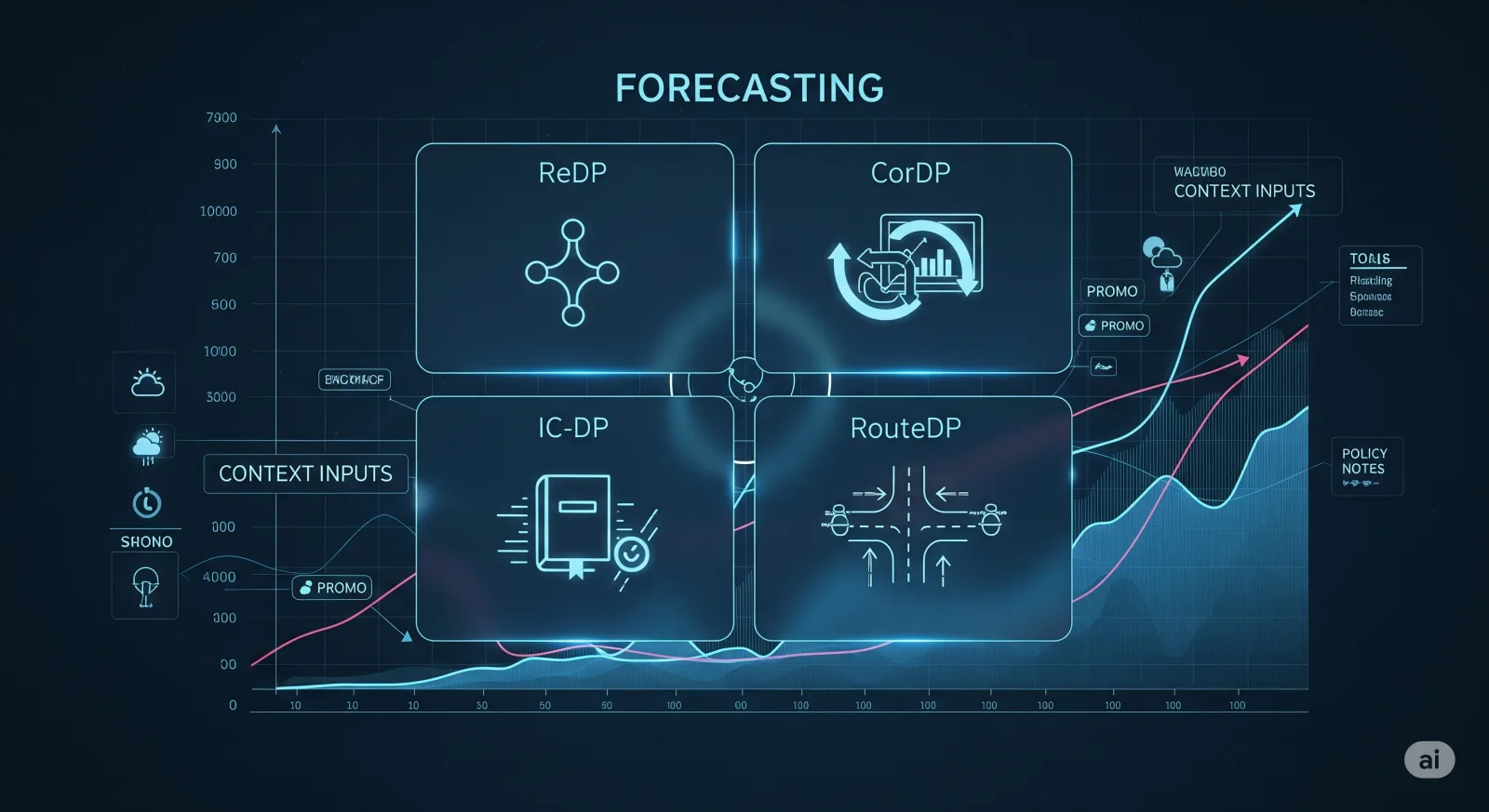
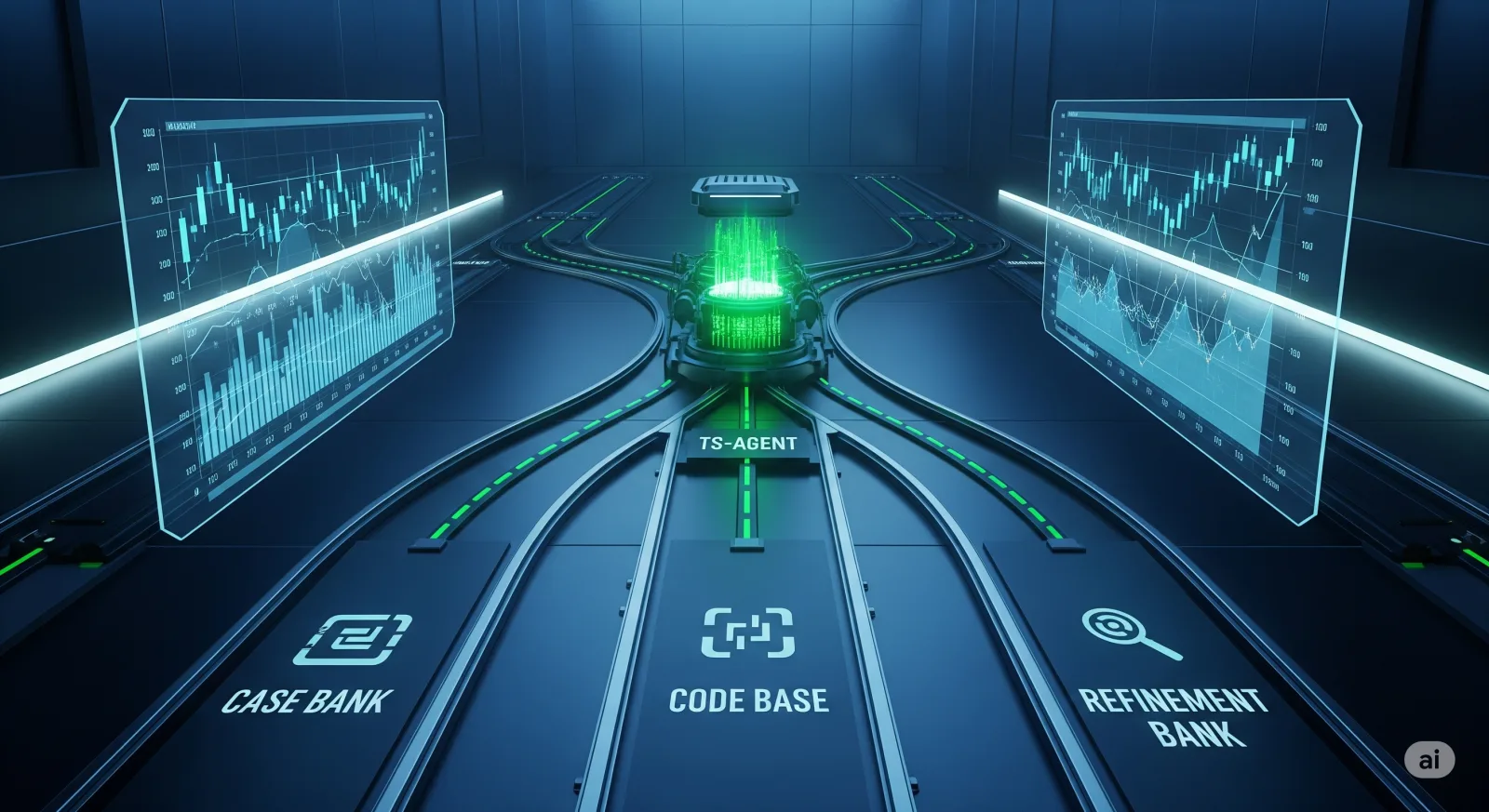
TL;DR for operators Forecasting teams usually ask the same question first: which model should we use? DCATS suggests a more operationally useful question: which related histories should this model learn from? The paper introduces DCATS, a Data-Centric Agent for Time Series, an LLM-agent framework that improves forecasting by selecting auxiliary time series for fine-tuning rather than by designing a new forecasting architecture.1 In the authors’ traffic forecasting study, GPT-4 Turbo reads metadata about nearby or similar California traffic sensors, proposes candidate neighbour sets, lets lightweight forecasting models test those proposals, and then refines the next round using validation error. ...

August 7, 2025 · 16 min · Zelina
Cover image

Causality in Stereo: How Multi-Band Granger Unveils Frequency-Specific Influence

TL;DR for operators Signals do not always influence each other on one clock. A machine vibration may create a fast alarm signature and a slower thermal drift. A brain region may interact through one rhythm quickly and another rhythm slowly. A market signal may move through intraday noise, weekly positioning, and slower macro repricing. Treating all of that as one blended time series is convenient. It is also a rather efficient way to throw away the thing you wanted to understand. ...

August 4, 2025 · 15 min · Zelina
Cover image

From Trendlines to Transformers: DeepSupp Redefines Support Level Detection

TL;DR for operators Support levels are usually treated as chart objects: a line, a zone, a Fibonacci retracement, a moving average, perhaps a hand-drawn artefact with suspicious confidence. DeepSupp reframes them as latent market states: patterns in how price, volume, VWAP, and related features move together over time.1 The paper’s useful contribution is the pipeline, not the marketing-friendly phrase “AI technical analysis.” DeepSupp builds rolling Spearman correlation matrices from price-volume features, sends those matrices through a multi-head attention autoencoder, compresses them into latent embeddings, and then uses DBSCAN clustering to map dense market states back into median price levels. In plainer language: it tries to find support zones by learning how market relationships evolve, rather than by assuming that yesterday’s visual line still deserves respect. ...

July 6, 2025 · 18 min · Zelina
Cover image

When Text Doesn’t Help: Rethinking Multimodality in Forecasting

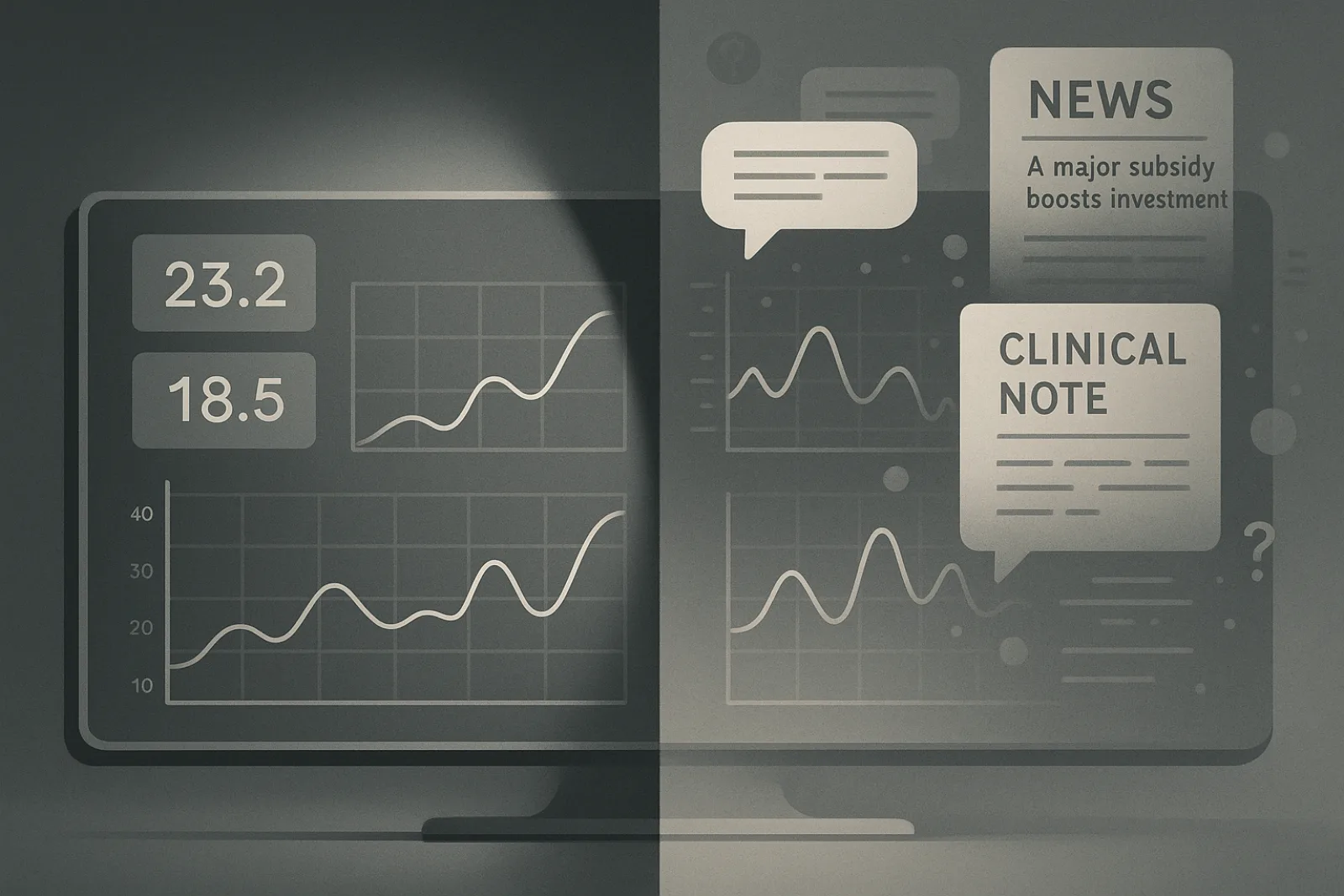
TL;DR for operators Text does not automatically make forecasts smarter. It often just makes the pipeline heavier. A new AWS study benchmarks multimodal time-series forecasting across 16 datasets and 7 domains, comparing time-series-only models, alignment-based multimodal models, and direct LLM prompting.1 The uncomfortable result is that multimodality is not a universal upgrade. Strong unimodal models still win on a substantial share of the benchmark, and the paper’s statistical tests do not support a blanket claim that adding text reliably improves accuracy. ...

June 30, 2025 · 15 min · Zelina