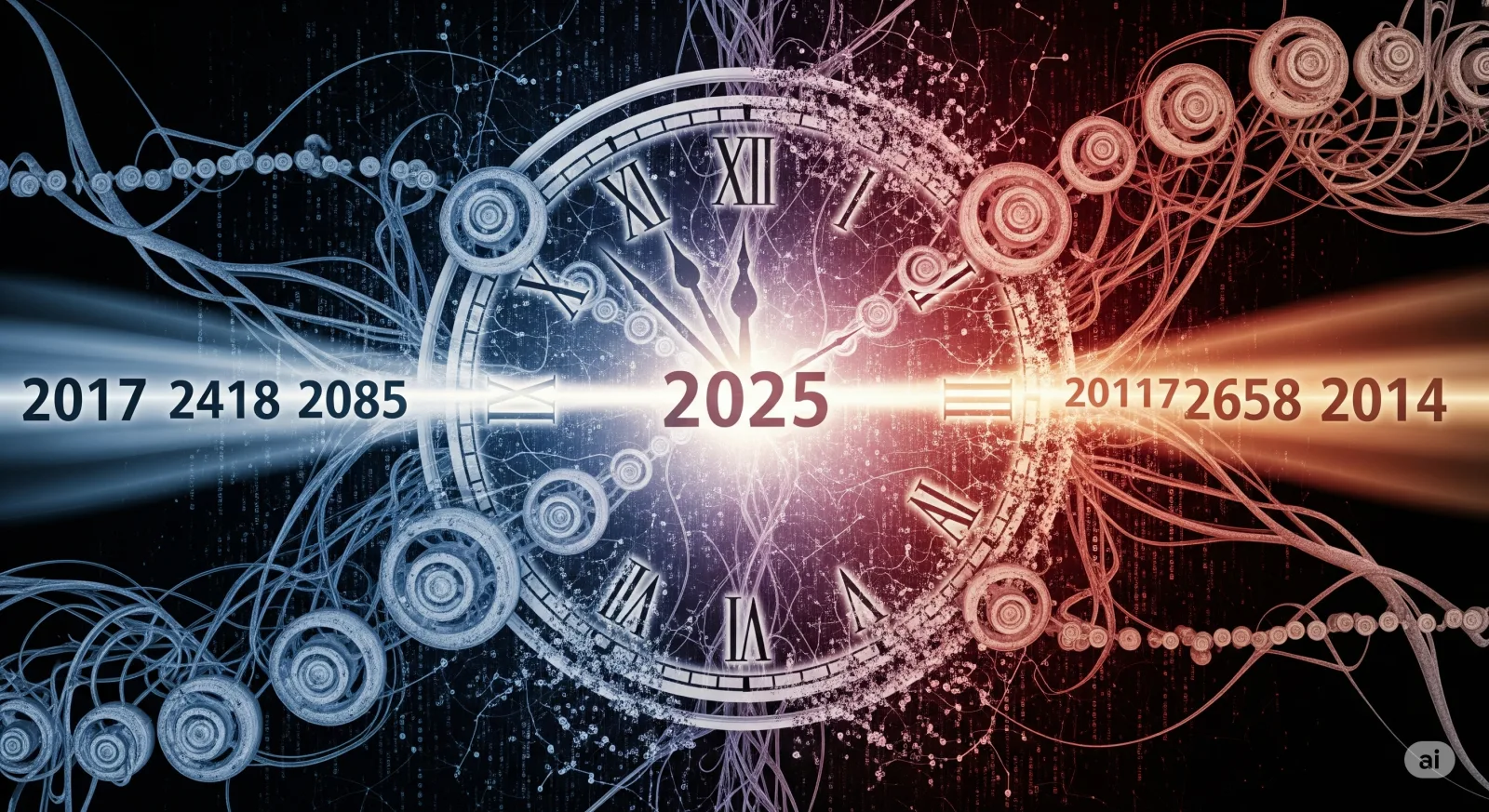
The Clock Inside the Machine: How LLMs Construct Their Own Time
TL;DR for operators Dates look harmless. They sit in spreadsheets, contracts, forecasts, audit trails, delivery plans, and board decks pretending to be objective little integers. The problem is that a language model may not treat them as just integers. A new paper, The Other Mind: How Language Models Exhibit Human Temporal Cognition, studies how 12 large language models judge similarity between years from 1525 to 2524.1 The authors find that larger models often organise years around a subjective reference point near the recent present, rather than simply comparing numerical distance. The models also show logarithmic compression: years farther from that reference point become less finely distinguished, in a pattern reminiscent of the Weber-Fechner law in human perception. ...