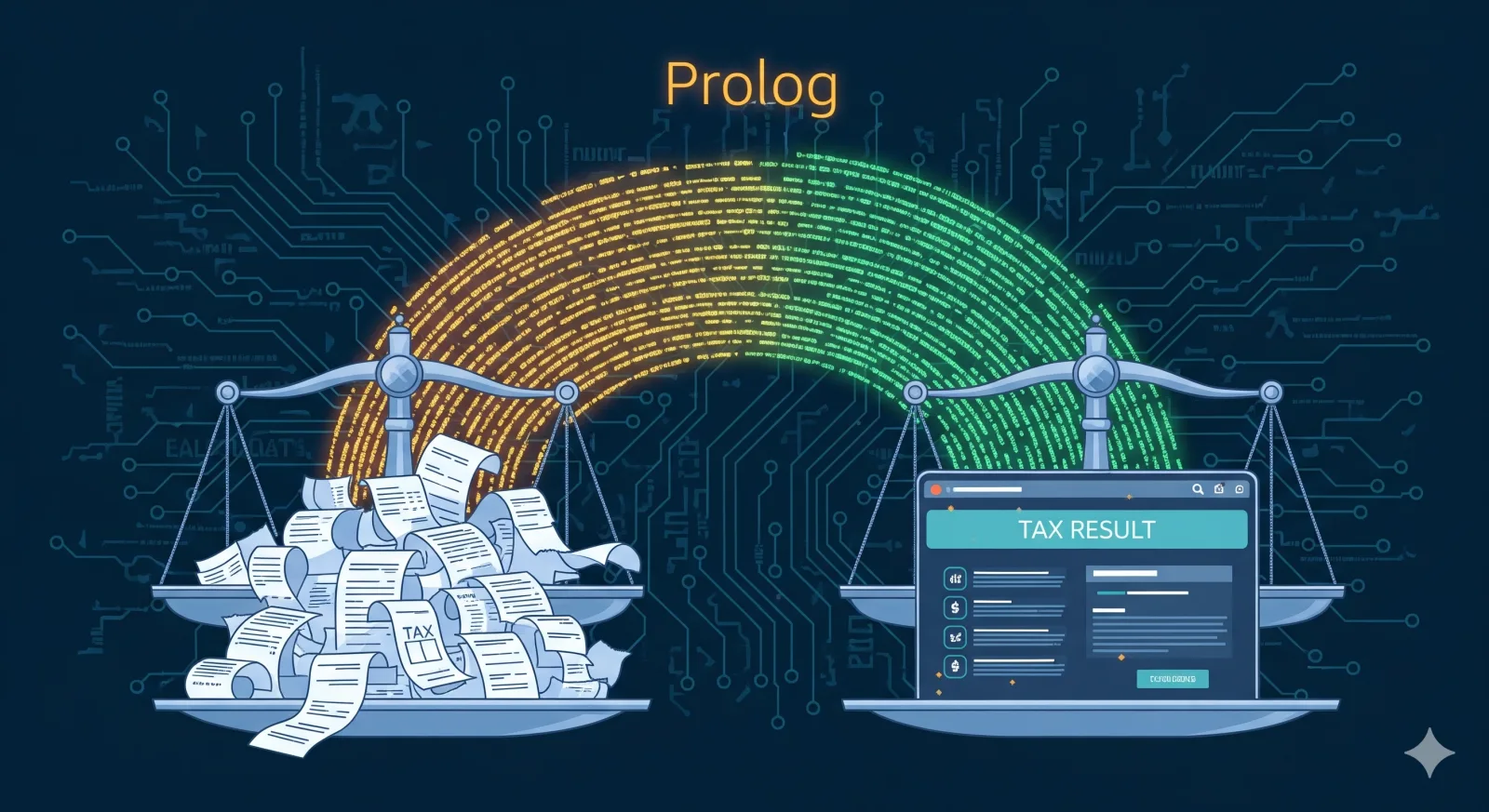
Prolog & Paycheck: When Tax AI Shows Its Work
TL;DR for operators Tax AI should not be judged by whether the model can produce a confident answer in fluent prose. That is how one builds a very polite liability machine. The useful pattern in this paper is architectural: let the language model translate statutory text and taxpayer facts into executable Prolog; let a symbolic solver compute the result; reject outputs that fail execution or disagree across independent attempts; then evaluate the system using an error-cost ledger, not just accuracy.1 The paper’s strongest practical message is therefore not “LLMs can do tax”. It is: high-stakes rule automation becomes more credible when the model is demoted from final authority to structured translator. ...