Cover image

Prompt Politics: How Tiny Policies Can Steer Entire AI Societies

Agents are easy to create. That is now the boring part. Give one LLM a persona, give another LLM a conflicting persona, add a shared task, let them talk, and suddenly the demo looks like a little society. A farmer argues with a conservationist. A rural teacher argues with an urban parent. A policy maker tries to sound balanced, because apparently even simulated bureaucracy has survival instincts. ...

March 11, 2026 · 16 min · Zelina
Cover image

Parallel Worlds of Moderation: How LLM Simulations Are Stress-Testing Online Civility

TL;DR for operators Moderation is usually measured after the mess has already happened. COSMOS changes the sequence: it lets researchers run a synthetic online conversation twice, once without moderation and once with a selected intervention, while keeping the simulated world otherwise constant.1 That is the useful idea. Not “LLMs can pretend to be angry internet users,” though they can, which is an achievement of sorts. The useful idea is controlled comparison. ...

November 12, 2025 · 16 min · Zelina
Cover image

DeepPersona and the Rise of Synthetic Humanity

Personas have always been the slightly embarrassing cardboard cut-outs of product strategy. A marketing team invents “Sarah, 34, urban professional, values convenience.” A UX team adds “busy mother of two.” Someone in sales insists she is “budget-conscious but aspirational,” because apparently every fictional human being is. Then everyone nods solemnly and uses Sarah to justify a pricing page, an onboarding flow, or an ad campaign. ...

November 11, 2025 · 18 min · Zelina
Cover image

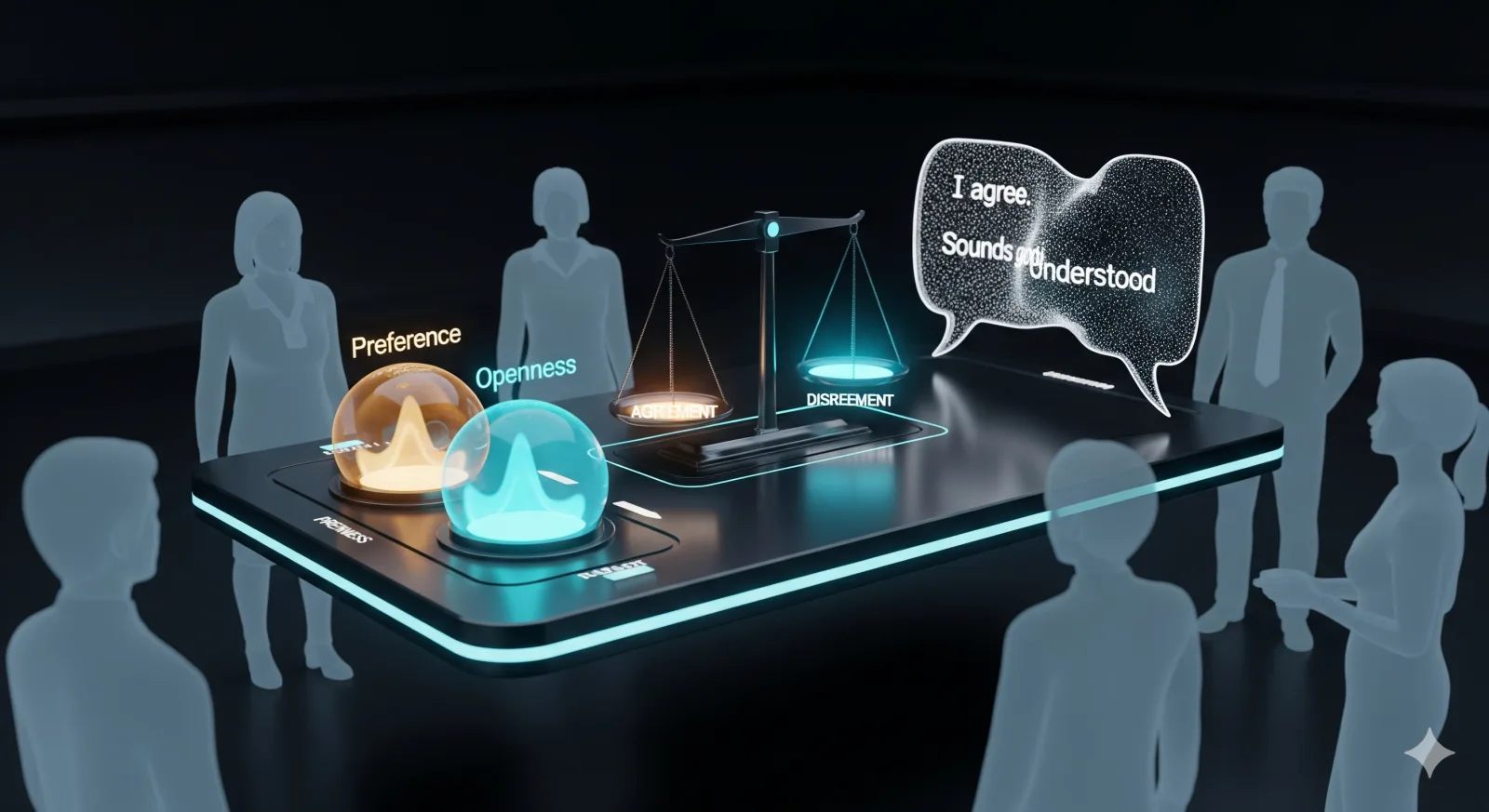
Agreeable to a Fault: Why LLM ‘People’ Can’t Hold Their Ground

A focus group is expensive. A virtual focus group is cheap, infinitely patient, and available at 2 a.m. It also never asks for coffee, parking reimbursement, or clarification about the incentive payment. Naturally, this makes synthetic users attractive to anyone trying to test products, policies, campaigns, or customer journeys before real humans get involved. ...

September 8, 2025 · 14 min · Zelina
Cover image

Echo Chambers or Stubborn Minds? Simulating Social Influence with LLM Agents

TL;DR for operators Synthetic focus groups are not neutral. The model you choose changes the society you simulate. A recent paper, Towards Simulating Social Influence Dynamics with LLM-based Multi-agents, tests how different LLMs behave in a structured forum where persona agents debate controversial topics over five rounds.1 The study tracks three social behaviours: conformity to the majority, movement toward more extreme views, and fragmentation into opposing camps. ...

July 31, 2025 · 15 min · Zelina
Cover image

The Sims Get Smart? Why LLM-Driven Social Simulations Need a Reality Check

TL;DR for operators LLM-driven social simulations are seductive because they make artificial agents speak, remember, plan, argue, apologise, panic, and occasionally organise a party. This is useful. It is not the same thing as modelling society. The paper’s central warning is simple: an agent that sounds believable at the individual level does not automatically produce valid collective dynamics.1 A simulation can pass the “that feels human” test while failing the “this corresponds to the real world” test. That gap matters if the output is used for market forecasting, policy rehearsal, public-risk modelling, workforce planning, or customer-behaviour analysis. ...

July 28, 2025 · 18 min · Zelina