
Cover image

When Agents Start Thinking Twice: Teaching Multimodal AI to Doubt Itself

Opening — Why this matters now Multimodal models are getting better at seeing, but not necessarily at understanding. They describe images fluently, answer visual questions confidently—and yet still contradict themselves when asked to reason across perception and language. The gap isn’t capability. It’s coherence. The paper behind this article targets a subtle but costly problem in modern AI systems: models that generate answers they cannot later justify—or even agree with. In real-world deployments, that gap shows up as unreliable assistants, brittle agents, and automation that looks smart until it’s asked why. ...

February 9, 2026 · 3 min · Zelina
Cover image

Evolving Minds: How LLMs Teach Themselves Through Adversarial Cooperation

The dream of self-improving intelligence has long haunted AI research—a model that learns not from humans, but from itself. Multi-Agent Evolve (MAE) by Yixing Chen et al. (UIUC, NVIDIA, PKU) gives that dream a concrete architecture: three versions of the same LLM—Proposer, Solver, and Judge—locked in a continuous loop of challenge, response, and evaluation. No human labels. No external verifiers. Just the model, teaching itself through the friction of disagreement. ...

November 1, 2025 · 4 min · Zelina
Cover image

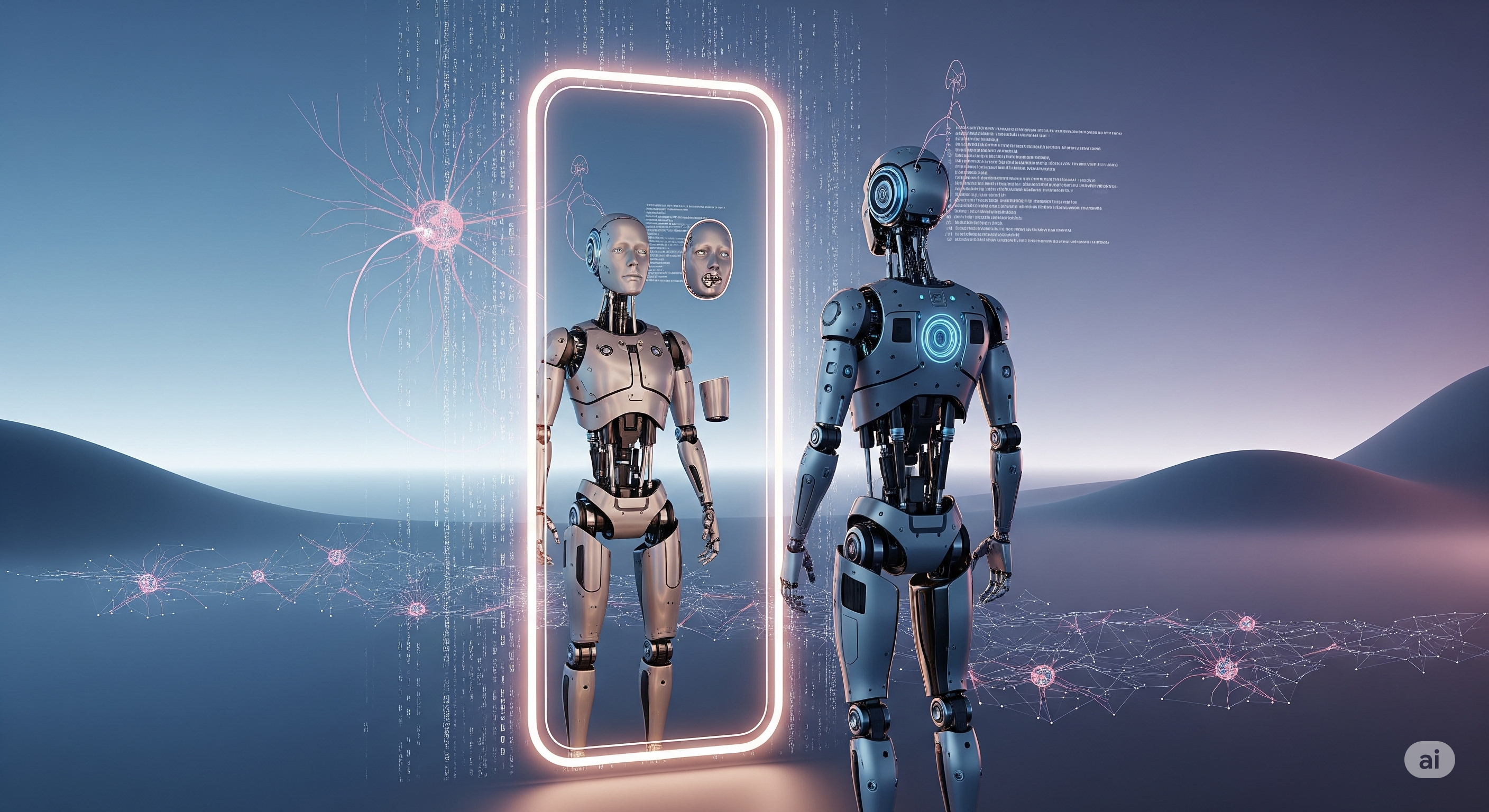
Mirror, Mirror in the Model: How MLLMs Learn from Their Own Mistakes

When multimodal large language models (MLLMs) like Gemini or Janus are asked to generate an image and then assess whether that image matches a prompt, you’d expect agreement. But a new study shows this harmony is often missing: the model’s own understanding branch disagrees with what its generation branch creates. This phenomenon—called self-contradiction—isn’t just an embarrassing quirk. As it turns out, it may be the most valuable feedback signal MLLMs have. ...

July 23, 2025 · 4 min · Zelina