Cover image

Diversity Pays: Why AI Research Agents Need More Than One Good Idea

Budget has a way of making AI agents less magical. On a slide, an AI research agent looks like a neat loop: read the task, propose an idea, write code, run an experiment, improve, repeat. In production, it looks more like a slightly caffeinated junior researcher with terminal access: sometimes brilliant, sometimes stubborn, and occasionally determined to spend four hours failing at the same doomed approach because the first idea sounded respectable. ...

November 21, 2025 · 15 min · Zelina
Cover image

The Benchmark Awakens: AstaBench and the New Standard for Agentic Science

Procurement meetings have a habit of turning AI agents into theatre. A vendor shows a polished research assistant. It finds papers, writes a summary, cites sources, maybe generates a small experiment plan. Everyone nods. Someone says “agentic workflow.” Someone else says “autonomous discovery.” A budget appears. The machine is declared practically scientific, which is convenient, because the machine itself has not yet been asked to survive the boring parts of science: retrieval under controlled conditions, code execution, data analysis, experimental reproduction, hypothesis testing, and the small matter of completing all required steps without wandering into the digital bushes. ...

October 31, 2025 · 13 min · Zelina
Cover image

Automate All the Things? Mind the Blind Spots

A research report lands on your desk. It has a neat abstract, respectable tables, clean code attached, and just enough methodological language to sound like someone suffered through the usual academic rituals. Except this time, no one did. An AI scientist system generated the idea, wrote the code, ran the experiments, selected the result, and drafted the paper. ...

September 14, 2025 · 18 min · Zelina
Cover image

From PDF to PI: Turning Papers into Productive Agents

Every R&D team has a shelf of papers that are theoretically useful and practically booby-trapped. The abstract is promising. The method is relevant. The results look transferable. Then reality arrives wearing a conda error message: the repository has three setup paths, two notebooks, one undocumented dependency, and a tutorial that assumes you already know the answer. The paper has been published. The method has not, in any serious operational sense, been delivered. ...

September 12, 2025 · 17 min · Zelina
Cover image

Peer Review, But Make It Multi‑Agent: Inside aiXiv’s Bid to Publish AI Scientists

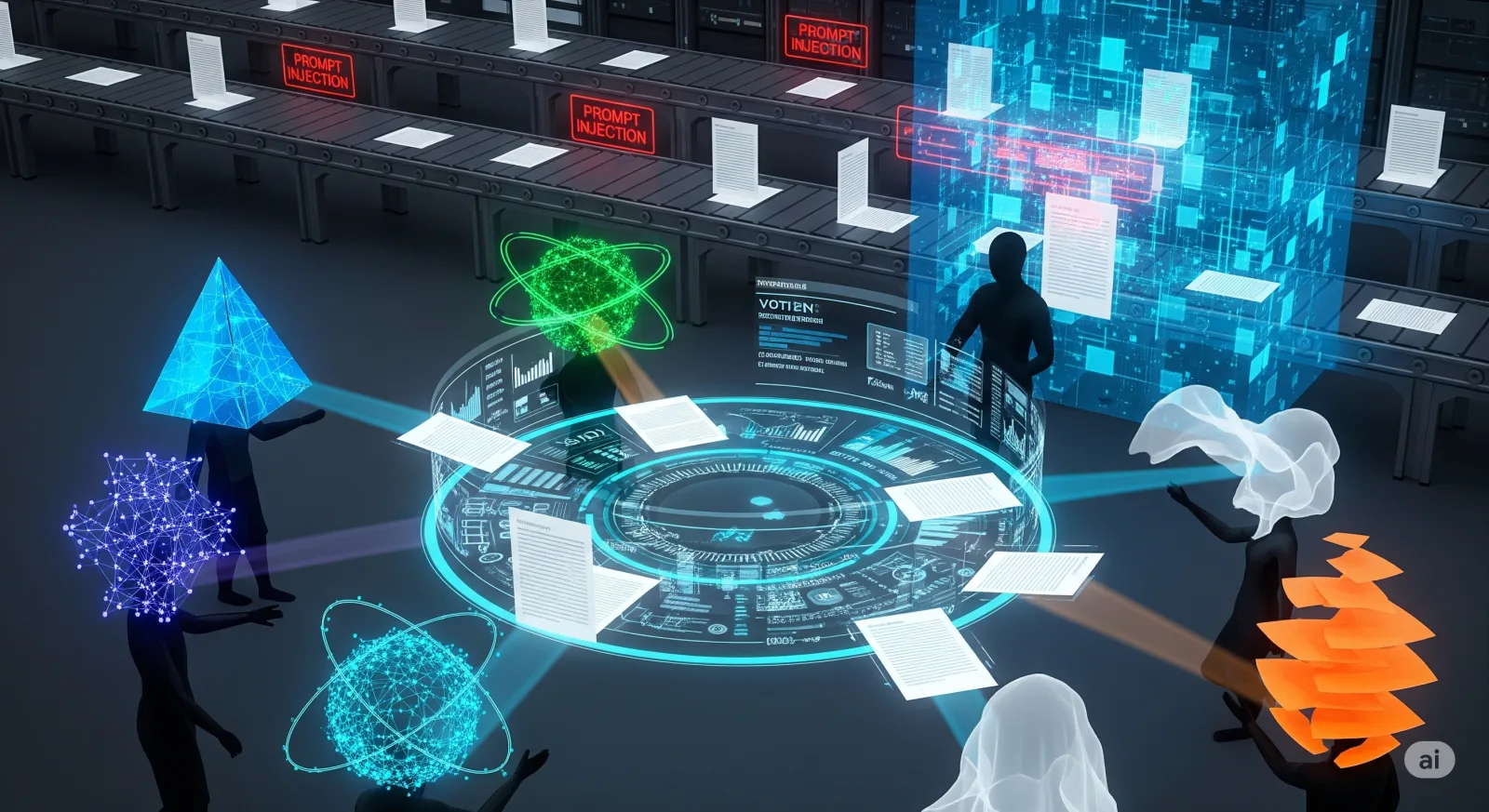
TL;DR for operators aiXiv is not mainly a claim that AI scientists are ready to flood the world with publishable research and we should all politely applaud the machines. It is more interesting than that, and less comforting. The paper proposes an infrastructure layer for AI-generated science: structured submission, automated review, retrieval-grounded feedback, revision loops, pairwise comparison, prompt-injection detection, multi-model voting, provisional acceptance, DOI-style publication, APIs, MCP interfaces, and public discussion.1 ...

August 24, 2025 · 17 min · Zelina
Cover image

IRB, API, and a PI: When Agents Run the Lab

TL;DR for operators Lab work is mostly not white coats and dramatic discoveries. It is protocol design, ethics paperwork, recruitment settings, data cleaning, model diagnostics, figure formatting, reference checking, and the slow discovery that your beautiful hypothesis has politely declined to exist. That is what makes this paper interesting. Virtuous Machines: Towards Artificial General Science presents an agentic AI system that did not merely write a speculative research proposal. It designed and executed an online human-participant experiment, collected data through Prolific and Pavlovia, analysed the results, produced figures and tables, wrote manuscripts, and ran peer-style review over the outputs.1 ...

August 20, 2025 · 16 min · Zelina
Cover image

The Rise of the Self-Evolving Scientist: STELLA and the Future of Biomedical AI

TL;DR for operators STELLA is not interesting because it calls itself a “self-evolving scientist”. The internet has suffered enough from ambitious nouns. It is interesting because it attacks a real operational bottleneck in biomedical research: the best answer often requires not just reasoning, but finding the right database, building the right analysis environment, running code, checking intermediate results, and deciding when the current workflow is inadequate. ...

July 13, 2025 · 15 min · Zelina