Cover image

The Image Looks Good. But Whose Taste Is It?

TL;DR for operators A retailer can generate an attractive product image that has little connection to the customer viewing it. A creator can receive a polished illustration that looks unlike anything they would normally publish. In both cases, conventional image-quality scores may miss the personalization failure. Research on personalized image generation from user histories introduces two benchmarks and a system called Pearl that reasons over historical activity, generates an image, and inspects the result before revising its prompt.1 Pearl improves several offline personalization measures, but does not consistently produce the most aesthetically appealing or visually similar images. ...
November 1, 2026 · 8 min · Zelina
Cover image

The Retry Is Not the Lesson: How ReTeach Learns from Failed Answers

TL;DR for operators A model generates an incorrect answer. An automated verifier can reject it but cannot explain the mistake. ReTeach1 shows how that failure can become training material without a worked solution or a larger external teacher. The model’s teacher revisits unsuccessful attempts, reflects on possible errors, and retries. But the successful retry is not simply copied into the student’s training targets. Instead, the teacher uses its additional reasoning context to produce better-informed token predictions along the student’s original response. The student learns from those predictions without needing that context itself. On SciKnowEval-Physics, explicit reflection achieves 64.24% accuracy, versus 62.91% with retries but no reflection (Section 4.3, Figure 4). ...

October 30, 2026 · 8 min · Zelina
Cover image

Think Again, but Make It Count: Train Reflection Before You Spend More Tokens on It

TL;DR for operators A reasoning model can spend extra tokens reconsidering its answer and still fail to repair the mistake. Worse, unnecessary reconsideration can disturb reasoning that was already correct. The paper studied here treats that as a training problem rather than an invitation to add another inference-time review loop. It first filters a model’s own critiques using verifiable ground truth, then trains the model on the surviving examples. A second reinforcement-learning stage rewards both final-answer correctness and the quality of the reflective step itself. ...

September 16, 2026 · 7 min · Zelina
Cover image

Failures, Taxonomized: How Multi‑Level Reflection Turns Agents Into Self‑Learners

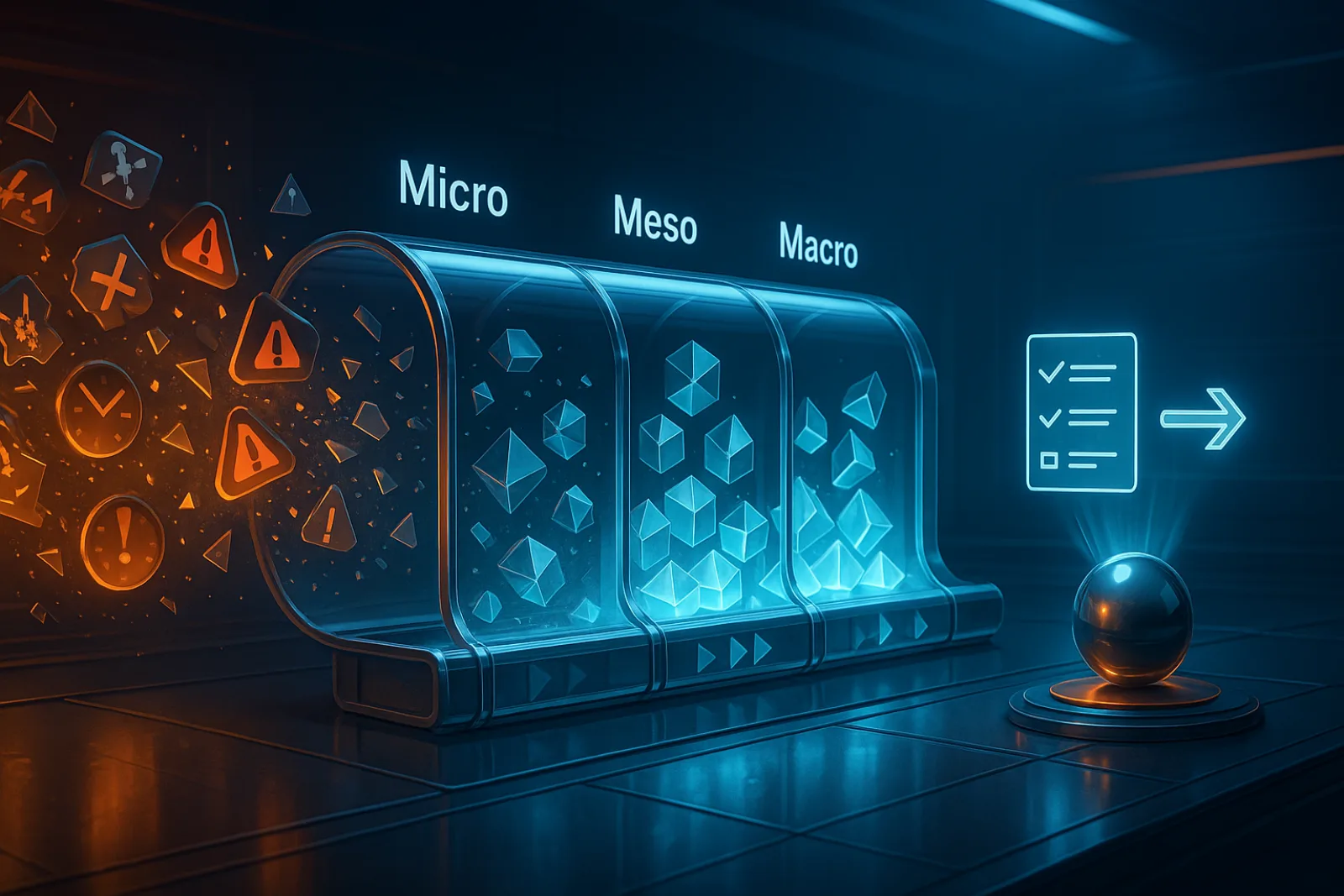
Failure is usually treated as waste. The demo breaks, the agent apologises, someone adds a prompt patch, and everyone pretends the next retry will be more mature. Very enterprise. Very ceremonial. The SaMuLe paper makes a more useful claim: failed agent runs are not just embarrassing logs. They are the curriculum.1 More precisely, they are raw material for a structured reflection pipeline that turns messy trajectories into error taxonomies, cross-task lessons, and finally a small retrospective model trained to diagnose future failures. ...

October 2, 2025 · 14 min · Zelina