Cover image

The Crystal Ball Was a Search Loop

TL;DR for operators Lab automation is not the story here. The story is search discipline. The paper introduces HACO, a human–AI co-discovery system that tries to develop a better crystal structure prediction algorithm by searching across generative-modeling ideas, coding candidates, training them, evaluating them, and refining the winners. The system identifies masked generative modeling, specifically MaskGIT from computer vision, as a transferable idea for crystal structure prediction. With sparse human steering, it turns that idea into MaskGXT, a masked discrete-token transformer for generating crystal structures from compositions.1 ...


July 7, 2026 · 19 min · Zelina
Cover image

The Solver Was Fine. The Premises Got Lost.

TL;DR for operators SciR is a benchmark for a problem that enterprise AI teams keep trying to flatten into one metric: can a model reason scientifically?1 The more useful question is less flattering and more operational: did the model fail because it could not infer the answer, or because it could not recover the premises from the scientific mess placed in front of it? ...

June 23, 2026 · 19 min · Zelina
Cover image

The Parallel Mind: How AIRA2 Turns AI Research from Guesswork into Scalable Discovery

Research has a waiting-room problem. A human team proposes an experiment, waits for the training run, checks the metric, argues about whether the result is real, then decides what to try next. The cycle is familiar, expensive, and mildly theatrical. AI research agents promise to compress that loop. Give the agent a benchmark, a compute budget, and a tool environment; let it search; harvest better models at the end. Convenient. Also, if done naively, a beautiful machine for producing confident nonsense at GPU speed. ...

March 30, 2026 · 18 min · Zelina
Cover image

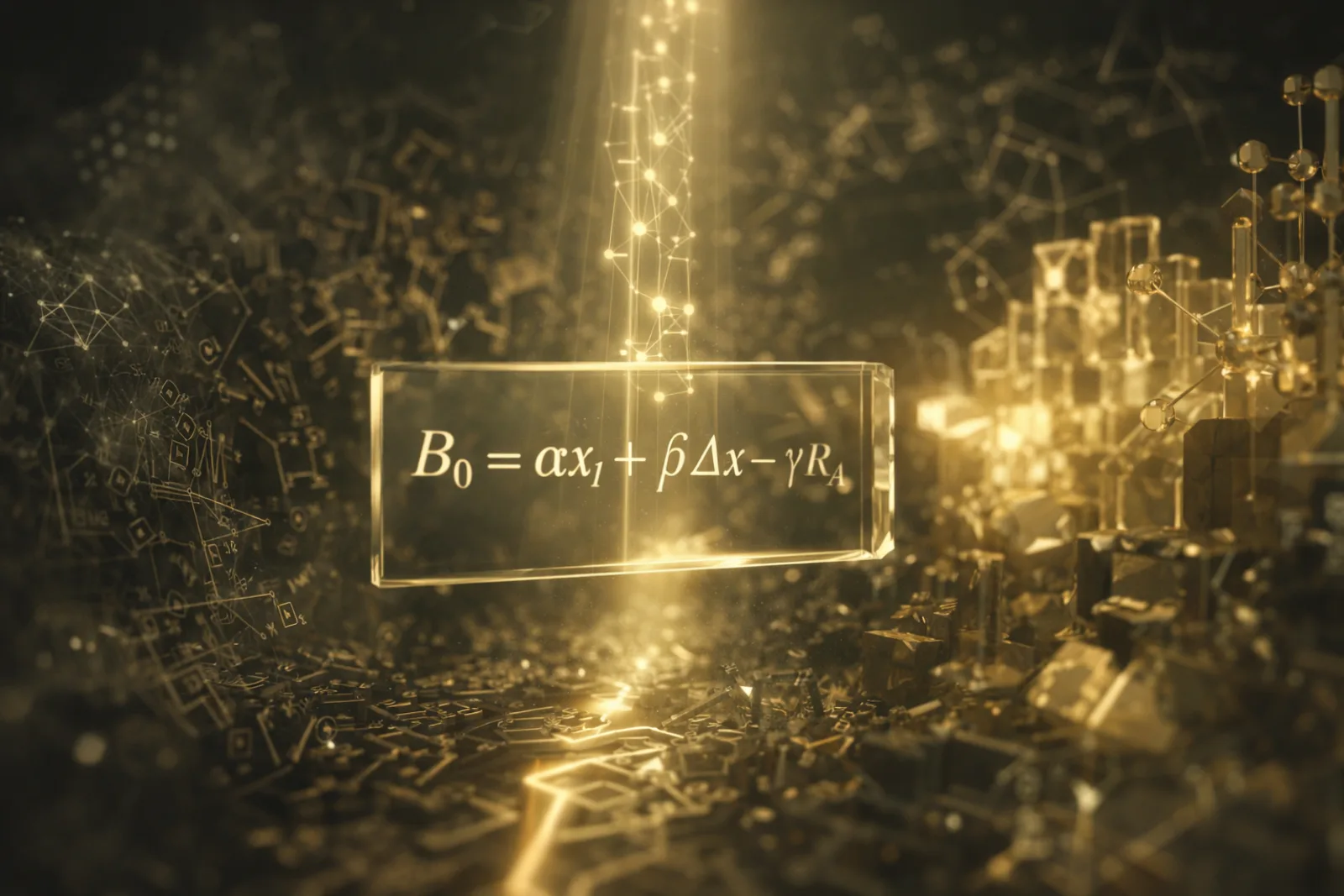
When LLMs Learn Physics: Taming Symbolic Regression in Materials Science

Formula discovery sounds like the part of science where artificial intelligence should behave like a heroic mathematician: stare at data, discover a law, and write down a clean equation while everyone else politely applauds. That is the cinematic version. The actual engineering problem is less glamorous and much more useful. Symbolic regression already searches for equations. Given enough variables, operators, constants, and patience, it can produce formulas that fit data. The trouble is that “fits data” and “means something physically” are not the same sentence. In a high-dimensional materials dataset, symbolic regression can wander through a forest of plausible-looking algebra and return a formula that is accurate, ornate, and scientifically suspicious. A spreadsheet can also produce a trendline. We do not usually call that physics. ...

March 1, 2026 · 16 min · Zelina
Cover image

Think Like a Scientist: When LLMs Stop Guessing and Start Reasoning

Factory dashboards are full of curves. Temperature curves, vibration curves, pressure curves, yield curves, defect curves. Most AI systems are happy to predict the next point on the curve and call it intelligence. Useful, yes. Scientific, not quite. Engineers often want something more stubbornly old-fashioned: an equation. Not because equations look elegant in a slide deck, although they do help meetings feel temporarily civilized. They want equations because equations can be inspected, simulated, challenged, simplified, embedded into control systems, and argued over by humans who still prefer causes to vibes. ...

February 13, 2026 · 15 min · Zelina
Cover image

From Benchmarks to Beakers: Stress‑Testing LLMs as Scientific Co‑Scientists

Benchmarks are clean. Research is not. A benchmark asks a model to answer a question, then politely stops. A research workflow asks the model to form a hypothesis, test it, read the result, notice what went wrong, adjust the plan, and try again without wandering into scientific nonsense. One is a quiz. The other is a beaker with a budget, a deadline, and a surprisingly expensive simulation queue. ...

December 18, 2025 · 16 min · Zelina
Cover image

Fragments, Feedback, and Fast Drugs: When Generative Models Grow a Spine

A lab does not slow down because nobody can generate molecules. That is the polite fiction. In many drug discovery workflows, candidate molecules can be generated in bulk. The slower part comes after generation: chemists inspect what the model proposes, explain what looks wrong or promising, and then someone has to translate that feedback into the model’s objective function. This “someone” is usually an AI engineer who understands the code but not necessarily the medicinal chemistry intuition. The chemist understands the target, the scaffold, and the quiet reasons a molecule feels suspicious. The model understands none of that unless the translation layer works. ...

November 26, 2025 · 15 min · Zelina
Cover image

The Rise of FreePhD: How Multiagent Systems are Reimagining the Scientific Method

A broken file link is not usually where scientific revolutions begin. It is, however, where many automated workflows die. That is why the most revealing moment in the freephdlabor paper is not the grand claim about personalised AI research groups. It is the rather unromantic episode where the system tries to write a paper, discovers that the experiment data are missing because of a failed symlink, attempts workarounds, fails validation, reports the failure, gets routed back through resource preparation, rebuilds the workspace correctly, and only then proceeds to manuscript generation.1 ...

October 25, 2025 · 15 min · Zelina
Cover image

Innovation, Agentified: How TRIZ Got Its AI Makeover

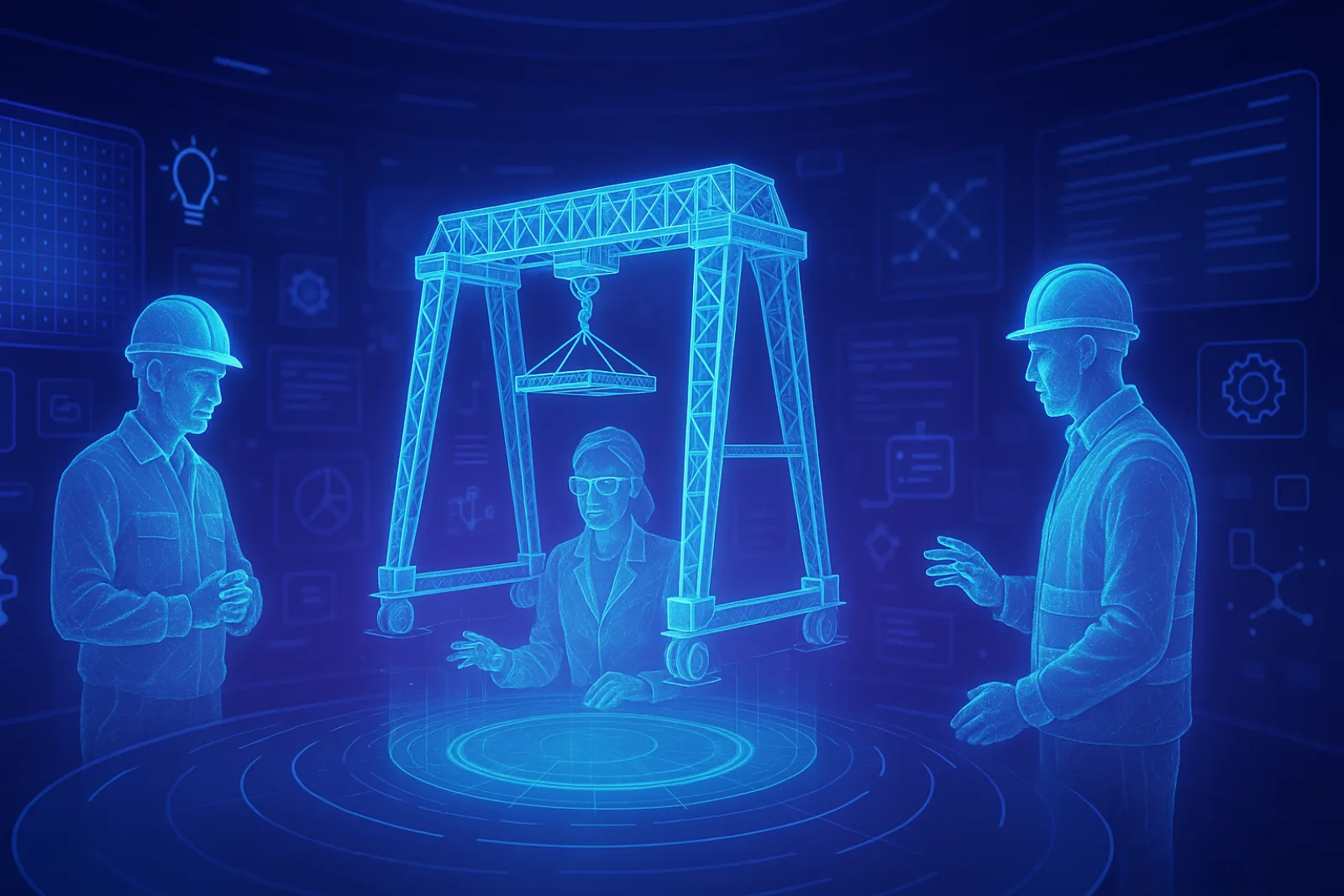
TL;DR for operators A crane is a useful place to test agentic innovation because the problem is painfully concrete: move heavy loads faster, avoid dangerous swinging, prevent overheating, and do not accidentally turn productivity into an incident report. The paper behind TRIZ Agents uses exactly this kind of gantry-crane improvement problem to test whether a multi-agent LLM system can follow the TRIZ method and produce plausible engineering ideas.1 ...

June 24, 2025 · 15 min · Zelina