Cover image

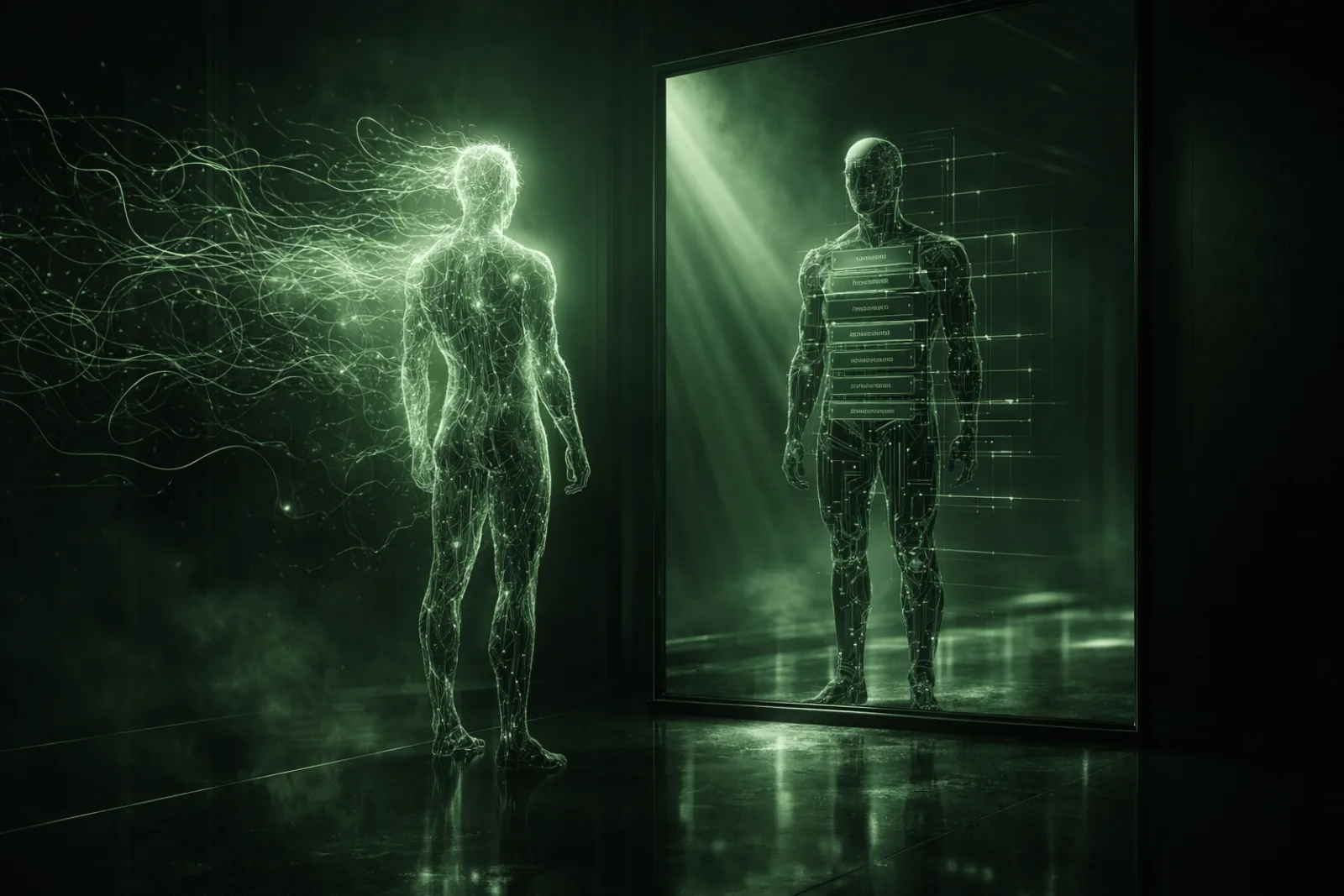
Mirror, Mirror on the LLM: Teaching Models to Think About Their Thinking

Evidence is not the same as judgment. Anyone who has watched an AI assistant work through a multi-document question has seen the strange version of this failure. The model finds the relevant fact. It even says something that looks like the right answer. Then, a few paragraphs later, it invents an extra condition, follows that condition with great confidence, and lands somewhere else. ...

February 28, 2026 · 15 min · Zelina
Cover image

Signal Over Noise: Why Multimodal RL Needs to Know What to Ignore

Audio. Video. Subtitles. The standard instinct is to send all of them into the model and hope the transformer performs its usual magic trick: turn a messy pile of signals into a useful answer. This instinct is understandable. It is also expensive, noisy, and occasionally a magnificent way to teach the model the wrong lesson. ...

February 14, 2026 · 18 min · Zelina
Cover image

When Agents Start Thinking Twice: Teaching Multimodal AI to Doubt Itself

A model that fails its own eye test Mirror. That is where the problem becomes easy to see. Ask a multimodal model to generate an image of a plush lion toy in front of a mirror. The model may produce something plausible at first glance: lion, mirror, warm lighting, adorable synthetic confidence. Then ask the same model, through its understanding branch, whether the image makes physical sense. Suddenly it notices the issue: if the toy faces the camera, the mirror should mostly show its back, not another front-facing lion. ...

February 9, 2026 · 14 min · Zelina
Cover image

Replay the Losses, Win the Game: When Failed Instructions Become Your Best Training Data

Failure logs are usually treated as evidence for the prosecution. A model is asked to produce a concise compliance summary with three bullet points, mention two risks, avoid prohibited claims, and end with a recommendation. It produces three bullets, correctly identifies the risks, avoids the prohibited claims—and forgets the recommendation. Under a strict binary reward, the response receives a zero. Under a partial-credit reward, it might receive 0.75. The first signal says nothing useful happened. The second says something useful happened, but not precisely what. ...

December 30, 2025 · 18 min · Zelina
Cover image

Spin Doctors: Why RL Fine‑Tuning Mostly Rotates, Not Reinvents

TL;DR for operators If your fine-tuned model gets better on the training task while quietly becoming worse outside it, the problem may not be that the model “lost intelligence”. It may have rotated its useful internal directions away from broadly generalizable behaviour. The paper behind this article studies SFT followed by PPO-style RL on two open LLMs using a controlled arithmetic benchmark, then inspects the weight matrices through singular-value decomposition.1 The pattern is clean enough to be operationally interesting: OOD performance peaks early during SFT, falls as SFT continues, and can be substantially restored by RL when the SFT checkpoint is only moderately degraded. But if SFT pushes the model too far into a specialized regime, RL is no longer a reliable rescue crew. Apparently even reinforcement learning has limits. Who knew. ...

August 25, 2025 · 14 min · Zelina
Cover image

Delta Force: How Weak Models are Secretly the Best Teachers

TL;DR for operators Training budget is usually where elegant AI strategy goes to die. The paper behind this article argues that preference tuning does not always need a superior teacher response. It may only need a useful contrast. A model can improve by learning that one weak answer is better than an even weaker one, even when neither answer is as good as what the model can already produce.1 ...

July 9, 2025 · 17 min · Zelina