Cover image

MirrorTok: When AI Builds a Twin of the Algorithm

MirrorTok: When AI Builds a Twin of the Algorithm Feed. That is the business unit now. Not the app, not the content library, not even the recommendation model by itself. The feed is the place where creators learn what to make, users learn what they like, and the platform learns which behaviors deserve more distribution. Everyone is adapting to everyone else, at machine speed, while the dashboard politely pretends that yesterday’s metrics still describe tomorrow’s system. ...


March 15, 2026 · 16 min · Zelina
Cover image

When Aligned Models Compete: Nash Equilibria as the New Alignment Layer

Attention is a strange boss. It does not simply reward the best content, the most balanced opinion, or the most socially useful answer. It rewards whatever survives the rules of the environment. That distinction matters once AI systems stop being isolated chatbots and start behaving like a population: autonomous accounts, synthetic creators, enterprise agents, customer-facing bots, negotiation assistants, research agents, and ranking-aware content machines. Each one may be aligned in the usual single-model sense. Each one may pass safety checks. Each one may avoid obvious toxicity. Then they are released into the same market for attention, engagement, approval, conversion, or influence. ...

February 9, 2026 · 16 min · Zelina
Cover image

Peer Review, But Make It Multi‑Agent: Inside aiXiv’s Bid to Publish AI Scientists

TL;DR for operators aiXiv is not mainly a claim that AI scientists are ready to flood the world with publishable research and we should all politely applaud the machines. It is more interesting than that, and less comforting. The paper proposes an infrastructure layer for AI-generated science: structured submission, automated review, retrieval-grounded feedback, revision loops, pairwise comparison, prompt-injection detection, multi-model voting, provisional acceptance, DOI-style publication, APIs, MCP interfaces, and public discussion.1 ...

August 24, 2025 · 17 min · Zelina
Cover image

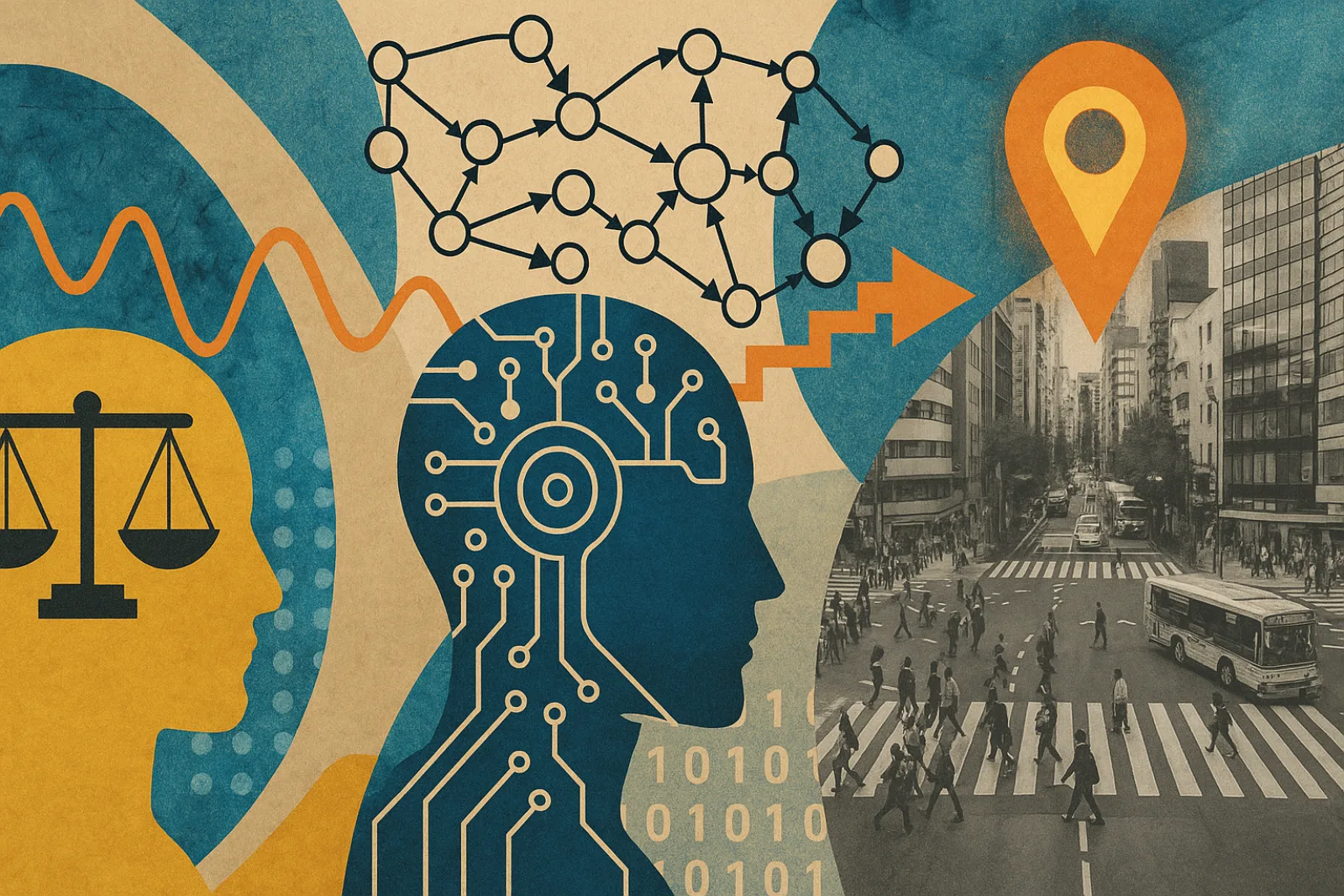
Urban Loops and Algorithmic Traps: How AI Shapes Where We Go

TL;DR for operators AI systems should not be judged only by whether they make each user happier, faster, or more “creative.” That is the easy dashboard. The harder question is whether millions of individually useful interactions reshape the whole market, city, or creative ecosystem in ways that concentrate attention and opportunity. Two recent arXiv papers form a useful chain. One models next-venue recommendation in cities and shows a sharp trade-off: recommenders can increase individual venue diversity while concentrating collective visits on already popular locations.1 The other argues that generative AI should be understood as an alternative form of cognition built from collective human knowledge, and that the practical path forward is human-AI synergy, broad access, and governance rather than endless trench warfare over authorship.2 ...

April 11, 2025 · 14 min · Zelina