AI for Standard Operating Procedures
How to use AI with SOPs so teams can find, follow, and improve procedures without losing control or accountability.
How to use AI with SOPs so teams can find, follow, and improve procedures without losing control or accountability.
How to use AI to classify, prioritize, and route inbound email without turning your inbox into an uncontrolled black box.
How to use AI to turn raw operational inputs into clearer recurring reports while preserving review, context, and accountability.
How to design an internal AI assistant that helps staff find policies, procedures, and operating knowledge without creating a guessing machine.
A practical guide to turning meeting transcripts into useful outputs such as decisions, action items, and follow-up notes.

TL;DR Most “multi‑objective” solutions collapse trade‑offs into a single number. MORSE keeps the trade‑offs alive: it evolves a Pareto front of policies—not just solutions—so operators can switch policies in real time as priorities shift (profit ↔ emissions ↔ lead time). Add a CVaR knob and the system becomes tail‑risk aware, reducing catastrophic outcomes without babysitting. Why this matters (for operators & P&L owners) Supply chains live in tension: service levels vs working capital, speed vs emissions, resilience vs cost. Traditional methods either: ...
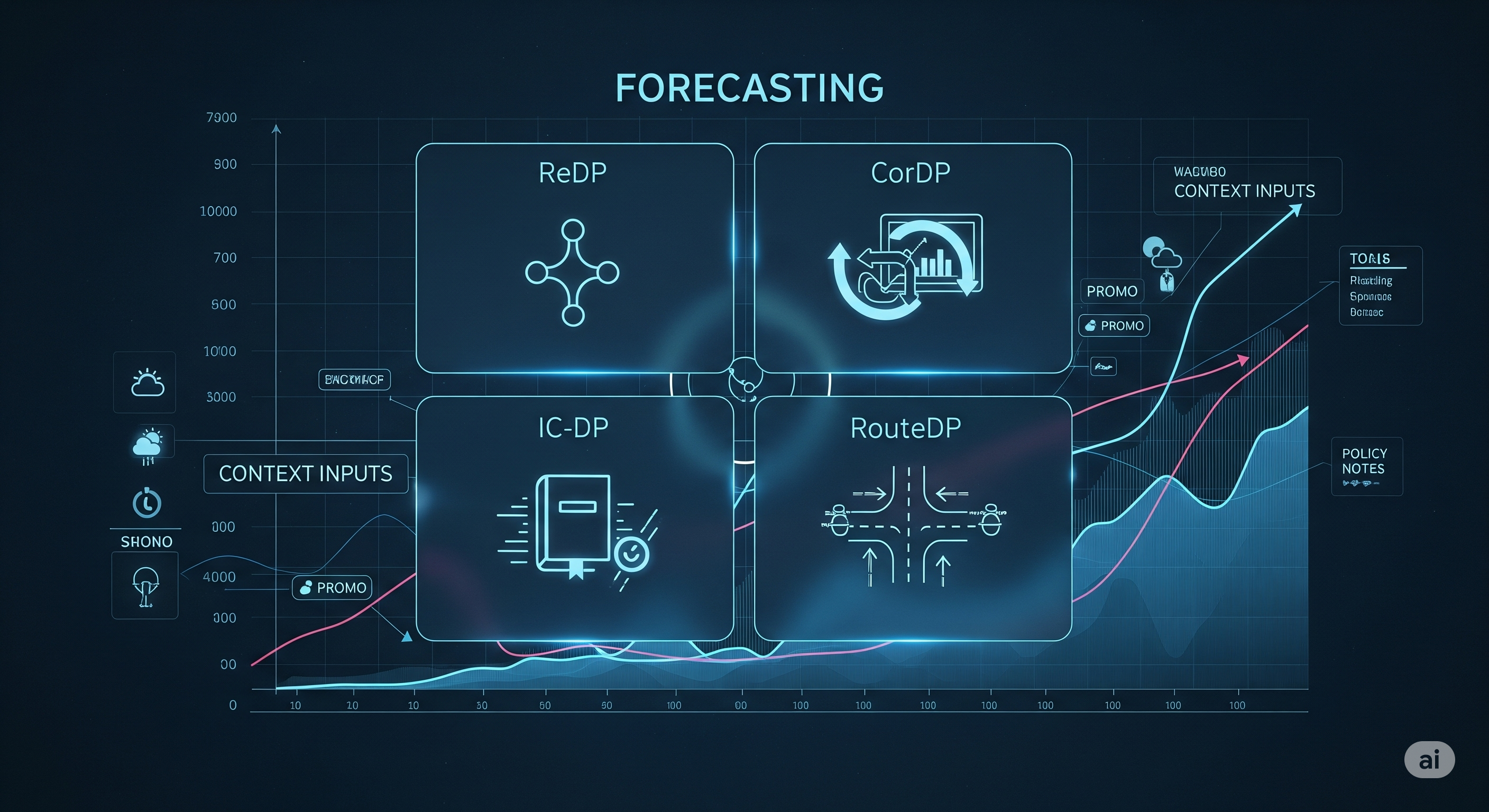
Large language models can forecast surprisingly well when you hand them the right context. But naïve prompts leave money on the table. Today’s paper introduces four plug‑and‑play strategies—ReDP, CorDP, IC‑DP, RouteDP—that lift accuracy, interpretability, and cost‑efficiency without training new models. Here’s what that means for teams running demand, risk, or ops forecasts. Why this matters for business readers Most production forecasts are numeric workhorses (ARIMA/ETS/TS foundation models), while contextual facts—weather advisories, policy changes, promos, strikes—arrive as text. LLMs can read that text and adjust the forecast, but simply stuffing history+context into a prompt (“direct prompting”) is often fragile. The four strategies below are operational patterns you can drop into existing stacks without re‑architecting. ...