Cover image

QED-Nano: Small Models, Big Proof Energy

Cost is usually where AI miracles become accounting problems. A frontier model can look brilliant when it is allowed to spend enormous inference compute, rely on undisclosed training data, and hide the machinery behind a clean demo. Very convenient. Also very hard to reproduce. For businesses, that matters because a capability that cannot be inspected, budgeted, or adapted is not really a capability. It is a vendor promise with a nice interface. ...

April 7, 2026 · 17 min · Zelina
Cover image

ThinkSafe: Teaching Models to Refuse Without Forgetting How to Think

A model can be very good at solving math problems and very bad at saying no. That sentence sounds like a joke until it becomes a deployment problem. A reasoning model trained to work harder, think longer, and satisfy difficult prompts may also become more willing to satisfy harmful prompts. The training objective says: solve the problem. The model obeys. Safety, apparently, was not copied on the memo. ...

February 3, 2026 · 15 min · Zelina
Cover image

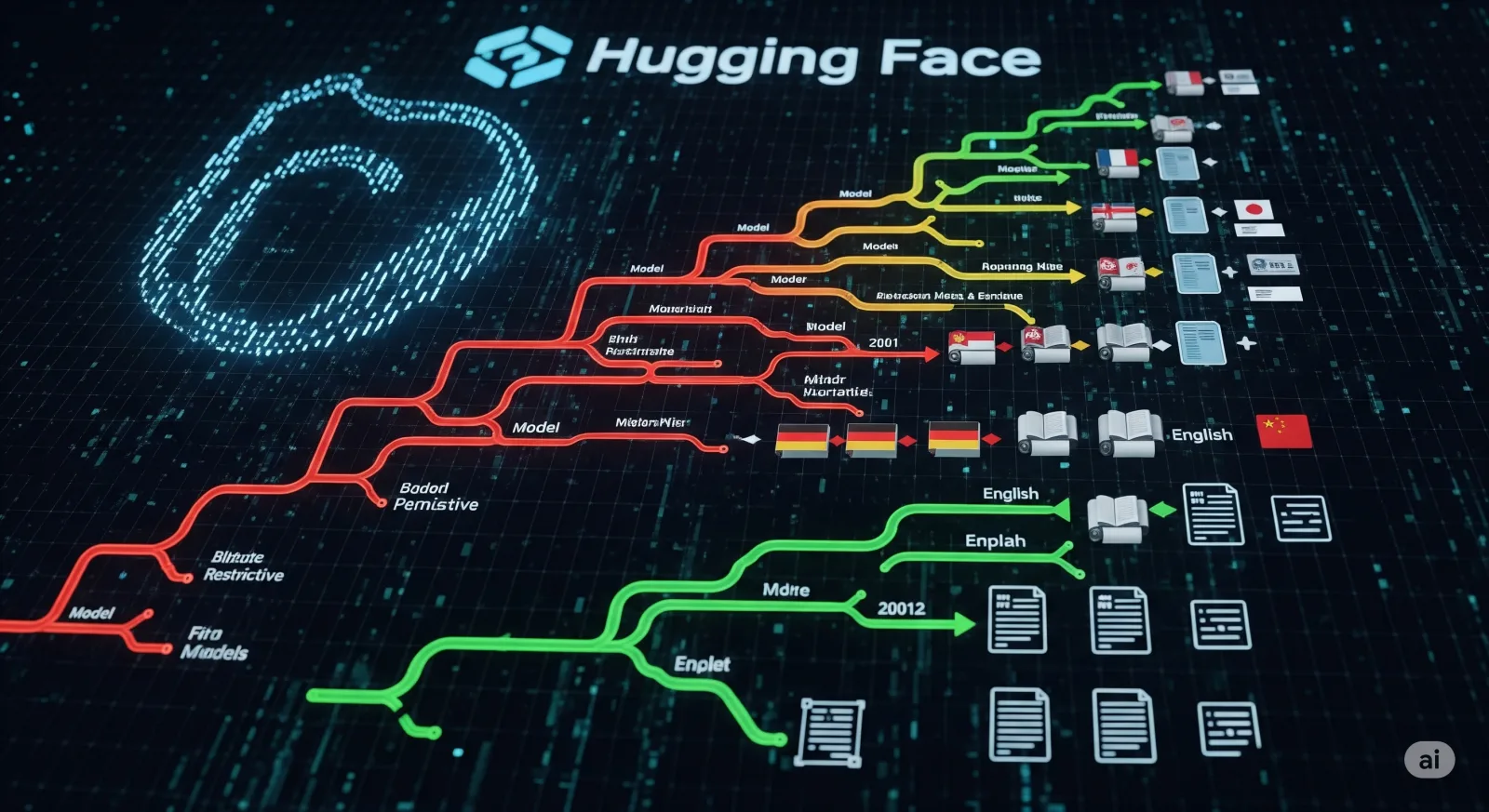
From Genes to Memes: The Evolutionary Biology of Hugging Face's 2 Million Models

TL;DR for operators Open-model adoption is usually treated as procurement with a nicer download button: find a model, check the licence, skim the model card, run a few benchmarks, and move on. This paper makes that habit look under-specified. Laufer, Oderinwale, and Kleinberg analyse 1.86 million models on Hugging Face and reconstruct family trees linking models to fine-tuned, adapted, quantised, or merged descendants.1 The useful result is not merely that Hugging Face is large. We knew that. The useful result is that model lineages mutate their public governance signals as they spread. ...

August 12, 2025 · 19 min · Zelina
Cover image

The Trojan GAN: Turning LLM Jailbreaks into Security Shields

TL;DR for operators CAVGAN is not another “clever jailbreak prompt” paper. Its real claim is more uncomfortable: jailbreaks and defenses may both be expressions of the same internal boundary inside an LLM. If malicious and benign requests occupy separable regions in hidden-state space, then an attacker can try to push a harmful request into the “safe-looking” region. A defender can also monitor that same space and intervene before the model answers. Convenient. Also slightly rude. ...

July 9, 2025 · 15 min · Zelina