Cover image

From Prompts to Proofs: When Language Becomes an SMT Theory

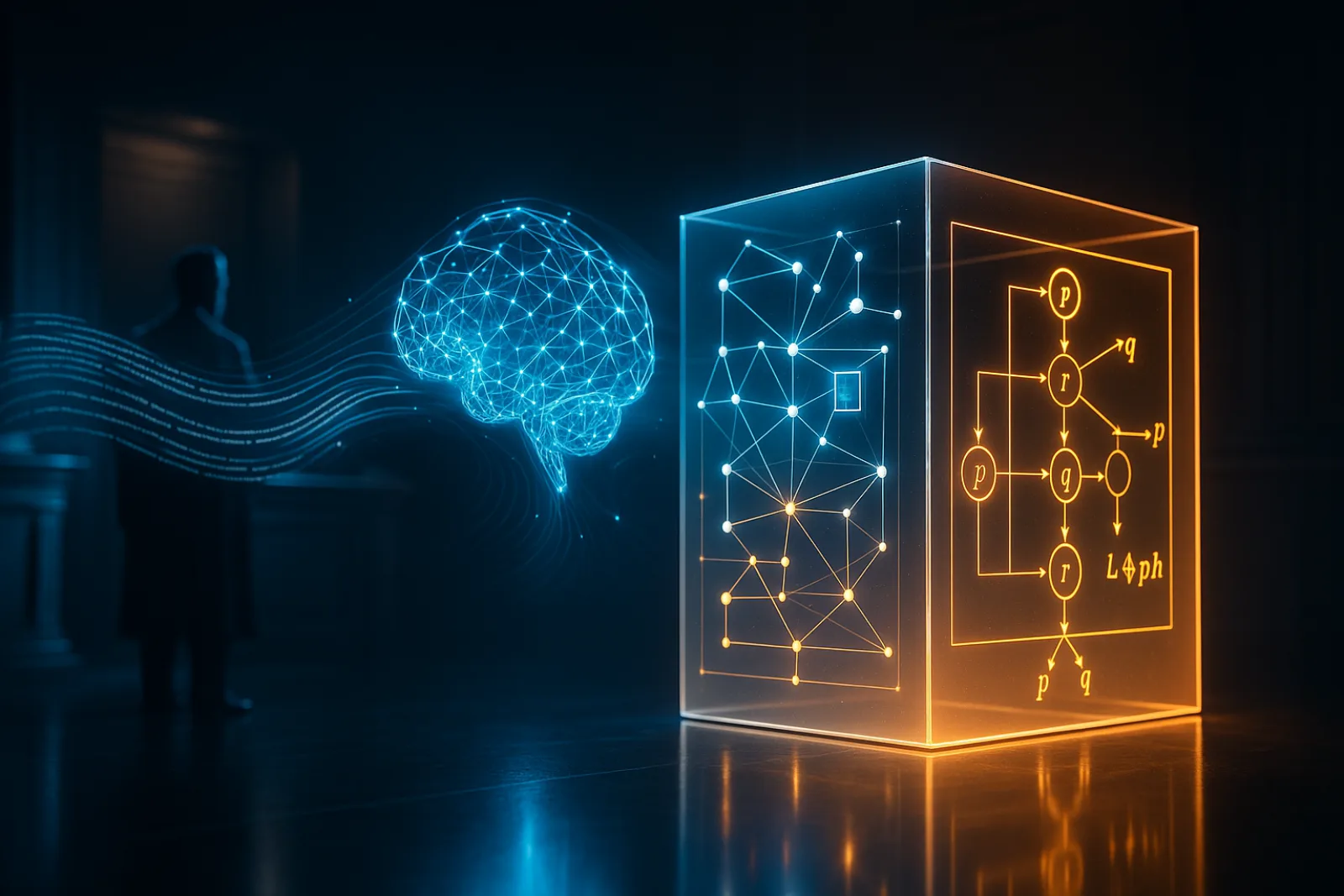
Policy is where language stops being poetry and starts becoming liability. A content moderation policy, a warranty clause, a procurement rule, a safety instruction, a legal test: all of them look like ordinary prose until someone asks the system to apply them consistently. Then the prose turns into a machine with hidden gears. Some gears are logical: this condition and that condition, this exception unless that threshold is met. Other gears are semantic: whether a message is threatening, whether a disclosure is meaningful, whether a clause covers a warranty period. Humans navigate this mixture badly but socially. LLMs navigate it fluently but not always reliably. Solvers navigate it reliably but only after the world has been turned into formal symbols. Which is, inconveniently, not how most business documents arrive. ...

February 23, 2026 · 17 min · Zelina
Cover image

Proof, Policy, and Probability: How DeepProofLog Rewrites the Rules of Reasoning

Proofs are supposed to be the respectable part of AI: tidy, inspectable, and resistant to the usual neural-network fog machine. Then reality turns up, as it so often does, carrying a bill. In neurosymbolic AI, the bill is search. A system may know the rules. It may even combine them with neural perception. But if answering a query requires enumerating a vast space of possible proofs, the promise of “interpretable reasoning” quickly becomes a very elegant way to run out of time. ...

November 12, 2025 · 18 min · Zelina
Cover image

The Doctor Is In: How DR. WELL Heals Multi-Agent Coordination with Symbolic Memory

Meetings are annoying for humans because they turn action into conversation. For autonomous agents, the problem is worse. A group of agents can each be individually competent and still fail collectively because one starts too early, another waits in the wrong place, and a third confidently pushes the wrong object in the wrong direction. Intelligence, as usual, does not automatically include basic scheduling manners. ...

November 7, 2025 · 14 min · Zelina
Cover image

When Logic Meets Language: The Rise of High‑Assurance LLMs

A compliance officer does not want a beautiful answer. She wants to know which clause applied, which exception overrode it, which fact triggered the exception, and whether the conclusion still holds after someone adds one inconvenient detail. That is the annoying little problem with using large language models in serious workflows. They are fluent. They are often useful. They can explain themselves at length, occasionally with the confidence of a junior associate who has discovered formatting. But in law, medicine, tax, contract review, and policy compliance, reasoning is not merely the ability to produce a plausible paragraph. It is the ability to tie a conclusion back to rules, facts, exceptions, and provenance. ...

October 9, 2025 · 17 min · Zelina
Cover image

Smart Moves: How SmartPilot is Revolutionizing Manufacturing with a Multiagent CoPilot

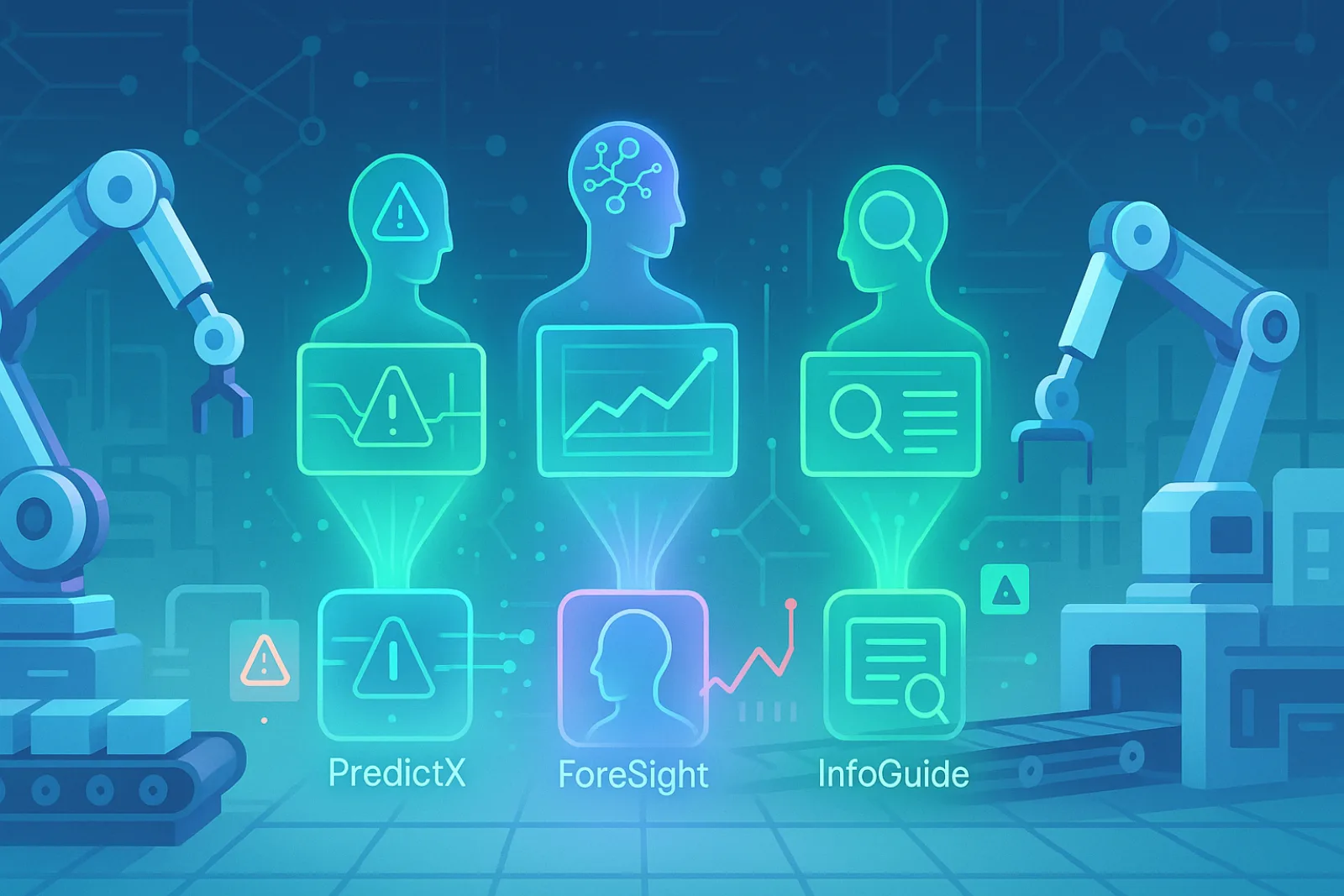
TL;DR for operators SmartPilot is not best understood as “ChatGPT for the factory floor.” That would be the lazy reading, and factories already have enough lazy dashboards with heroic colour palettes and no operational courage. The paper proposes a compact, neurosymbolic, multiagent manufacturing copilot that joins three practical functions: anomaly prediction, production forecasting, and domain-specific question answering.1 Its strongest idea is architectural. PredictX watches for anomalies using time-series and image data. ForeSight predicts near-term production using sequence models plus process-specific features. InfoGuide answers operator questions using manuals, retrieval, and real-time data. The system is then connected to live manufacturing infrastructure through OPC-UA and to domain knowledge through manufacturing ontologies. ...

May 14, 2025 · 16 min · Zelina