Cover image

Measure Twice, Generate, Then Look Again

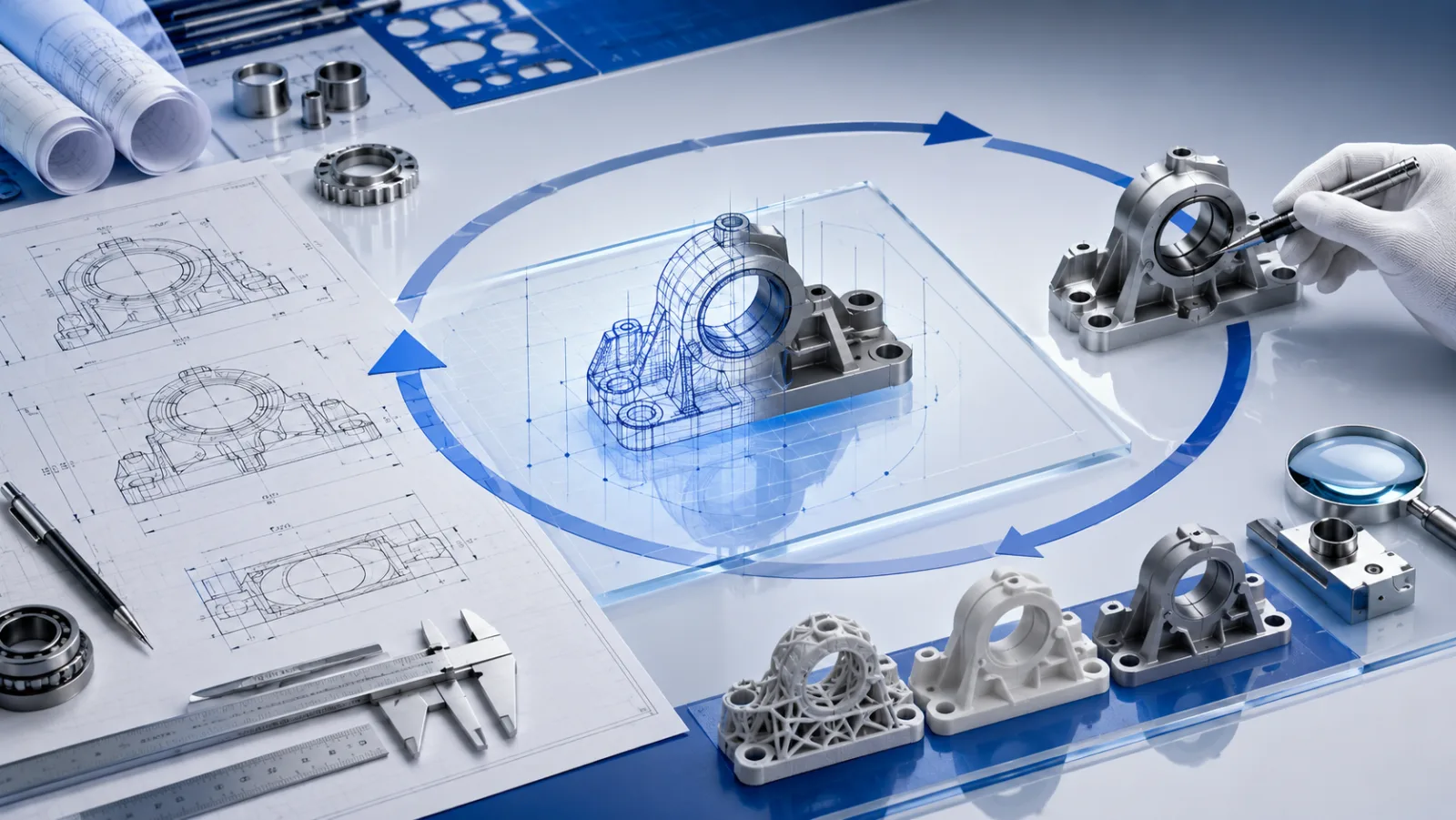
TL;DR for operators A CAD assistant that writes code once and hopes for the best is not an engineering workflow. It is a raffle with syntax highlighting. IterCAD is interesting because it treats CAD generation and editing as an iterative operating loop: read the drawing, generate CadQuery code, execute it in a sandbox, inspect compiler and geometric feedback, revise, and stop only when the model has evidence that the shape is right.1 The paper’s practical contribution is not “AI can design parts now.” That would be the usual confetti cannon, and mercifully not the correct lesson. The better lesson is that useful CAD automation needs closed-loop verification, localized visual grounding, and evaluation metrics that count failures instead of quietly hiding them in the basement. ...

June 29, 2026 · 21 min · Zelina
Cover image

The Grid Agent Saw the Pole. Then the Workflow Fell Over.

TL;DR for operators Power inspection is not a vision problem with some administrative paperwork attached. It is a chain. An image must become an equipment label, then a defect description, then a severity judgment, then a maintenance decision, then a correctly executed workflow. Break one link early enough and the rest of the chain becomes very confident clerical fiction. ...

June 22, 2026 · 18 min · Zelina
Cover image

Roll the Tape, Call the Tools: ReTool-Video and the Evidence-Routing Problem

Video is where AI demos go to become expensive. A model can describe a short clip. It can answer a question about a few sampled frames. It can even sound confident while doing so, which is apparently a product feature now. But business video work is rarely “what is happening in this five-second clip?” It is usually messier: find the exact moment in a two-hour training recording, count repeated actions without double-counting adjacent clips, verify whether an event appears in audio, subtitles, and frames, or decide whether a safety incident is real rather than just visually similar to one. ...

June 8, 2026 · 18 min · Zelina
Cover image

See, Plan, Snap: Why AI Can Think in Blocks but Can’t Drop Them

Blocks are supposed to make programming easier. That is the whole promise of Scratch: instead of typing syntax, the learner drags colorful blocks, snaps them together, and watches the program run. No semicolons. No import errors. No spiritual damage from invisible whitespace. Very civilized. Now give that same interface to an AI agent. ...

February 13, 2026 · 16 min · Zelina
Cover image

Mutation Impossible? How Multimodal Agents Are Rewriting Glioma Diagnostics

Report First, Diagnosis Second A medical report usually arrives after the diagnostic work is done. It explains, records, justifies, and sometimes politely hides how messy the evidence really was. This paper asks a more interesting question: what if the report itself becomes a predictive object? In Multimodal Oncology Agent for IDH1 Mutation Prediction in Low-Grade Glioma, Hafsa Akebli and colleagues build a Multimodal Oncology Agent, or MOA, for predicting IDH1 mutation status in low-grade glioma using TCGA-LGG data, whole-slide histology, structured clinical variables, genomic context, and external biomedical knowledge sources.1 The immediate headline is easy enough: the full multimodal setup reaches the best reported performance, with an F1-score of 0.912. ...

December 8, 2025 · 15 min · Zelina