Cover image

Echo Chambers or Stubborn Minds? Simulating Social Influence with LLM Agents

Large language models aren’t just prompt-completion machines anymore. In controlled simulations, they can behave like people in a group discussion: yielding to peer pressure, sticking to their beliefs, or becoming more extreme over time. But not all LLMs are socially equal. A recent paper titled “Towards Simulating Social Influence Dynamics with LLM-based Multi-agents” explores how different LLMs behave in a forum-style discussion, capturing three phenomena familiar to any political science researcher or Reddit moderator: conformity, group polarization, and fragmentation. The twist? These aren’t real people. They’re fully scripted LLM agents with fixed personas, engaged in asynchronous multi-round debates. ...

July 31, 2025 · 3 min · Zelina
Cover image

Game of Prompts: How Game Theory and Agentic LLMs Are Rewriting Cybersecurity

In today’s threat landscape, cybersecurity is no longer a battle of scripts and firewalls. It’s a war of minds. And with the rise of intelligent agents powered by Large Language Models (LLMs), we are now entering a new era where cyber defense becomes not just technical but deeply strategic. The paper “Game Theory Meets LLM and Agentic AI” by Quanyan Zhu provides one of the most profound frameworks yet for understanding this shift. ...

July 16, 2025 · 4 min · Zelina
Cover image

Talk is Flight: How RALLY Bridges Language and Learning in UAV Swarms

When language models take flight, consensus becomes not just possible, but programmable. Modern UAV swarms face the daunting task of coordinating across partial observability, adversarial threats, and shifting missions. Traditional Multi-Agent Reinforcement Learning (MARL) offers adaptability, but falters when role differentiation or semantic reasoning is required. Large Language Models (LLMs), meanwhile, understand tasks and intent—but lack grounded, online learning. RALLY (Role-Adaptive LLM-Driven Yoked Navigation) is the first framework to successfully integrate these two paradigms, enabling real-time, role-aware collaboration in UAV swarms. ...

July 7, 2025 · 3 min · Zelina
Cover image

Hive Minds and Hallucinations: A Smarter Way to Trust LLMs

When it comes to automating customer service, generative AI walks a tightrope: it can understand free-form text better than any tool before it—but with a dangerous twist. Sometimes, it just makes things up. These hallucinations, already infamous in legal and healthcare settings, can turn minor misunderstandings into costly liabilities. But what if instead of trusting one all-powerful AI model, we take a lesson from bees? A recent paper by Amer & Amer proposes just that: a multi-agent system inspired by collective intelligence in nature, combining LLMs, regex parsing, fuzzy logic, and tool-based validators to build a hallucination-resilient automation pipeline. Their case study—processing prescription renewal SMS requests—may seem narrow, but its implications are profound for any business relying on LLMs for critical operations. ...

July 3, 2025 · 4 min · Zelina
Cover image

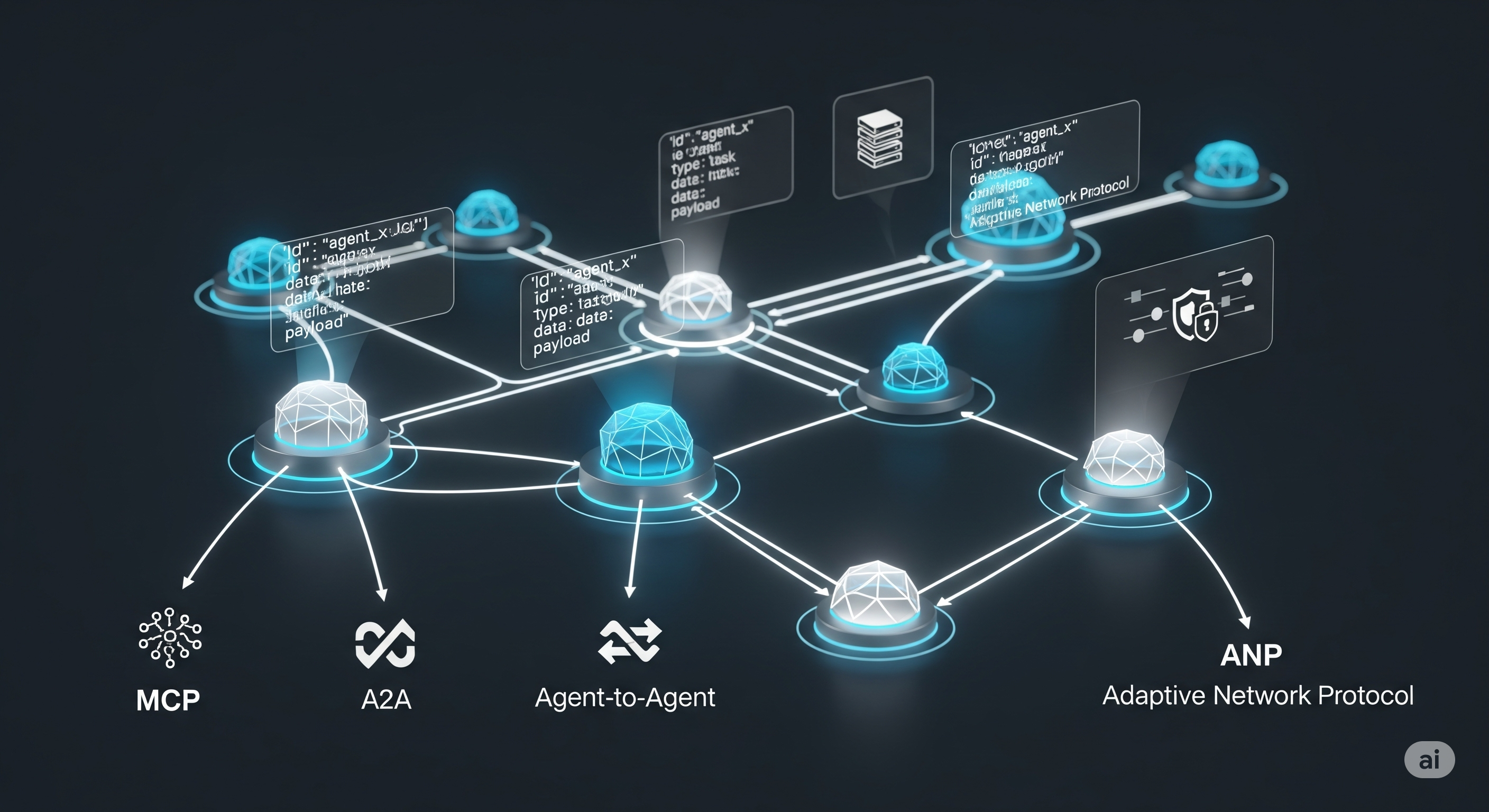
Agents Under Siege: How LLM Workflows Invite a New Breed of Cyber Threats

Agents Under Siege: How LLM Workflows Invite a New Breed of Cyber Threats From humble prompt-followers to autonomous agents capable of multi-step tool use, LLM-powered systems have evolved rapidly in just two years. But with this newfound capability comes a vulnerability surface unlike anything we’ve seen before. The recent survey paper From Prompt Injections to Protocol Exploits presents the first end-to-end threat model of these systems, and it reads like a cybersecurity nightmare. ...

July 1, 2025 · 4 min · Zelina
Cover image

The Reasoning Gymnasium: How Zero-Sum Games Shape Smarter LLMs

If the future of reasoning in large language models (LLMs) doesn’t lie in human-tweaked datasets or carefully crafted benchmarks, where might it emerge? According to SPIRAL, a recent framework introduced by Bo Liu et al., the answer is clear: in games. SPIRAL (Self-Play on zero-sum games Incentivizes Reasoning via multi-Agent muLti-turn reinforcement learning) proposes that competitive, turn-based, two-player games can become a reasoning gymnasium for LLMs. It provides an automated and scalable path for cognitive skill acquisition, sidestepping human-curated data and rigid reward functions. ...

July 1, 2025 · 4 min · Zelina
Cover image

Catalysts of Thought: How LLM Agents are Reinventing Chemical Process Optimization

In the world of chemical engineering, optimization is both a science and an art. But when operating conditions are ambiguous or constraints are missing, even the most robust solvers stumble. Enter the next-gen solution: a team of LLM agents that not only understand the problem but define it. When Optimization Meets Ambiguity Traditional solvers like IPOPT or grid search work well—if you already know the boundaries. In real-world industrial setups, however, engineers often have to guess the feasible ranges based on heuristics and fragmented documentation. This paper from Carnegie Mellon University breaks the mold by deploying AutoGen-based multi-agent LLMs that generate constraints, propose solutions, validate them, and run simulations—all with minimal human input. ...

June 27, 2025 · 4 min · Zelina
Cover image

Mind Games for Machines: How Decrypto Reveals the Hidden Gaps in AI Reasoning

As large language models (LLMs) evolve from mere tools into interactive agents, they are increasingly expected to operate in multi-agent environments—collaborating, competing, and communicating not just with humans but with each other. But can they understand the beliefs, intentions, and misunderstandings of others? Welcome to the world of Theory of Mind (ToM)—and the cleverest AI benchmark you haven’t heard of: Decrypto. Cracking the Code: What is Decrypto? Inspired by the award-winning board game of the same name, Decrypto is a three-player game of secret codes and subtle hints, reimagined as a benchmark to test LLMs’ ability to coordinate and deceive. Each game features: ...

June 26, 2025 · 4 min · Zelina
Cover image

The Joy of Many Minds: How JoyAgents-R1 Unleashes the Power of Multi-LLM Reinforcement Learning

When it comes to language model agents, more minds may not always mean merrier results. Multi-agent reinforcement learning (MARL) promises a flexible path for decomposing and solving complex tasks, but coordinating multiple large language models (LLMs) remains riddled with instability, inefficiency, and memory fragmentation. Enter JoyAgents-R1, a novel framework that proposes an elegant, scalable solution for jointly evolving heterogeneous LLM agents using Group Relative Policy Optimization (GRPO). Developed by researchers at JD.com, JoyAgents-R1 combines memory evolution, policy optimization, and clever sampling strategies to form a resilient multi-agent architecture capable of matching the performance of larger SOTA models with far fewer parameters. ...

June 25, 2025 · 3 min · Zelina
Cover image

Innovation, Agentified: How TRIZ Got Its AI Makeover

In the symphony of innovation, TRIZ has long served as the structured score guiding engineers toward inventive breakthroughs. But what happens when you give the orchestra to a team of AI agents? Enter TRIZ Agents, a bold exploration of how large language model (LLM) agents—armed with tools, prompts, and persona-based roles—can orchestrate a complete innovation cycle using the TRIZ methodology. Cracking the Code of Creativity TRIZ (Theory of Inventive Problem Solving), derived from the study of thousands of patents, offers a time-tested approach to resolving contradictions in engineering design. It formalizes the innovation process through tools like the 40 Inventive Principles and the Contradiction Matrix. However, its structured elegance demands deep domain expertise—something often scarce outside elite R&D centers. ...

June 24, 2025 · 4 min · Zelina