Cover image

Teach Me Once: How One‑Shot LLM Guidance Reshapes Hierarchical Planning

Teach Me Once, Then Please Stop Calling the API A familiar enterprise automation story starts with a competent but expensive expert in the loop. At first, the expert is useful. They interpret messy instructions, break tasks into sensible stages, and recover when something goes wrong. Then the workflow scales. Suddenly the expert is being called for every transaction, every exception, every tiny decision that could probably have been handled by a trained local process. What began as intelligence becomes latency, cost, and operational dependency. Very elegant. Very billable. Not always very deployable. ...

December 11, 2025 · 15 min · Zelina
Cover image

Think Fast, Think Slow: How Omni-AutoThink Rewrites Multimodal Reasoning

A customer sends a voice note, a screenshot, and a short complaint: “Why did your app charge me twice?” A weak AI assistant answers too fast and misses the evidence. A reasoning-heavy assistant thinks through everything, slowly, expensively, and occasionally performs a small philosophical opera over a billing issue. Neither is attractive. One is careless; the other is costly. The practical problem is not whether the model can reason. It is whether the model knows when reasoning is worth the bill. ...

December 4, 2025 · 15 min · Zelina
Cover image

Pruned but Not Muted: How Frequency-Aware Token Reduction Saves Vision Transformers

Images are expensive. Not emotionally, although some product managers do try. They are expensive because modern visual models turn an image into a sequence of tokens, then let those tokens attend to one another. In a Vision Transformer, more tokens usually mean more detail, but also more attention cost. The obvious response is to reduce the number of tokens. ...

November 29, 2025 · 16 min · Zelina
Cover image

Recurrent Revival: How Retrofitted Depth Turns LLMs Into Deeper Thinkers

Compute is the bill that arrives after every AI strategy meeting. Everyone wants stronger reasoning. Fewer hallucinations. Better mathematical reliability. More robust planning. The usual menu is familiar: train a bigger model, sample more answers, generate longer chain-of-thought, bolt on a verifier, or pray to the GPU procurement gods. Elegant, in the way an invoice can be elegant. ...

November 16, 2025 · 14 min · Zelina
Cover image

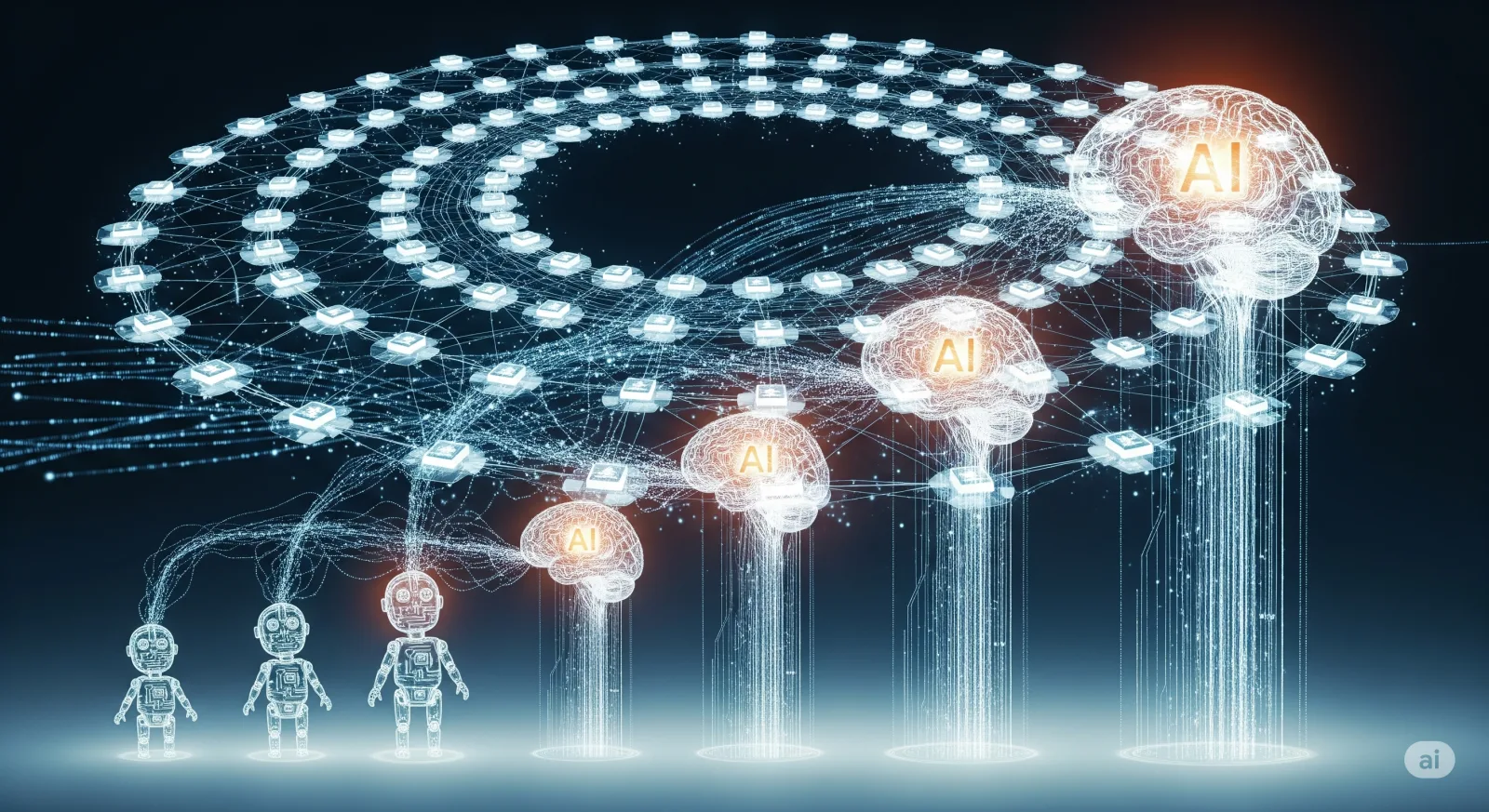
From Tadpole to Titan: How DEVFT Grows LLMs Like a Brain

TL;DR for operators Federated LLM fine-tuning sounds attractive until someone asks the rude operational question: who is actually paying for the compute, memory, and communication on the devices? The paper behind DevFT proposes a useful answer: do not fine-tune the full model end-to-end from the first round. Start with a compact submodel, train it federatively, transfer the learned LoRA parameters forward, then expand the model in stages until it reaches the full target size.1 The authors call this Developmental Federated Tuning, and yes, the developmental psychology metaphor is a little enthusiastic. Fortunately, the mechanism is more interesting than the metaphor. ...

August 4, 2025 · 16 min · Zelina