Cover image

Clue by Clue: ProjectionBench and the Business of Testing AI Discovery

Clue by Clue: ProjectionBench and the Business of Testing AI Discovery Lab meeting. A scientist has a topic, a research question, and not much else. No dataset yet. No final chart. No results section quietly waiting in the appendix. Just a question and the uncomfortable business of guessing what nature might do. ...

June 3, 2026 · 16 min · Zelina
Cover image

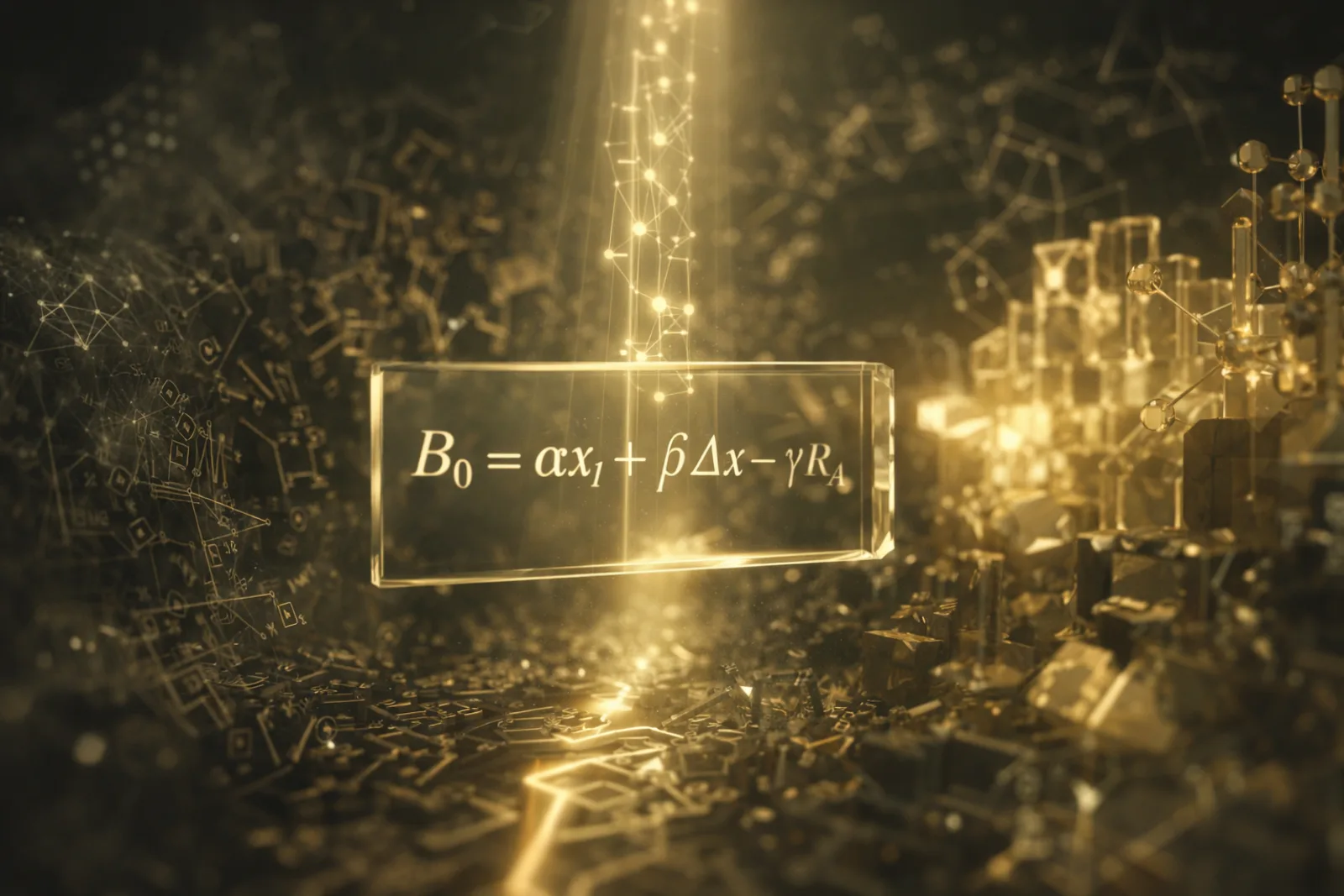
When LLMs Learn Physics: Taming Symbolic Regression in Materials Science

Formula discovery sounds like the part of science where artificial intelligence should behave like a heroic mathematician: stare at data, discover a law, and write down a clean equation while everyone else politely applauds. That is the cinematic version. The actual engineering problem is less glamorous and much more useful. Symbolic regression already searches for equations. Given enough variables, operators, constants, and patience, it can produce formulas that fit data. The trouble is that “fits data” and “means something physically” are not the same sentence. In a high-dimensional materials dataset, symbolic regression can wander through a forest of plausible-looking algebra and return a formula that is accurate, ornate, and scientifically suspicious. A spreadsheet can also produce a trendline. We do not usually call that physics. ...

March 1, 2026 · 16 min · Zelina
Cover image

SAGA, Not Sci‑Fi: When LLMs Start Doing Science

Science usually fails in a boring way. Not with explosions. Not with a robot dramatically discovering penicillin 2.0 while violins swell in the background. More often, a research workflow fails because somebody optimized the wrong thing a little too efficiently. A molecule scores well but is chemically ugly. A nanobody looks good under one predictor but fails to bind. A DNA enhancer activates the target cell line but also lights up the wrong tissue. A separation process reaches high purity by adding pointless unit operations, because the reward function forgot to punish industrial nonsense. The optimizer did its job. Unfortunately, the job description was incomplete. ...

December 29, 2025 · 16 min · Zelina
Cover image

When LLMs Stop Guessing and Start Calculating

A simulation job does not care how elegant the prompt was. It cares whether the input files are valid, whether the parameters are compatible, whether the previous step produced the right intermediate state, whether the solver converged, and whether the final number actually means what the workflow says it means. This is where the romance of “AI scientists” usually meets the concrete wall of scientific computing. The model can sound like a postdoc. The machine still wants the correct INCAR tag. ...

December 23, 2025 · 14 min · Zelina
Cover image

Crowds, Codes, and Consensus: When AI Learns the Language of Science

A lab has data. Lots of data. Spectra, simulations, microscopy images, code outputs, experimental notes, model prompts, maybe three versions of a spreadsheet called final_final_revised.xlsx, because civilization remains fragile. Then someone asks a simple question: what does this variable mean? That is when the machinery slows down. The word looked obvious when one team wrote it. It becomes less obvious when another team tries to reuse it. It becomes actively annoying when a model retrieves the wrong dataset because two groups used the same term differently, or different terms for the same concept. At that point, metadata stops being administrative wallpaper and becomes infrastructure. ...

December 11, 2025 · 16 min · Zelina
Cover image

The Missing Link: How AI Maps Hidden Properties in Materials Science

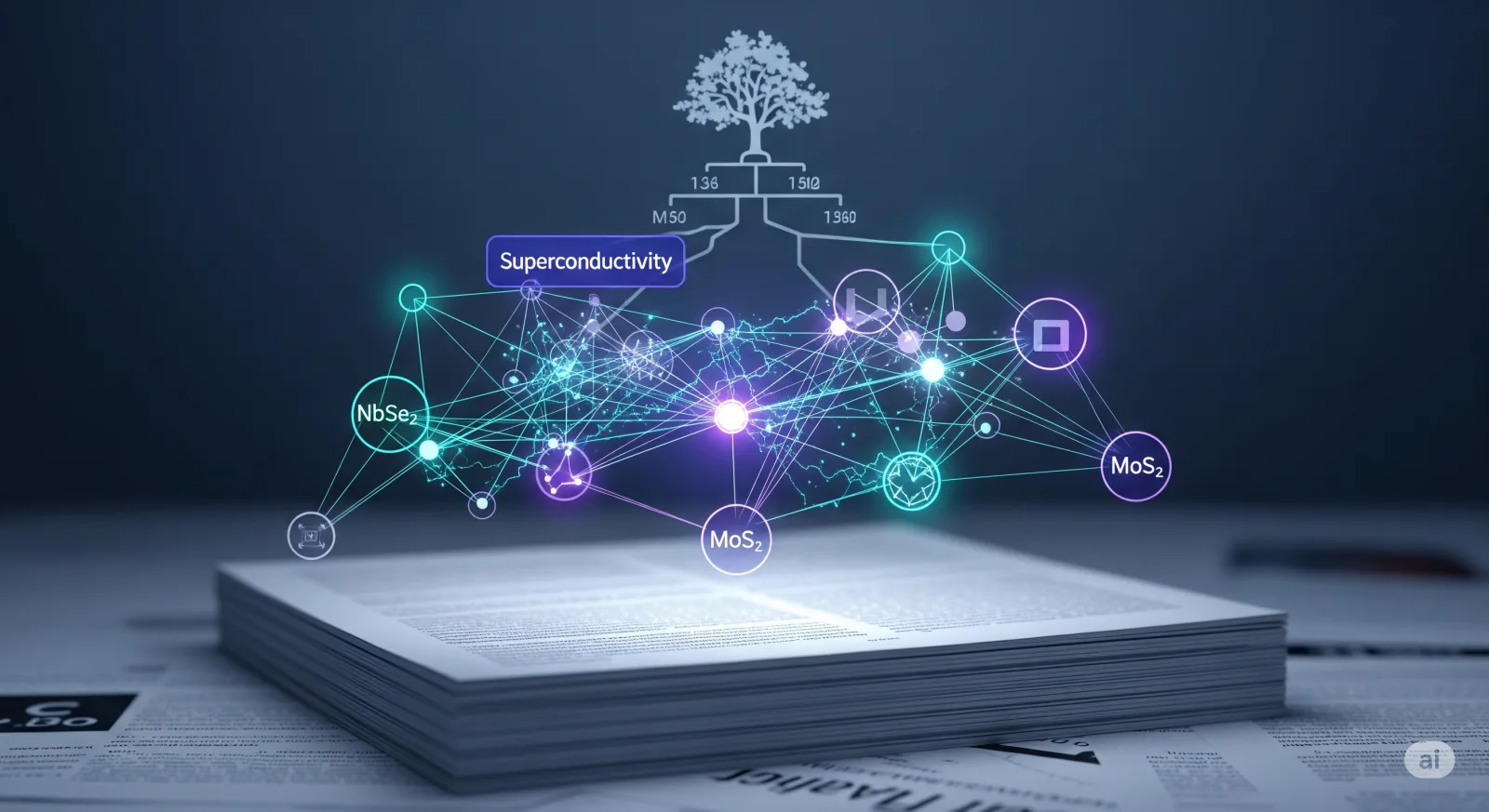
TL;DR for operators R&D teams rarely suffer from having too little information. They suffer from having too much information distributed across papers, subfields, naming conventions, and research communities that politely ignore one another. The paper behind this article proposes a way to turn that literature mess into a ranked map of possible material-property links.1 ...

July 13, 2025 · 14 min · Zelina