Cover image

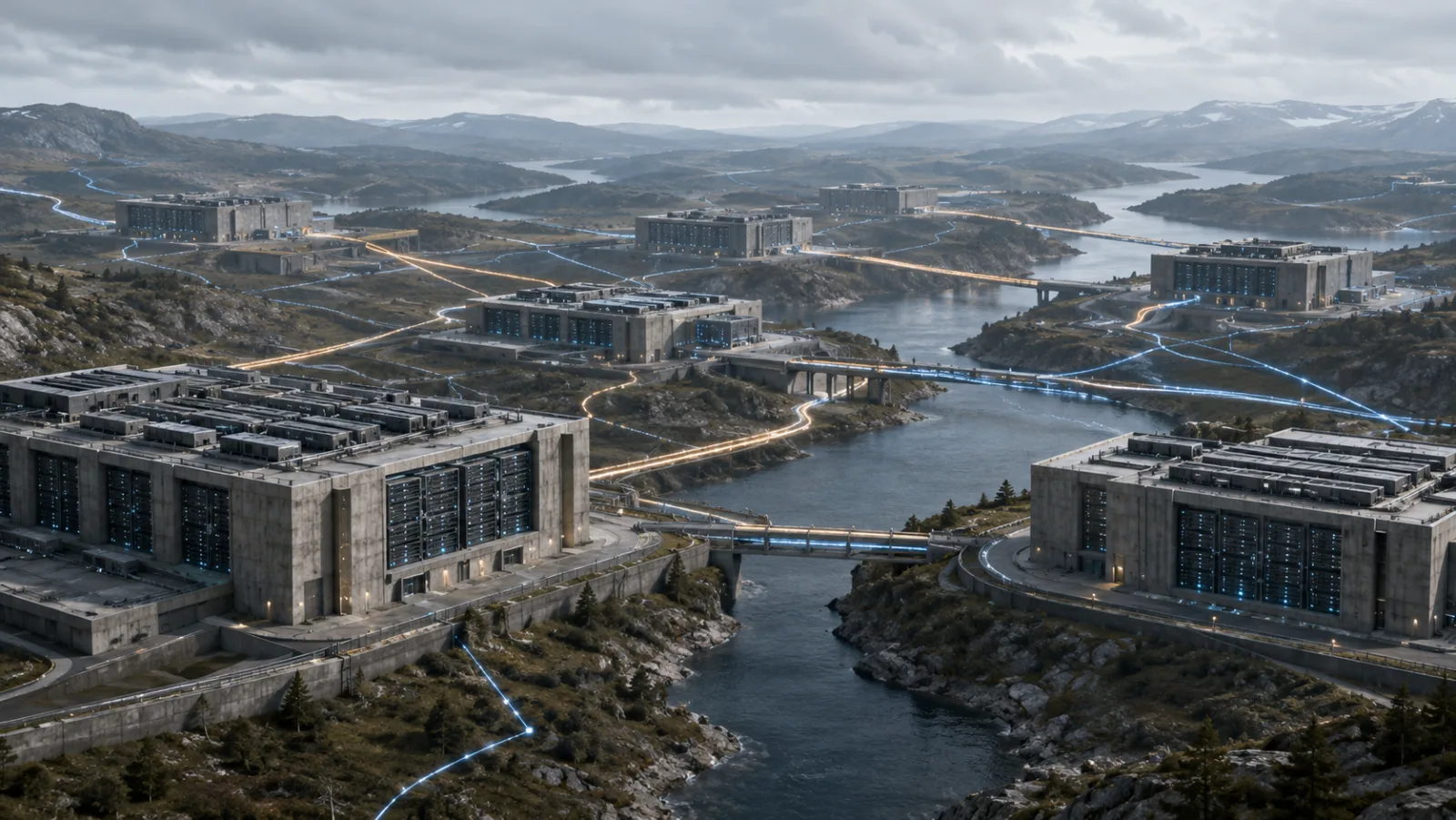
No Cluster Is an Island: ScaleAcross Explorer and the Geography Tax of AI Training

GPUs used to have a simple business story: buy more, wire them well, train bigger models. That story is not false. It is just starting to resemble a children’s book. The adult version has buildings, regions, power constraints, optical links, oversubscribed networks, packet loss, pipeline bubbles, model chunks, microbatches, and a quiet question with a very expensive answer: when the GPUs no longer fit comfortably inside one data center building, how should the training job be split? ...

June 5, 2026 · 18 min · Zelina
Cover image

RelayS2S: When AI Stops Waiting Its Turn

A voice assistant has one job before it has any other job: do not make the user wonder whether it heard them. That tiny silence after a user stops speaking is not merely awkward. It is a control signal. It tells the user whether the system is alive, attentive, confused, or quietly regretting its product roadmap. In text chat, a delay can be tolerated because the medium already feels asynchronous. In speech, delay feels personal. The room has a rhythm, and the machine has missed the beat. ...

March 25, 2026 · 16 min · Zelina
Cover image

From Prompts to Policies: How Digital Twins Are Quietly Rewiring Enterprise AI Agents

The agent keeps looking in the wrong place An incident happens. A service slows down. A pod restarts. A dashboard turns the tasteful shade of operational panic. The enterprise AI agent is asked to help. It reads logs, calls tools, inspects metrics, follows traces, and produces a plausible chain of reasoning. Sometimes it finds the root cause. Sometimes it wanders through the topology graph like a consultant discovering Kubernetes for the first time. ...

March 24, 2026 · 16 min · Zelina
Cover image

Act While Thinking: When AI Agents Learn to Multitask (Finally)

Waiting is the least glamorous part of an AI agent. A user asks for a report, a code fix, a dataset analysis, or a literature scan. The agent thinks, calls a tool, waits, reads the result, thinks again, calls another tool, waits again, and repeats this little ritual until the final answer appears. From the outside, this looks like “reasoning.” From the system side, much of it is simply queueing around tools. ...

March 22, 2026 · 18 min · Zelina
Cover image

Reflection in the Dark: When Prompt Optimization Forgets to Think

A prompt fails. The optimizer reflects. The prompt changes. The score moves. This is the part where everyone is supposed to feel comforted. A self-improving system has looked at its mistake and revised itself. Very modern. Very agentic. Very convenient. The less comforting possibility is that the system has not understood the mistake at all. It has simply rewritten the prompt around the nearest explanation it can imagine. The score may improve, stagnate, or fall, but the optimizer still cannot answer the most basic operational question: what exactly did we just fix? ...

March 21, 2026 · 17 min · Zelina
Cover image

Agents With Memory: Turning Execution Logs into Institutional Knowledge

Logs are where automation failures usually go to become archaeology. A business deploys an AI agent. The agent calls APIs, checks intermediate states, makes assumptions, retries after errors, occasionally succeeds by accident, and sometimes discovers a genuinely efficient route through a workflow. The full execution trace is stored somewhere. In theory, this is valuable evidence. In practice, it often becomes a swamp: too verbose for managers, too unstructured for engineers, and too raw for the next agent run. ...

March 13, 2026 · 16 min · Zelina
Cover image

When Less Proves More: The Case for Minimalist AI Theorem Provers

When Less Proves More: The Case for Minimalist AI Theorem Provers Proof is a good place to test AI humility. In ordinary business writing, a model can sound confident, cite familiar patterns, and still be quietly wrong. The error may not surface until the contract is signed, the policy memo is circulated, or the spreadsheet has already acquired the authority of a sacred object. In formal theorem proving, the arrangement is less polite. The model writes code. Lean compiles it. The compiler either accepts the proof or sends it back covered in red ink. ...

March 2, 2026 · 16 min · Zelina
Cover image

Template Thinking: Why Your Next AI Agent Should Steal from Cognitive Science

Architecture is usually where AI enthusiasm goes to become expensive. A team starts with a capable model. Then it adds a planner. Then memory. Then a tool router. Then a critic. Then a second critic because the first critic was apparently too polite. A few weeks later, the “agent” works on the demo path, fails on the second edge case, and nobody can explain whether the problem is the prompt, the retrieval layer, the tool schema, the memory policy, or the small parliament of LLM calls now debating inside the workflow. ...

February 28, 2026 · 22 min · Zelina
Cover image

FadeMem: When AI Learns to Forget on Purpose

Memory is easy to sell. Give an AI agent a bigger context window. Add a vector database. Store every user preference, meeting note, support ticket, and half-correct instruction that ever passed through the system. Then call it “persistent memory,” because apparently a drawer full of old receipts is now intelligence. The problem is that agents do not fail only because they forget. They also fail because they remember too much, too flatly, and too obediently. Old facts compete with new ones. Repeated but trivial details crowd out rare but important constraints. Retrieval brings back something semantically similar but temporally wrong. The agent sounds confident because the database found something. Very helpful. Very dangerous. ...

February 1, 2026 · 13 min · Zelina
Cover image

Many Minds, One Solution: Why Multi‑Agent AI Finds What Single Models Miss

Review meeting. That is the easiest way to understand why multi-agent AI sometimes works better than one impressive model asked to “think harder.” In a good review meeting, the finance person does not merely contribute another opinion. The compliance person does not merely add vibes. The operations person does not simply vote. Each participant keeps pulling the same proposal back toward a different kind of admissibility: budget realism, regulatory safety, technical feasibility, customer usefulness, operational maintainability. ...

January 22, 2026 · 17 min · Zelina