
Cover image

Carbon, Code & Clusters: When AI Audits the Life Cycle of Itself

AI has a carbon problem. It also has a paperwork problem. The carbon problem is familiar enough: models require chips, chips require factories, data centers require power, and “cloud” remains one of technology’s more successful euphemisms for buildings full of hot machines. The paperwork problem is quieter. If organizations want to measure environmental impact seriously, they need Life Cycle Assessment, or LCA: the discipline of tracking environmental burdens across extraction, production, use, and end-of-life. That work depends on fragmented studies, sector-specific data, inconsistent terminology, and long technical reports written in the dialect of people who enjoy appendices. ...

February 28, 2026 · 18 min · Zelina
Cover image

When the AI Becomes the Agronomist: Can Chatbots Really Replace the Literature Review?

A farmer does not need a literature review. She needs to know what works. That simple sentence is why AI agronomy is so tempting. Somewhere inside thousands of papers are useful answers: which microbial agents suppress whitefly, whether botanicals work outside the lab, how much pest control disappears when a method leaves a greenhouse and meets weather, soil, and actual insects with their own little business plans. The evidence exists, but it is fragmented, multilingual, paywalled, and written in the soothing dialect of “further research is warranted.” ...

December 15, 2025 · 15 min · Zelina
Cover image

Cite Before You Write: Agentic RAG That Picks Graph vs. Vector on the Fly

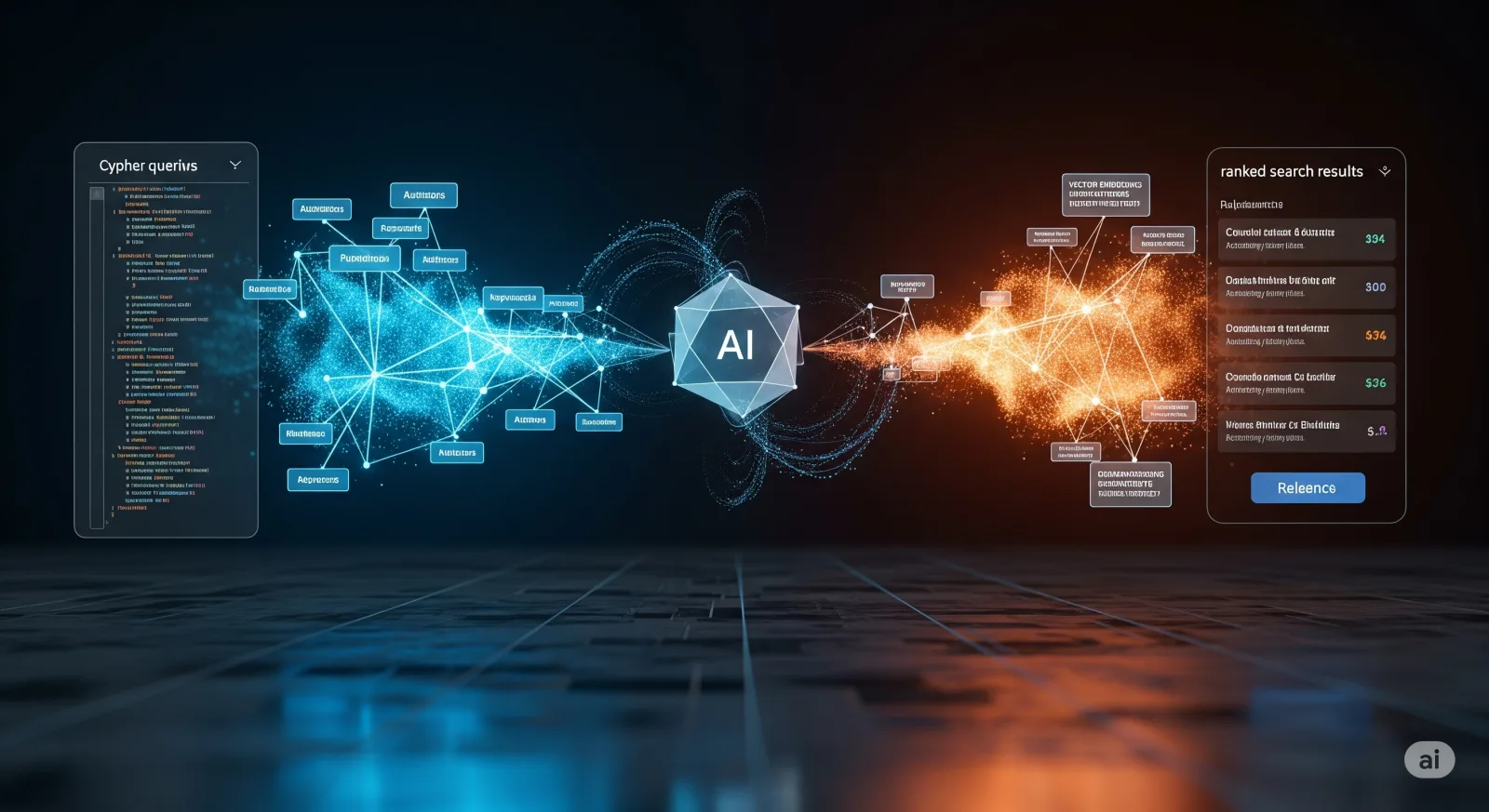
TL;DR for operators Most enterprise RAG failures are not generation failures. They are retrieval-routing failures wearing a very convincing blazer. The paper behind this article proposes an open-source agentic hybrid RAG framework for scientific literature review: bibliographic metadata and citation relationships go into a Neo4j knowledge graph; full-text PDF chunks go into a FAISS vector store; an LLM-based agent decides whether a user’s question should be answered through GraphRAG or VectorRAG; a Mistral-based generator produces the final answer; DPO is used to improve grounding; and bootstrap resampling is used to report evaluation uncertainty.1 ...

August 11, 2025 · 20 min · Zelina