Cover image

Law & Order(ly Data): How LLMs Are Learning to Read Regulations Like Machines

Compliance has a familiar little horror story: everyone can find the rule, but nobody can safely operationalize it. The document is searchable. The PDF is indexed. The chatbot can quote the right paragraph with the confidence of a junior associate who has just discovered Ctrl+F. And yet the actual business question still hangs in the air: who must do what, under which condition, subject to which exception, and with what consequence? ...


April 3, 2026 · 17 min · Zelina
Cover image

Reading Between the Lines: How AI Learned to Interpret the Law

A park sign says: “No vehicles in the park.” That seems simple until a child arrives on a small bicycle. A rule has now become a legal interpretation problem. Does “vehicle” mean any device used for transport? Does it mean motor vehicles? Does a child’s bike count? Should the answer change if the rule was meant to protect pedestrians, prevent noise, preserve grass, or stop cars from entering the park? ...

March 6, 2026 · 16 min · Zelina
Cover image

From Prompts to Proofs: When Language Becomes an SMT Theory

Policy is where language stops being poetry and starts becoming liability. A content moderation policy, a warranty clause, a procurement rule, a safety instruction, a legal test: all of them look like ordinary prose until someone asks the system to apply them consistently. Then the prose turns into a machine with hidden gears. Some gears are logical: this condition and that condition, this exception unless that threshold is met. Other gears are semantic: whether a message is threatening, whether a disclosure is meaningful, whether a clause covers a warranty period. Humans navigate this mixture badly but socially. LLMs navigate it fluently but not always reliably. Solvers navigate it reliably but only after the world has been turned into formal symbols. Which is, inconveniently, not how most business documents arrive. ...

February 23, 2026 · 17 min · Zelina
Cover image

Bracket Busters: When Agentic LLMs Turn Law into Code (and Catch Their Own Mistakes)

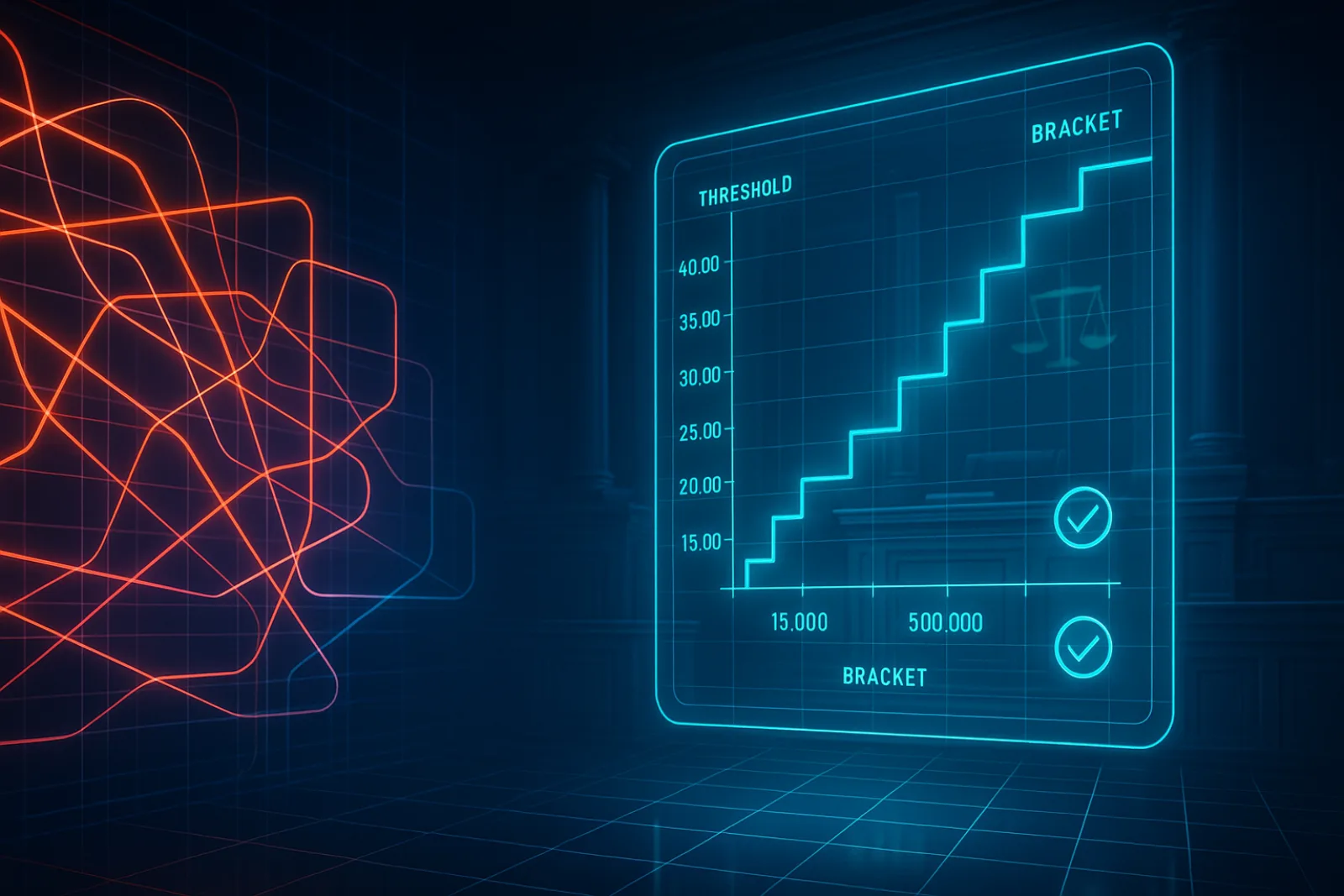
TL;DR Tax law is full of brackets, caps, cliffs, phase-outs, and exceptions. Conveniently, those are also the places where software quietly breaks. The paper behind this article introduces Synedrion, a multi-agent LLM framework for translating legal tax documents into executable software.1 Its most useful idea is not “use agents” in the vague conference-demo sense. It is more specific: split legal interpretation, code generation, senior review, and behavioural testing into separate roles, then use higher-order metamorphic testing to catch systematic errors that normal test cases and pairwise comparisons can miss. ...

October 1, 2025 · 16 min · Zelina
Cover image

Prolog & Paycheck: When Tax AI Shows Its Work

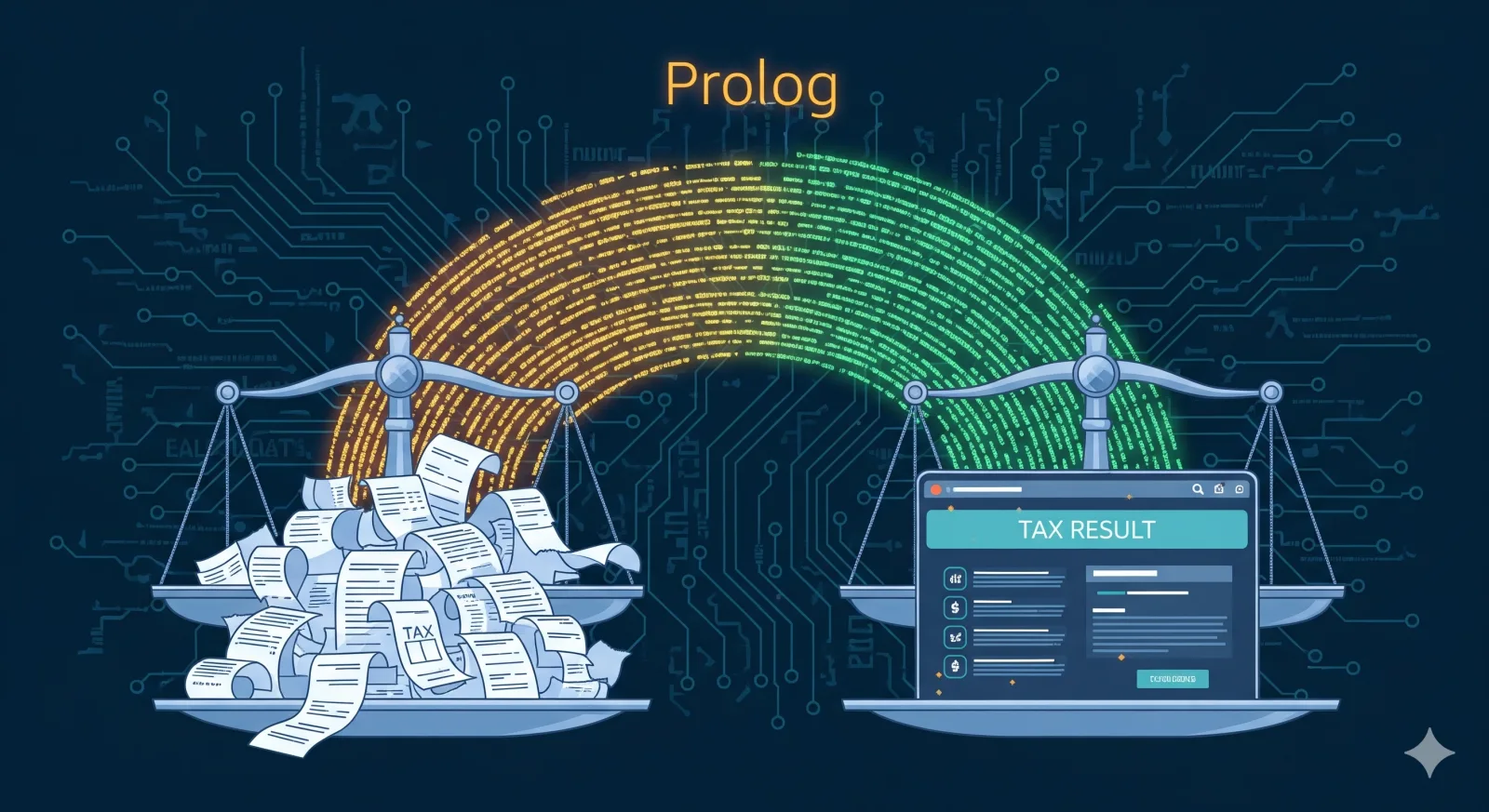
TL;DR for operators Tax AI should not be judged by whether the model can produce a confident answer in fluent prose. That is how one builds a very polite liability machine. The useful pattern in this paper is architectural: let the language model translate statutory text and taxpayer facts into executable Prolog; let a symbolic solver compute the result; reject outputs that fail execution or disagree across independent attempts; then evaluate the system using an error-cost ledger, not just accuracy.1 The paper’s strongest practical message is therefore not “LLMs can do tax”. It is: high-stakes rule automation becomes more credible when the model is demoted from final authority to structured translator. ...

August 31, 2025 · 15 min · Zelina
Cover image

Put It on the GLARE: How Agentic Reasoning Makes Legal AI Actually Think

TL;DR for operators GLARE is useful because it attacks the boring but expensive failure mode in legal AI: the model jumps to the familiar label, decorates the guess with legal-sounding prose, and hopes nobody asks whether a nearby charge would have fit better. The paper proposes an agentic legal judgment prediction framework that does three things in sequence: it expands the set of candidate charges, retrieves precedents with explicit reasoning paths rather than just similar facts, and performs targeted legal search when the model detects a knowledge gap.1 That mechanism matters more than the branding. GLARE is not “RAG, but with legal documents.” It is closer to a small operating procedure for legal reasoning: widen the hypothesis space, compare alternatives, then fetch the missing premise. ...

August 25, 2025 · 17 min · Zelina
Cover image

When AI Plays Lawmaker: Lessons from NomicLaw’s Multi-Agent Debates

TL;DR for operators NomicLaw is best read as an audit harness, not as a prototype parliament for machines. The paper puts ten open-source LLMs into a simplified lawmaking game: propose a rule, justify it, vote on one proposal, accumulate points, repeat. That mechanism turns vague questions about “AI deliberation” into measurable traces: self-voting, reciprocity, coalition switching, vote volatility, first-mover effects, winner mentions, and shifts in legal-rhetorical framing.1 ...

August 8, 2025 · 16 min · Zelina