Cover image

Same Old Spark: Why AI Creativity Needs Metacognition, Not More Polish

Same Old Spark: Why AI Creativity Needs Metacognition, Not More Polish A marketing team asks twenty people to draft campaign ideas with the same AI assistant. The results arrive quickly. They are fluent, structured, audience-aware, and unusually presentable for first drafts. Then someone reads them side by side. The problem is not that the ideas are bad. That would be easier. The problem is that they are good in the same way. Same rhythm. Same safe positioning. Same “unexpected” angle that everyone, apparently, discovered independently with a little help from the same machine. The team has not automated creativity. It has automated convergence with nicer formatting. ...

June 11, 2026 · 17 min · Zelina
Cover image

From Search to Synthesis: Why AI’s Next Leap Requires Structured Thinking

Spreadsheet. That is where many impressive AI research reports quietly go to die. A model can browse twenty web pages, produce a polished executive memo, cite three market reports, and still fail at the boring part: comparing numbers, checking whether a table supports a claim, generating the right chart, and then explaining what the chart actually means. The output looks like research. The mechanism underneath is closer to literary confidence with a browser tab. ...

April 11, 2026 · 17 min · Zelina
Cover image

Proofs at Scale: When 30,000 Agents Replace the Referee

Mathematics has a management problem. That sounds less romantic than saying it has a reasoning problem, but romance is not usually where bottlenecks hide. A proof can be brilliant, a referee can be diligent, and still the verification system can fail for the boring reason that nobody has enough time to check everything line by line. The paper Automatic Textbook Formalization takes that bottleneck seriously and then does something unusually concrete: it reports a multi-agent system that formalized a 500-plus-page graduate algebraic combinatorics textbook into Lean, with all 340 target definitions and theorems proved, in about one week.1 ...

April 6, 2026 · 18 min · Zelina
Cover image

Agents That Remember: Why HERA Turns RAG into a System, Not a Trick

A customer-support bot fails in the most ordinary way. It retrieves the right policy document. It identifies the right customer case. It even quotes the correct refund condition. Then, somewhere between retrieval and answer synthesis, it forgets that the customer bought the product through a reseller, not directly from the company. The final answer is plausible, polite, and wrong. The system did not lack information. It lacked coordination. ...

April 2, 2026 · 20 min · Zelina
Cover image

From Scroll to Structure: Rethinking Academic Reading with TreeReader

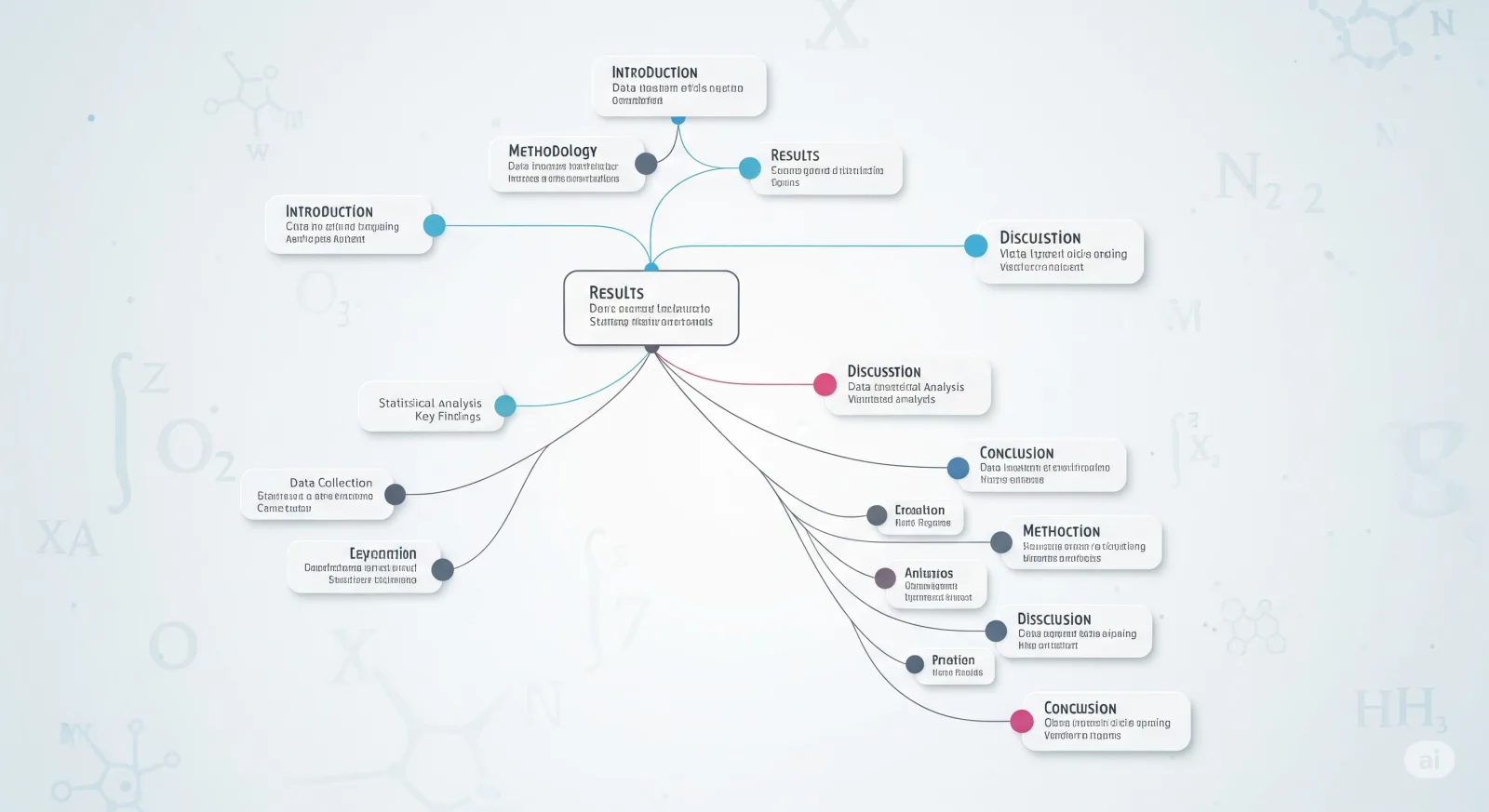
TL;DR for operators TreeReader is not interesting because it uses an LLM to summarise papers. That part is now table stakes, which is a polite way of saying everyone has already built the demo. It is interesting because it treats a paper as a hierarchy rather than a scroll. Sections, subsections, paragraphs, figures, and tables become nodes in an interactive tree. Each node gets a concise LLM-generated summary, and the user can expand downward when detail is needed or move upward when context matters. Crucially, summaries are linked back to source text, so the system does not ask the reader to trust the model’s charming little hallucination engine on vibes alone.1 ...

August 2, 2025 · 17 min · Zelina
Cover image

Beyond the Pull Request: What ChatGPT Teaches Us About Productivity

TL;DR for operators Most companies still ask the wrong first question about LLMs in software development: “Do they make developers write code faster?” That question is not useless. It is just too small. A recent paper by Sardar Bonabi, Sarah Bana, Vijay Gurbaxani, and Tingting Nian uses Italy’s temporary 2023 ChatGPT ban as a natural experiment to examine what happened to public GitHub activity when Italian developers abruptly lost access to ChatGPT, compared with similar developers in France and Portugal.1 The study covers 88,022 open-source software developers and looks at a 16-week window: eight weeks before the ban, four weeks during it, and four weeks after access was restored. ...

July 1, 2025 · 17 min · Zelina