Cover image

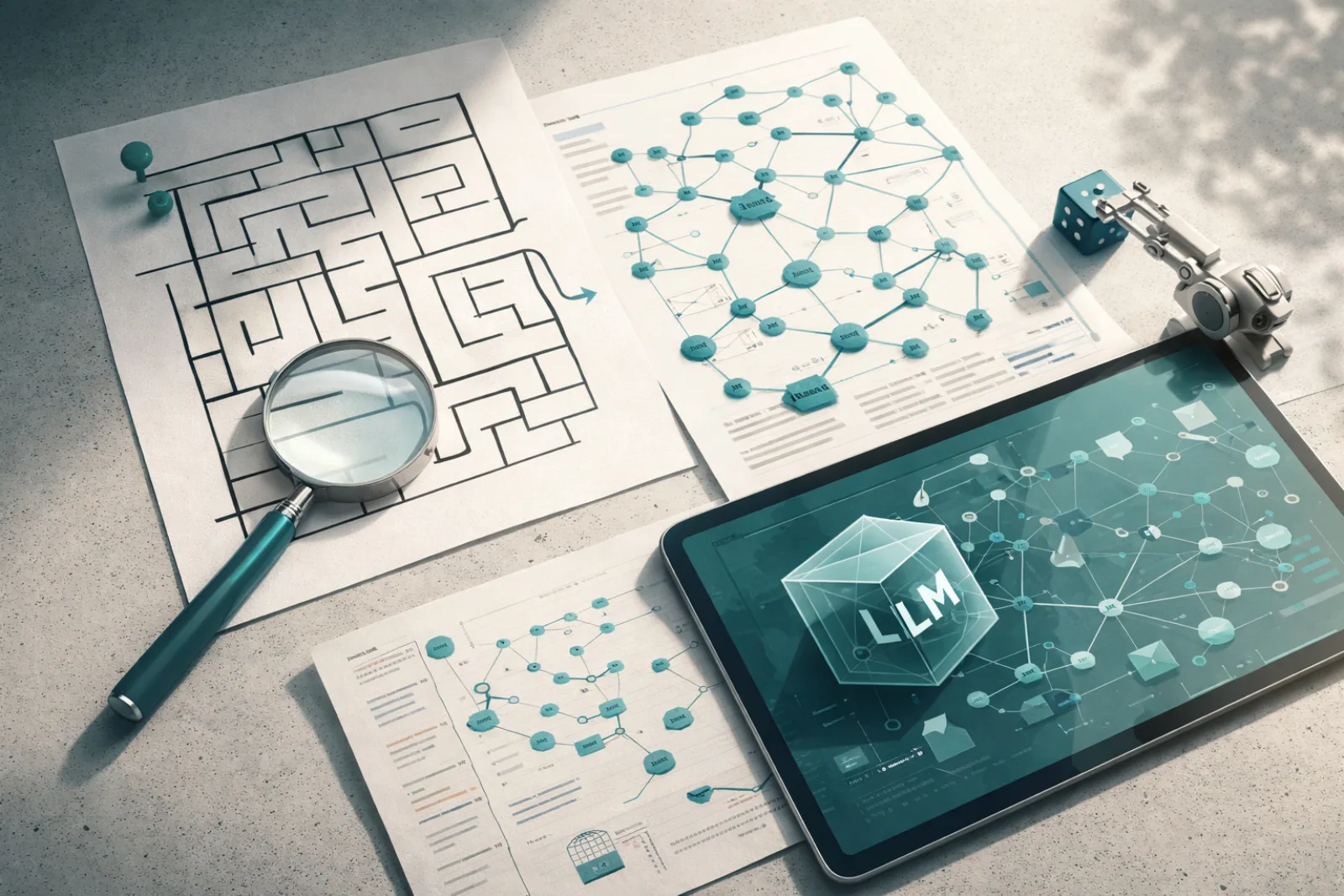
Walking the Graph: When LLMs Stop Guessing and Start Navigating

Enterprise data has a familiar bad habit: it looks organized until someone asks a question that requires moving across it. A supplier is connected to a factory, the factory is connected to a product line, the product line is connected to a delayed shipment, and the shipment is tied to a contract clause that nobody wants to read at 11:40 p.m. The graph exists. The relationships exist. The answer is somewhere inside the structure. Then an LLM pipeline retrieves a subgraph, pastes it into a prompt, and asks the model to “reason carefully.” ...

April 5, 2026 · 19 min · Zelina
Cover image

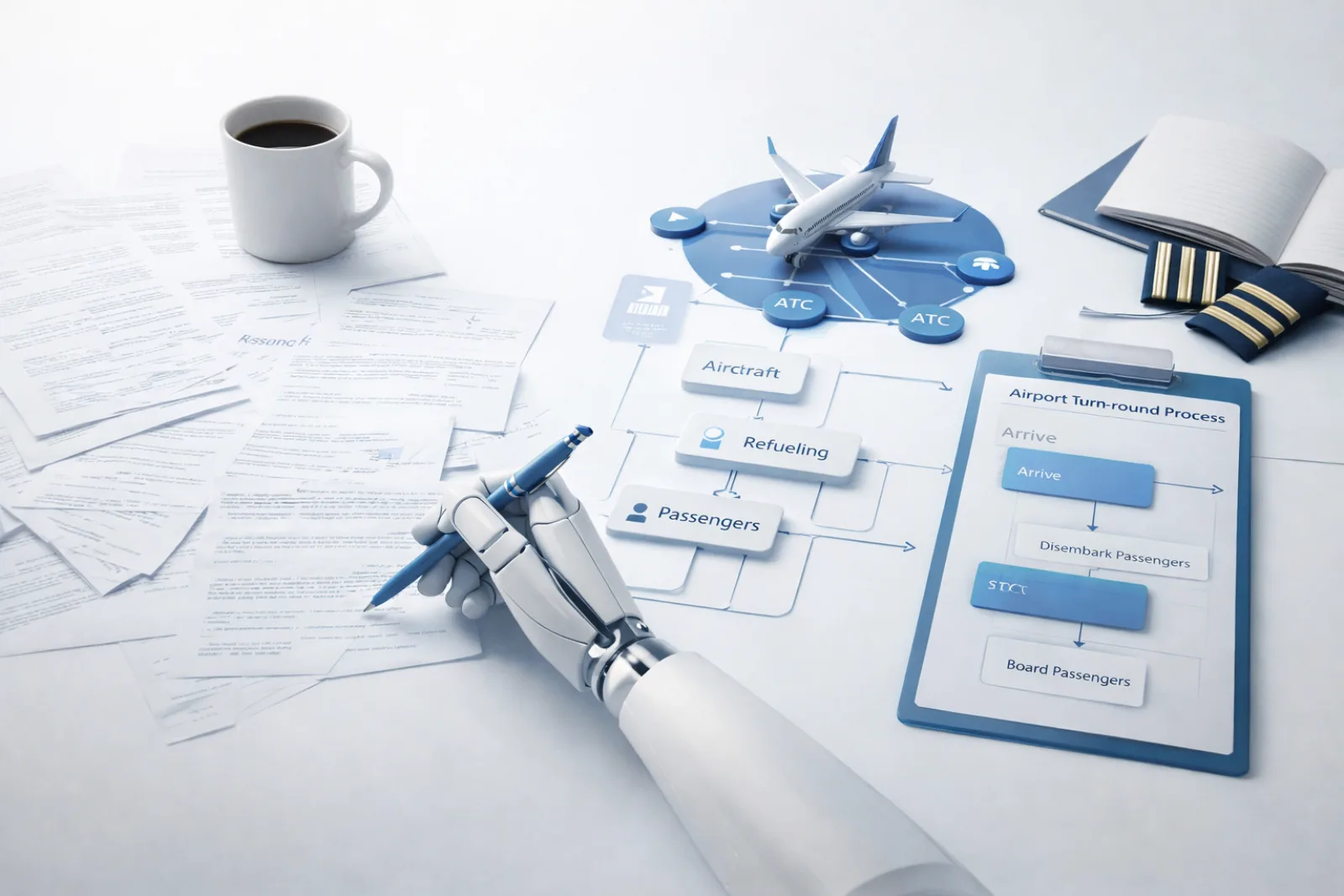
From Black-Box to Boarding Gate: When LLMs Finally Learn to Show Their Work

Airports are where ordinary corporate coordination problems go to become expensive. A delayed data update is not just an “alignment issue.” A vague handoff is not just “cross-functional friction.” A misunderstood phrase can move aircraft, ground crews, gates, passengers, baggage, and regulatory responsibility in the wrong order. Aviation has a talent for making management consultants’ favorite words suddenly physical. Very inconsiderate of it. ...

March 30, 2026 · 15 min · Zelina
Cover image

From Pipelines to Research Brains: The Rise of AI-Supervised Science

Memory is the boring word that decides whether an AI agent is useful or merely theatrical. A familiar business scene: a team builds an AI workflow to scan documents, generate ideas, produce drafts, and recommend next actions. The demo looks clever. The first week feels magical. Then the cracks appear. The system repeats discarded ideas. It forgets why an option was rejected. It summarizes a project but cannot explain how one failure in March should change a decision in April. Its “memory” is really a longer chat transcript wearing a lab coat. ...

March 26, 2026 · 15 min · Zelina
Cover image

DIAL-KG: When Knowledge Graphs Finally Learn Like Humans

Documents change. That sounds too obvious to deserve a research paper. Product documentation changes. Compliance rules change. APIs are deprecated. Security policies are replaced. A customer support article says one thing in January, a release note quietly reverses it in March, and the enterprise search system confidently retrieves both as if time were just a decorative metadata field. ...

March 23, 2026 · 19 min · Zelina
Cover image

From Hallucination to Verification: Why AI Needs a Pharmacist’s Mindset

Prescription checks are a good way to humble AI. Not because the language is impossible. Drug labels, clinical notes, dosage instructions, contraindications, and interaction warnings are all text-heavy. LLMs are good at text. That part is not the problem. The problem is that prescription verification is not a writing task. It is a safety task disguised as a reading task. A pharmacist is not merely asking, “Does this paragraph sound medically reasonable?” The real question is narrower and harsher: given this patient, this drug, this dose, this route, this timing, this interaction profile, and this missing or available clinical data, is there a specific safety issue that must be raised? ...

March 13, 2026 · 17 min · Zelina
Cover image

Memory Matters: Teaching Medical AI to Remember Like a Pathologist

Memory is a boring word until the diagnosis is wrong. A pathologist does not look at a whole-slide image as a flat picture. They see morphology, compare it with disease categories, recall grading criteria, filter out misleading patterns, and decide which pieces of old knowledge deserve attention in the current case. That last part is easy to understate. Expertise is not only having knowledge. It is knowing when to activate it. ...

March 11, 2026 · 15 min · Zelina
Cover image

Glyphs That Remember the Past: Teaching AI to Read History Without Being Told It

Symbols are easy to digitize and surprisingly hard to respect. A business team sees two product names, two supplier records, two compliance clauses, or two scanned forms that look related. The lazy engineering answer is: “label the matches, label the non-matches, train a contrastive model.” That answer often works. It is also how many embedding systems quietly turn uncertainty into false certainty, then call the result “semantic similarity.” Very tidy. Very confident. Occasionally very wrong. ...

March 10, 2026 · 15 min · Zelina
Cover image

Your AI’s Memory Palace: Why Personal Assistants Need a Knowledge Graph

Memory is the feature every personal AI assistant promises and the part most of them quietly fail to deliver. Not because the models are stupid. That would be too comforting. The deeper problem is that a person’s life is not stored as one clean document. It is scattered across calendar entries, photos, call logs, notes, documents, alarms, contacts, screenshots, receipts, and the occasional file named “final_final_revised_v3.pdf,” because civilization remains fragile. ...

March 9, 2026 · 16 min · Zelina
Cover image

Emergency Intelligence: When AI Designs the Curriculum

Training looks simple from far away. Put people in a room, give them scenarios, let an experienced instructor correct them, repeat until competence appears. This is charming. It is also how organizations quietly discover that “human expertise” does not scale just because someone bought a learning management system. The new PACE paper, PACE: A Personalized Adaptive Curriculum Engine for 9-1-1 Call-taker Training, studies a very specific version of this problem: training emergency call-takers, the people who answer 9-1-1 calls before police, fire, or medical responders enter the scene.1 The paper’s setting is unusually useful because the stakes are high, the skill structure is complex, and the training bottleneck is not vague. A call-taker must master more than a thousand interdependent procedural skills across 63 incident types. A missed question or wrong instruction can cascade across an entire protocol. ...

March 6, 2026 · 15 min · Zelina
Cover image

Double Helix, Double Checks: Why Agentic AI Needs Governance Before It Writes Your Code

Code is where AI confidence goes to become expensive. A chatbot can produce a plausible function in ten seconds. An agent can now plan a refactor, split files, update interfaces, generate documentation, and politely leave behind a system that fails because one event payload forgot a required field. Very efficient. Very modern. Very annoying. ...

March 5, 2026 · 16 min · Zelina