Cover image

Mind the Gap: Why Agency Isn’t Intelligence (Yet)

A trading bot keeps executing while the market regime changes. A warehouse robot keeps optimizing its route while a sensor slowly drifts. A customer-service agent keeps sounding fluent while the conversation loses coherence one turn at a time. From the outside, the system still looks agentic. It acts. It responds. It may even keep producing acceptable short-term outcomes. The dashboard, naturally, waits until the mess is obvious. Dashboards are polite like that. ...


February 28, 2026 · 16 min · Zelina
Cover image

Auditing the Illusion of Forgetting: When Unlearning Isn’t Enough

Deletion requests sound simple until the model answers politely. A user asks for data to be removed. A publisher demands that copyrighted passages stop being reproduced. A compliance team wants evidence that a fine-tuned model no longer carries traces of a forbidden dataset. The model is run through an unlearning method, the surface tests improve, the dashboard turns less red, and everyone enjoys the brief spiritual comfort of a green checkmark. ...

January 22, 2026 · 17 min · Zelina
Cover image

MI-ZO: Teaching Vision-Language Models Where to Look

Camera placement is an unglamorous way to lose an AI project. A vision-language model may recognize doors, ladders, rocks, chairs, and surface textures perfectly well in ordinary images. Point the camera at the wrong side of an object, however, and the relevant feature disappears. Show the model eight similarly unhelpful views and it has received more data without receiving more evidence. ...

January 2, 2026 · 16 min · Zelina
Cover image

Bits, Bets, and Budgets: When Agents Should Walk Away

Budget is not an afterthought Budget is usually treated as the boring part of agent design. The exciting part is the agent: planning, calling tools, trying strategies, revising itself, and occasionally behaving like a junior analyst who has discovered both confidence and the corporate credit card. But in real automation, budget is not boring. Budget is the boundary between useful autonomy and expensive wandering. ...

December 9, 2025 · 16 min · Zelina
Cover image

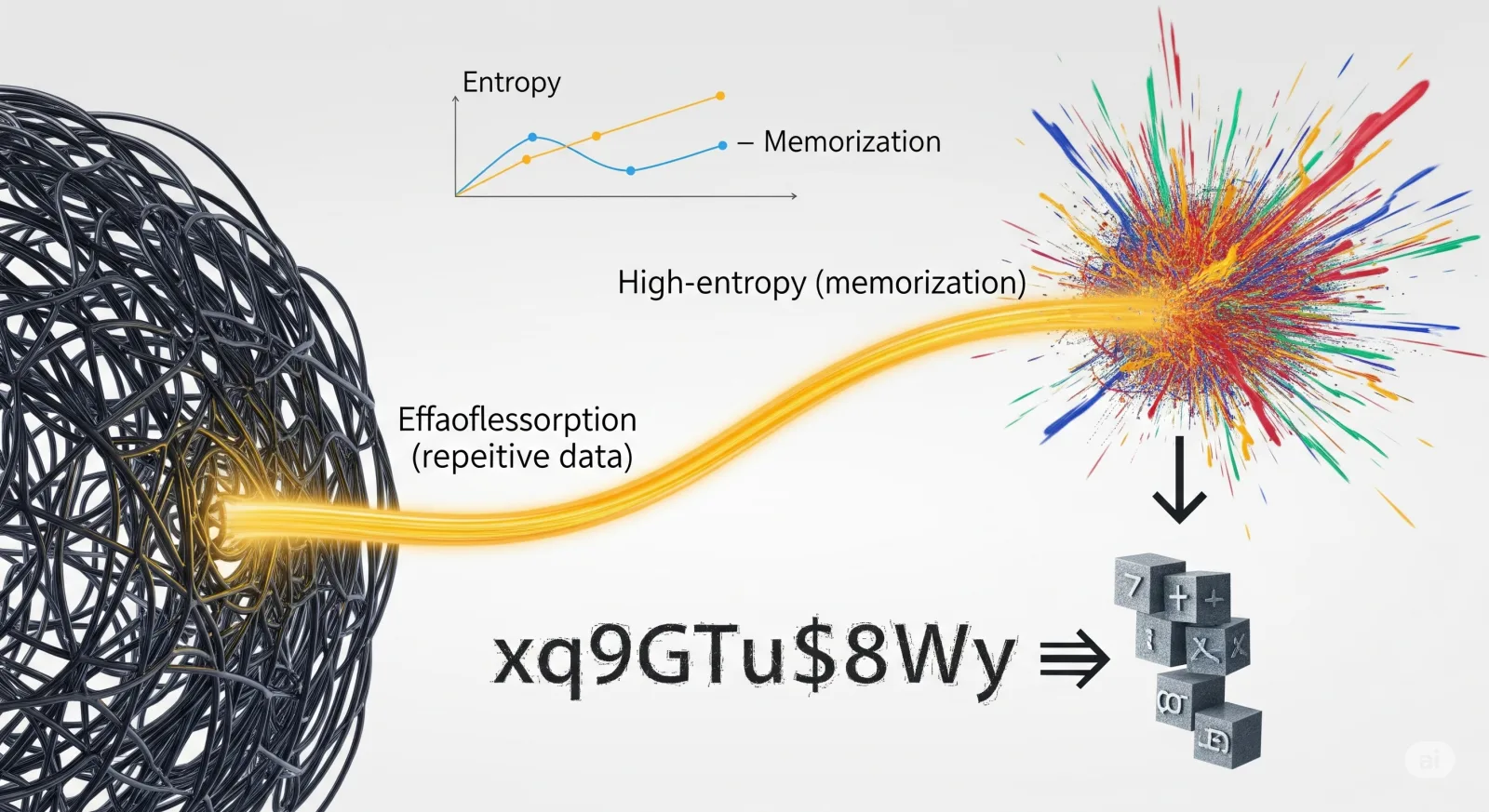
What LLMs Remember—and Why: Unpacking the Entropy-Memorization Law

TL;DR for operators Memorization audits usually start with the wrong question: “Which individual text snippets look memorized?” This paper suggests a better first diagnostic: group many snippets by how closely the model reproduces them, then measure the entropy of the token distribution inside each group.1 The result is an empirical pattern the authors call Entropy–Memorization Linearity. In plain English: when training examples are pooled by edit-distance score, their set-level entropy forms a strong linear relationship with how closely the model reproduces them. Since the paper’s “memorization score” is an edit distance, lower score means stronger verbatim reproduction; higher score means the generated continuation is farther from the ground truth. ...

July 13, 2025 · 15 min · Zelina