Cover image

The Gospel of Faithful AI: How FaithAct Rewrites Reasoning

TL;DR for operators FaithAct is useful because it changes the unit of control. Instead of asking whether a multimodal model’s final answer is correct, it asks whether each intermediate claim is supported by the image before that claim is allowed to steer the next step.1 That is a more operational target. Accuracy tells you whether the system arrived somewhere acceptable; perceptual faithfulness tells you whether it drove through the road or hallucinated a bridge. ...

November 12, 2025 · 14 min · Zelina
Cover image

FAITH in Numbers: Stress-Testing LLMs Against Financial Hallucinations

TL;DR for operators FAITH is useful because it changes the hallucination question from “Does the model sound right?” to “Can the model reconstruct a known financial number from the exact tables and surrounding text that justify it?”1 That sounds modest. It is not. In finance, modest is usually where the damage hides. ...

August 8, 2025 · 18 min · Zelina
Cover image

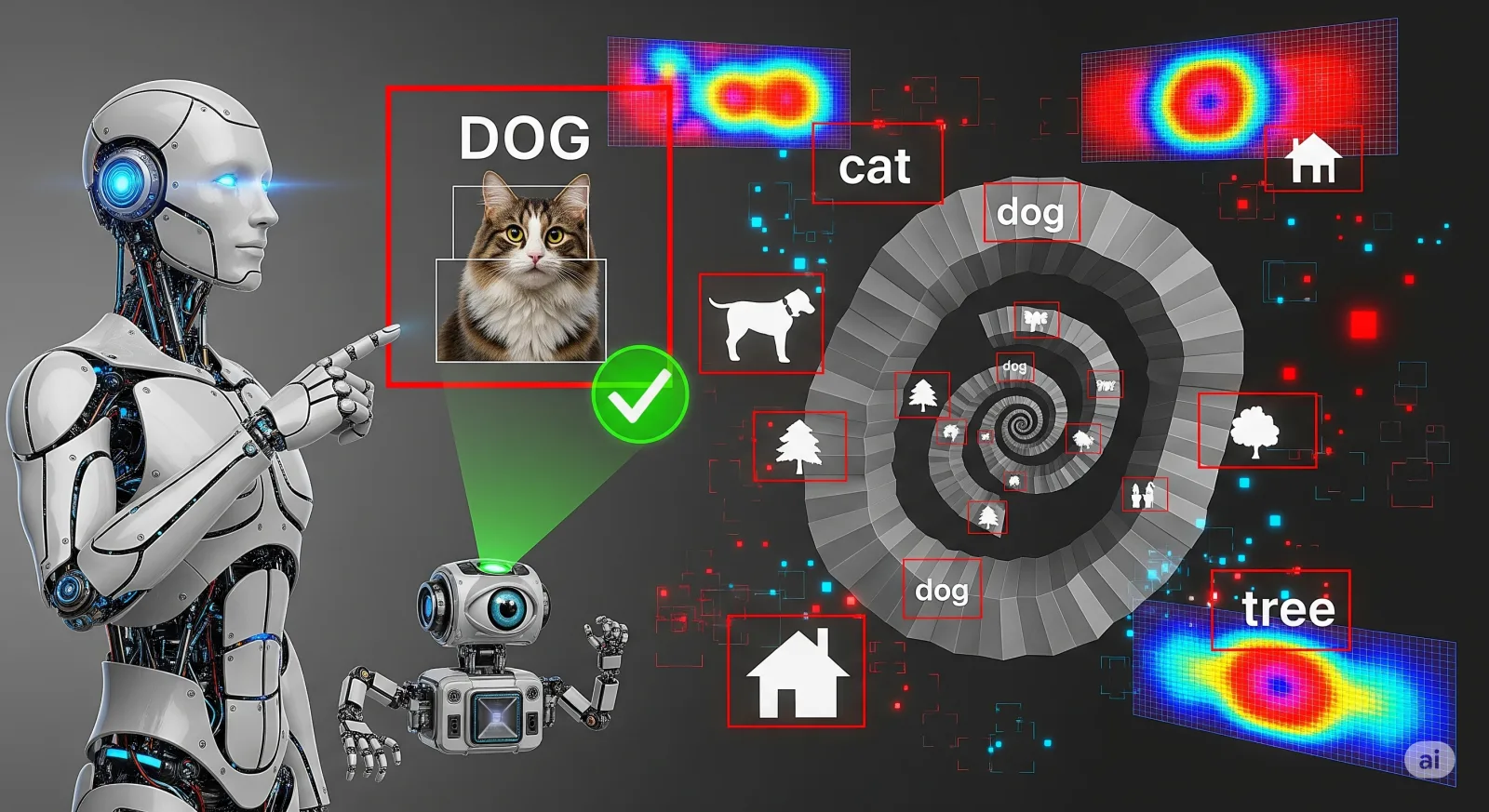
Seeing Is Deceiving: Diagnosing and Fixing Hallucinations in Multimodal AI

TL;DR for operators A multimodal model can look at an image and still answer from memory, habit, or linguistic guesswork. That is the uncomfortable core of visual hallucination: the output is fluent, relevant-looking, and sometimes even useful, while being only loosely attached to the pixels it claims to describe. The practical lesson is not “never use multimodal AI.” That would be tidy, dramatic, and mostly useless. The lesson is narrower and more valuable: visual hallucinations need to be diagnosed by where grounding fails, not merely counted after the model has embarrassed itself. ...

August 5, 2025 · 14 min · Zelina
Cover image

Mirage Agents: When LLMs Act on Illusions

TL;DR for operators LLM agents do not merely hallucinate by saying false things. They hallucinate when they act on a version of the world that does not match the task, the history, or the screen in front of them. That is the useful idea in MIRAGE-Bench: it treats agent hallucination as context-unfaithful action. The agent may click a button that is not there, assume a page transition succeeded when it did not, answer a colleague’s question with invented information, submit code despite failed tests, or report success when the environment says otherwise. Very industrious. Very confident. Very much not what you want near production systems. ...

July 29, 2025 · 19 min · Zelina
Cover image

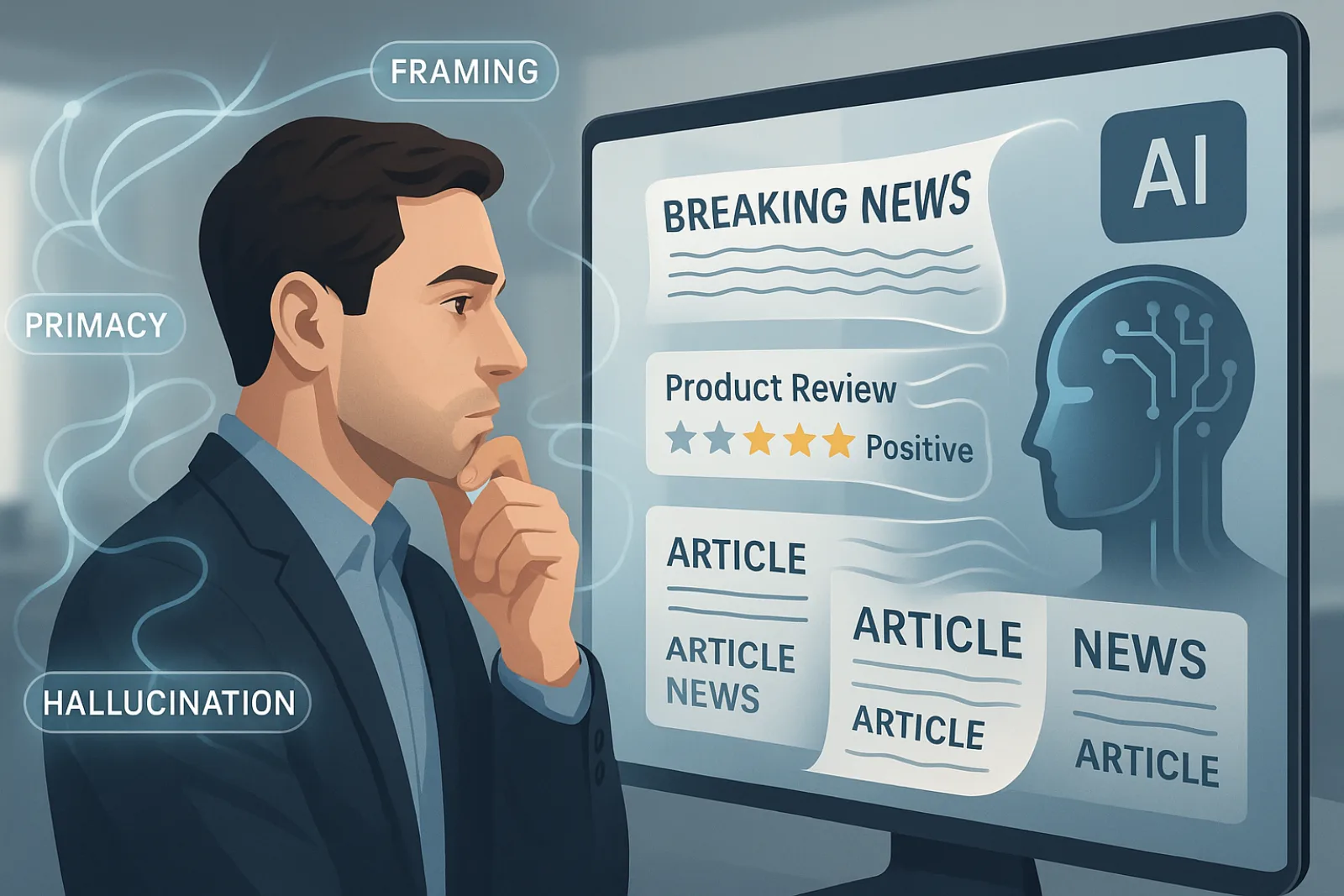
Mind Games: How LLMs Subtly Rewire Human Judgment

TL;DR for operators When an LLM summarises a review, policy memo, support ticket, medical note, or news item, the operational question is not only “Did it get the facts right?” The sharper question is: did it change what the user is likely to believe, prioritise, or buy? The paper behind this article studies exactly that problem. It treats LLM-generated content as a decision interface and measures three ways the interface can quietly bend human judgment: changing the sentiment frame of the source, overemphasising the beginning of the source, and fabricating confident answers for events beyond the model’s knowledge cutoff.1 ...

July 8, 2025 · 19 min · Zelina
Cover image

The Crossroads of Reason: When AI Hallucinates with Purpose

TL;DR for operators Do not ask, “Can the model do the task?” Ask, “Does the model use the capabilities it already has when the task becomes messy?” Hallucination is not one thing. In a medical, legal, financial, or investment workflow, it is a defect. In a labelled creative mode, it can be a feature. Revolutionary stuff: context matters. Goal-directedness is also not one thing. More goal pursuit can improve execution, but it also raises safety and governance questions. The sensible business pattern is not “deploy an autonomous AI analyst and hope it behaves”. It is mode governance: separate factual, creative, and decision-support modes with different metrics, interfaces, and controls. High-stakes workflows need scaffolding: memory, rule extraction, refinement loops, ensemble checks, scoring, audit trails, and humans who can edit policy rather than merely admire the model’s prose. AI products are currently being sold with a suspiciously convenient promise: one conversational interface will reason, search, write, create, decide, advise, analyse, and maybe spiritually support the quarterly planning meeting if procurement approves the invoice. ...

April 18, 2025 · 16 min · Zelina
Cover image

What Happens in Backtests… Misleads in Live Trades

TL;DR for operators A beautiful backtest can still be a lie. Not because the model is malicious, obviously; spreadsheets have not yet formed a union. The problem is simpler and more expensive: a model can fit past data while misrepresenting the thing you actually care about. Charles Rathkopf’s paper on hallucination and reliability in scientific generative AI gives operators a useful way to think about this problem.1 It argues that hallucination should not be defined mainly as deviation from training data. In science, and in business domains that behave like science, the real question is whether an output misrepresents the target phenomenon: a protein, a weather system, a molecule, a patient, a market, a factory, a supply chain. ...

April 15, 2025 · 17 min · Zelina