Cover image

The Gate Before the Graph: Why Technical RAG Needs Evidence Control

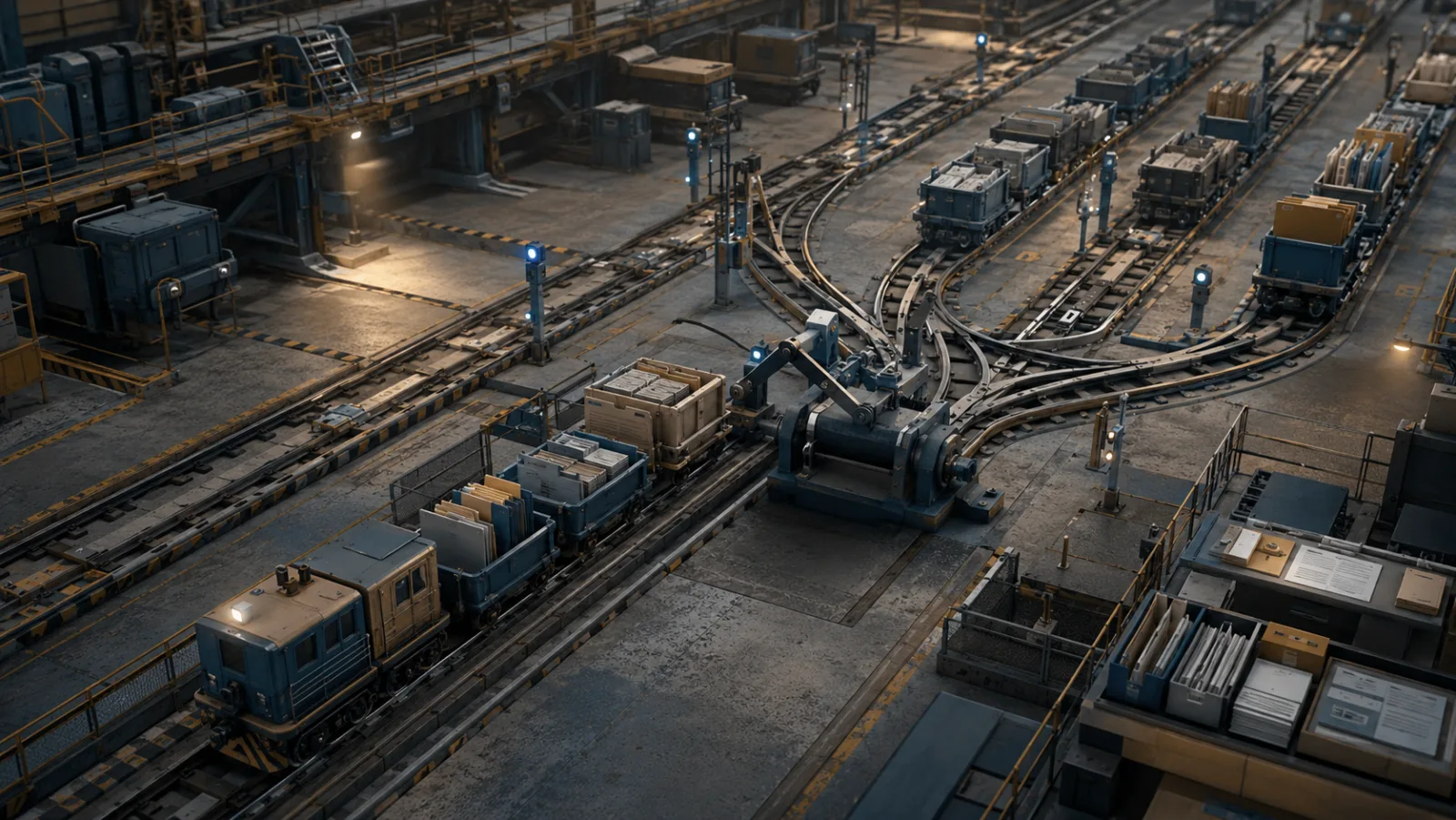
Search is easy until it becomes responsible. A product engineer asks, “What methods exist for real-time tire friction estimation?” A normal search tool returns papers. A normal RAG system retrieves chunks. A confident LLM then writes a neat answer, preferably with enough bullet points to look managerial. The problem is not that this answer is always wrong. That would be mercifully simple. The problem is that it may be locally plausible but evidentially thin: two relevant chunks, one outdated method, no coverage of adjacent terminology, and a citation that looks reassuring mostly because it exists. ...

June 6, 2026 · 18 min · Zelina
Cover image

Query the Receipt, Not the Vibe: DualGraph and the RAG Catalog Problem

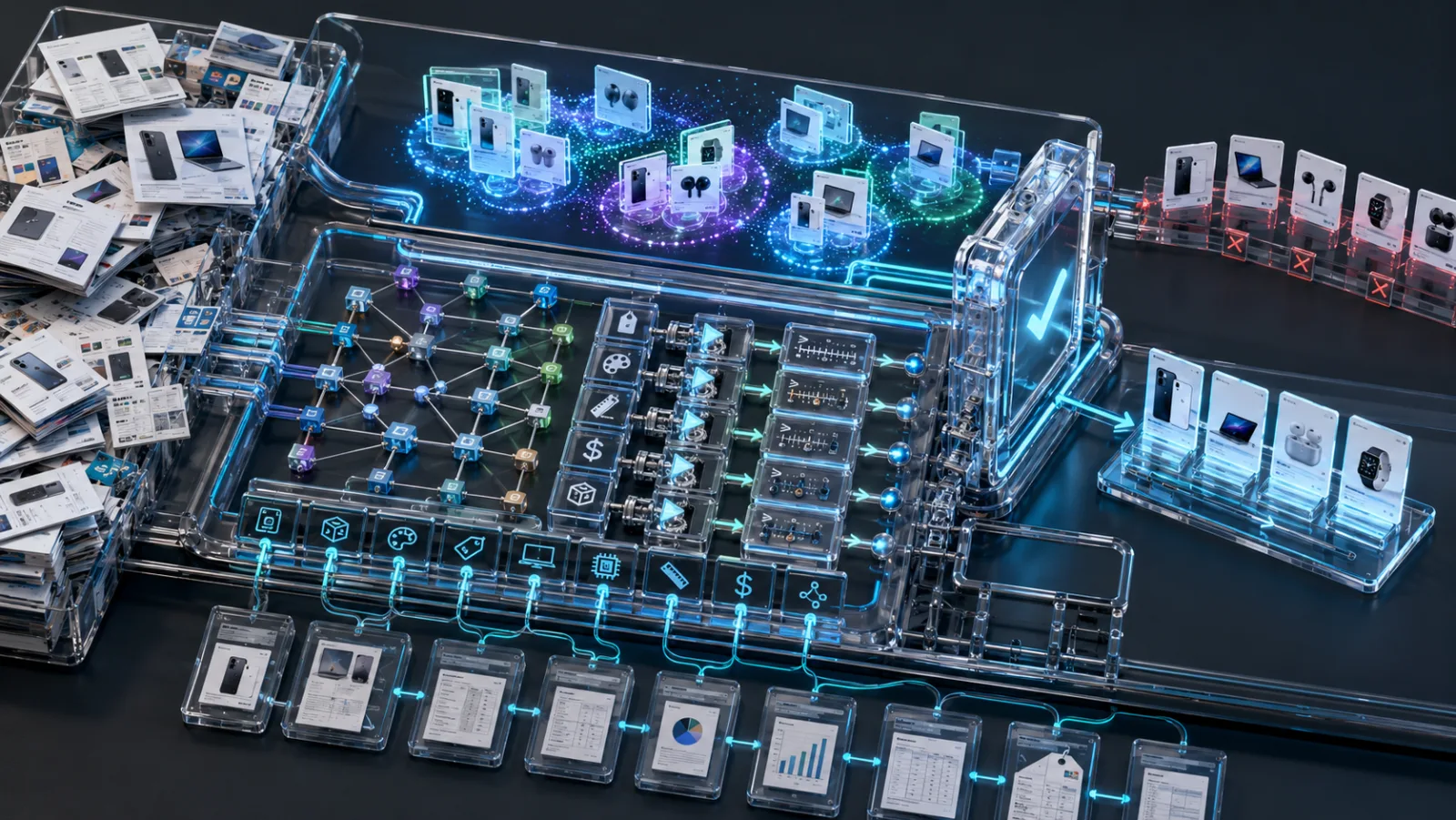
A product catalog is not a paragraph with a search box Catalogs look deceptively friendly to RAG systems. A product page has descriptions, feature bullets, specification tables, prices, variants, categories, and marketing copy. Feed those pages into a vector database, ask an LLM a question, and the system should answer. This is the comforting story. It is also where many enterprise RAG demos begin their quiet decline into customer-support theater. ...

May 30, 2026 · 17 min · Zelina
Cover image

The Memory That Thinks: When AI Stops Remembering and Starts Reasoning

A memory mistake is still a mistake Memory sounds comforting until it remembers the wrong thing. Imagine a clinical AI agent facing a patient whose disease appears to be regressing after prior treatment. A past case in memory says that conflicting cancer signals should not be trusted too quickly. That sounds relevant. It even sounds cautious, which is the preferred costume of many bad decisions. But in this case, the regression is not noise. It is the signal. Treating it as a conflict leads the agent toward unnecessary systemic therapy rather than watchful waiting. ...

March 24, 2026 · 17 min · Zelina
Cover image

Your AI’s Memory Palace: Why Personal Assistants Need a Knowledge Graph

Memory is the feature every personal AI assistant promises and the part most of them quietly fail to deliver. Not because the models are stupid. That would be too comforting. The deeper problem is that a person’s life is not stored as one clean document. It is scattered across calendar entries, photos, call logs, notes, documents, alarms, contacts, screenshots, receipts, and the occasional file named “final_final_revised_v3.pdf,” because civilization remains fragile. ...

March 9, 2026 · 16 min · Zelina
Cover image

Deep GraphRAG: Teaching Retrieval to Think in Layers

Retrieval has a management problem. Not the motivational-poster kind of management problem. The operational kind. A company asks its AI system a question about a contract, a customer dispute, a policy exception, or a technical incident. The answer is not sitting in one paragraph. It is distributed across definitions, transactions, policies, exceptions, and historical context. A flat vector search grabs a few semantically similar chunks and hopes the model can stitch them together. A global summarizer reads widely, compresses aggressively, and occasionally smooths away the exact fact that mattered. A local graph search follows nearby entities and may become very confident inside the wrong neighborhood. ...

January 20, 2026 · 14 min · Zelina
Cover image

Graph Medicine: When RAG Stops Guessing and Starts Diagnosing

Hospitals do not suffer from a shortage of medical text. They suffer from a shortage of medical text that machines can use without becoming dangerously imaginative. Clinical guidelines are full of thresholds, exceptions, disease associations, diagnostic pathways, and terminology that looks tidy only until someone tries to automate it. A guideline may say one thing about a biomarker in the context of cardiovascular risk, another in renal disease, and something subtly different when age, sex, postoperative status, or treatment history enters the room. This is exactly the sort of nuance that makes large language models useful—and also exactly the sort of nuance that makes them risky. ...

November 18, 2025 · 15 min · Zelina
Cover image

GraphRAG Gone Modular: Why Multi-Agent Cypher Matters More Than You Think

Ask a business user what they want from a data system and the answer is usually charmingly simple: “I want to ask a question and get the right answer.” Then reality arrives, wearing a database-admin badge. The data is not in one neat document. It is in entities, attributes, edges, hierarchies, ownership chains, product dependencies, spatial relations, compliance rules, and asset metadata. In other words, it is a graph. And if that graph lives in a labeled property graph database, the system probably expects a query language such as Cypher, not a cheerful paragraph about “leveraging insights”. ...

November 15, 2025 · 13 min · Zelina
Cover image

Cite Before You Write: Agentic RAG That Picks Graph vs. Vector on the Fly

TL;DR for operators Most enterprise RAG failures are not generation failures. They are retrieval-routing failures wearing a very convincing blazer. The paper behind this article proposes an open-source agentic hybrid RAG framework for scientific literature review: bibliographic metadata and citation relationships go into a Neo4j knowledge graph; full-text PDF chunks go into a FAISS vector store; an LLM-based agent decides whether a user’s question should be answered through GraphRAG or VectorRAG; a Mistral-based generator produces the final answer; DPO is used to improve grounding; and bootstrap resampling is used to report evaluation uncertainty.1 ...

August 11, 2025 · 20 min · Zelina
Cover image

The Lion Roars in Crypto: How Multi-Agent LLMs Are Taming Market Chaos

TL;DR for operators MountainLion is best understood as a crypto research operating system, not a mystical trading lion that eats volatility for breakfast. The paper introduces a multi-modal, multi-agent LLM framework that combines technical analysis, news retrieval, on-chain signals, chart interpretation, price forecasting, GraphRAG-style semantic reasoning, and user feedback into a structured investment-reporting pipeline.1 ...

August 3, 2025 · 17 min · Zelina
Cover image

From Cora to Cosmos: How PyG 2.0 Scales GNNs for the Real World

TL;DR for operators PyG 2.0 is not mainly a “new GNN model” story. It is an infrastructure story. The paper presents PyTorch Geometric as a modular graph-learning stack that now covers storage, sampling, heterogeneous and temporal graph handling, neural message passing, acceleration, explainability, and application workflows such as relational deep learning and GraphRAG.1 ...

July 24, 2025 · 18 min · Zelina