Cover image

Forecast First, Ask Later: How DCATS Makes Time Series Smarter with LLMs

TL;DR for operators Forecasting teams usually ask the same question first: which model should we use? DCATS suggests a more operationally useful question: which related histories should this model learn from? The paper introduces DCATS, a Data-Centric Agent for Time Series, an LLM-agent framework that improves forecasting by selecting auxiliary time series for fine-tuning rather than by designing a new forecasting architecture.1 In the authors’ traffic forecasting study, GPT-4 Turbo reads metadata about nearby or similar California traffic sensors, proposes candidate neighbour sets, lets lightweight forecasting models test those proposals, and then refines the next round using validation error. ...

August 7, 2025 · 16 min · Zelina
Cover image

The Lion Roars in Crypto: How Multi-Agent LLMs Are Taming Market Chaos

TL;DR for operators MountainLion is best understood as a crypto research operating system, not a mystical trading lion that eats volatility for breakfast. The paper introduces a multi-modal, multi-agent LLM framework that combines technical analysis, news retrieval, on-chain signals, chart interpretation, price forecasting, GraphRAG-style semantic reasoning, and user feedback into a structured investment-reporting pipeline.1 ...

August 3, 2025 · 17 min · Zelina
Cover image

Tree of Alpha: How MST Networks and Neural Forecasts Outperformed the S&P 500

TL;DR for operators A recent paper, Dependency Network-Based Portfolio Design with Forecasting and VaR Constraints, proposes a portfolio engine that first turns the S&P 500 into a dependency network, then strips that network down to a minimum spanning tree, then selects the five most central stocks, then allocates capital using risk-aware weights, and finally uses ARIMA or neural autoregressive forecasts to decide whether those positions deserve exposure on a given day.1 ...

August 3, 2025 · 18 min · Zelina
Cover image

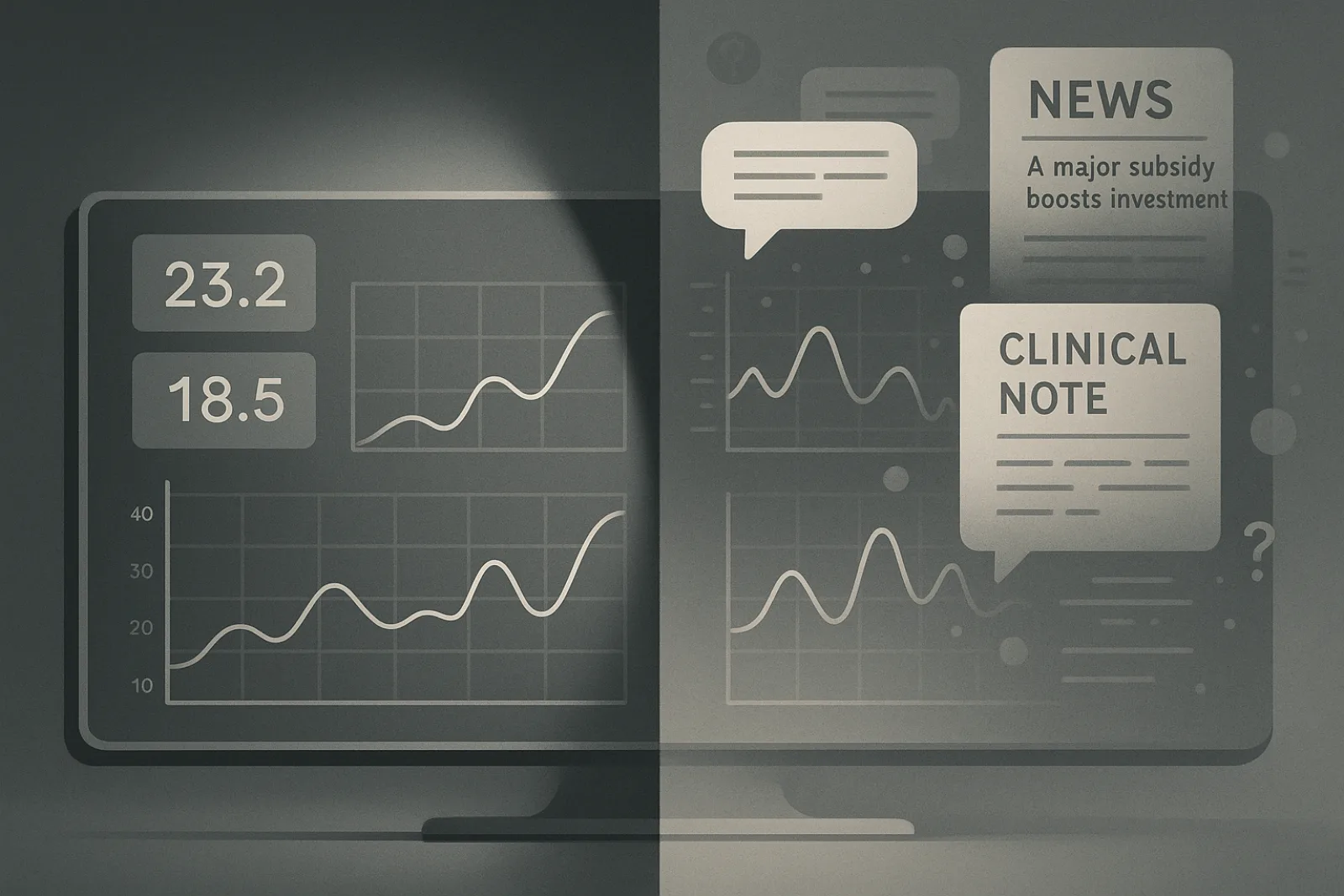
When Text Doesn’t Help: Rethinking Multimodality in Forecasting

TL;DR for operators Text does not automatically make forecasts smarter. It often just makes the pipeline heavier. A new AWS study benchmarks multimodal time-series forecasting across 16 datasets and 7 domains, comparing time-series-only models, alignment-based multimodal models, and direct LLM prompting.1 The uncomfortable result is that multimodality is not a universal upgrade. Strong unimodal models still win on a substantial share of the benchmark, and the paper’s statistical tests do not support a blanket claim that adding text reliably improves accuracy. ...

June 30, 2025 · 15 min · Zelina