Cover image

The Path Between Slices Is Part of the Model

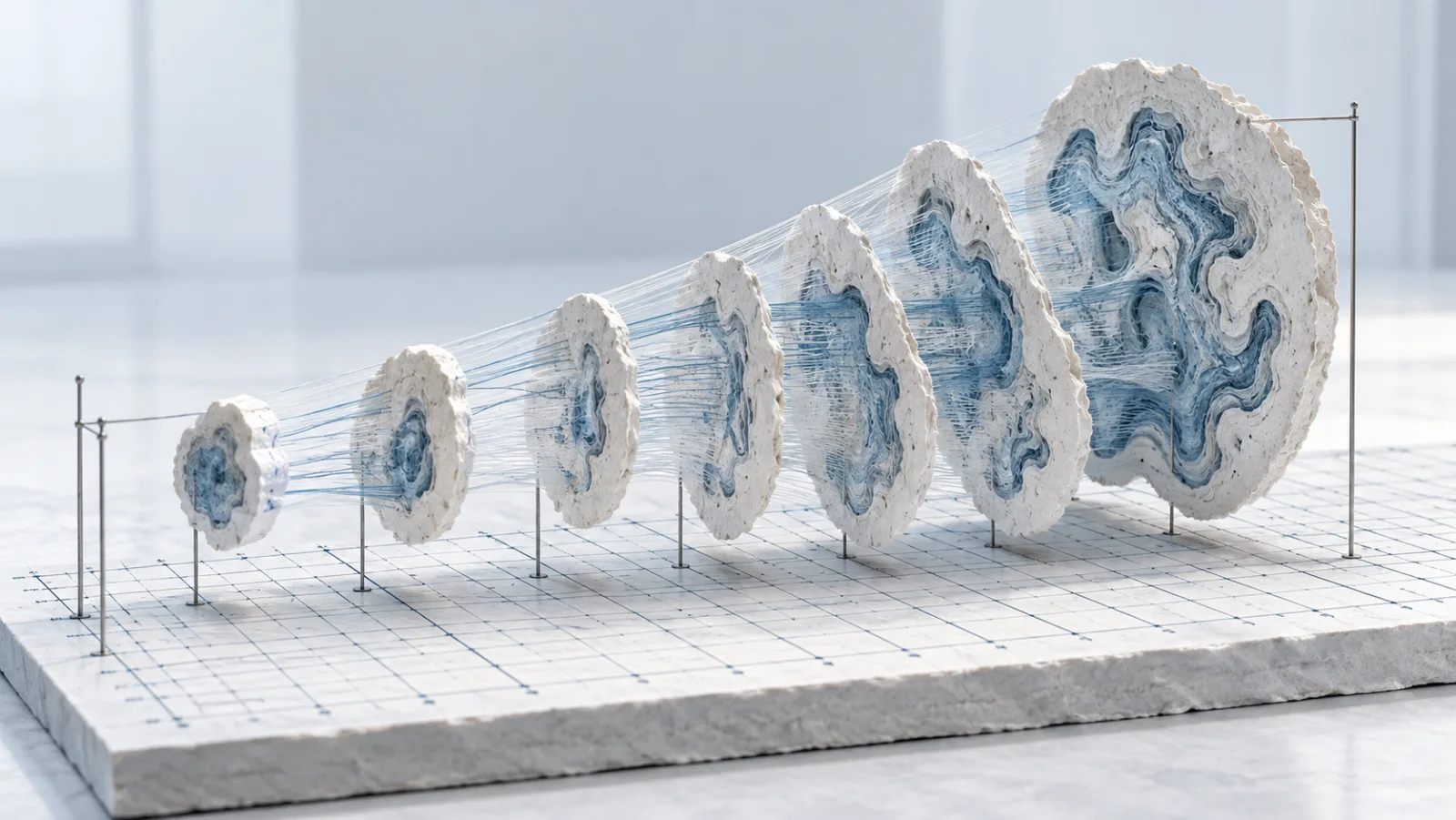
TL;DR for operators If a reconstruction system has observations at two time points or tissue depths, improving the match between those endpoints is only part of the problem. TP-DATE shows that the trajectory used to connect them can independently affect reconstruction quality. The authors hold the static quadratic-form optimal transport coupling fixed and change only the conditional path. Replacing TP-DATE’s interaction-aware trajectory with straight interpolation worsens every reported mean metric on both Mouse brain and ARTISTA. That isolates a practical point: the path carries modeling information that is not already contained in the endpoint assignment. ...


October 13, 2026 · 7 min · Zelina
Cover image

Mirror, Mirror on the Latent: How Reflective Flow Sampling Sharpens Text‑to‑Image Models

Image generation teams have a familiar problem: the model is good enough to impress people in a demo, then slightly disobedient enough to annoy them in production. The prompt asks for a red ceramic teapot on a wooden table. The output gives a beautiful teapot, possibly red, possibly ceramic, possibly levitating in a tasteful manner. Add text, spatial relations, or editing instructions, and the gap between “pretty” and “correct” becomes a recurring invoice. ...

March 10, 2026 · 17 min · Zelina
Cover image

From Data to Atoms: How CliqueFlowmer Turns AI Into a Materials Inventor

A materials lab does not need an AI system that can politely imitate the periodic table. It needs one that can search. That difference sounds small until money enters the room. In materials discovery, every serious candidate eventually asks for simulation time, specialist review, density functional theory validation, and—if it survives long enough—lab synthesis. A model that produces many plausible crystals is useful. A model that pushes candidates toward a target property before the expensive validation begins is more useful. Less glamorous, perhaps. But so is a good spreadsheet, and civilization somehow survives. ...

March 9, 2026 · 17 min · Zelina
Cover image

Think First, Grasp Later: Why Robots Need Reasoning Benchmarks

A robot receives a simple instruction: pick up the blue cup. It approaches the blue cup, positions its gripper badly, and knocks the cup over. Another robot moves smoothly, closes its gripper precisely—and picks up the red cup. On the operations dashboard, both attempts may appear under the same pleasantly uninformative label: task failed. ...

January 3, 2026 · 17 min · Zelina
Cover image

What We Don’t C: Why Latent Space Blind Spots Matter More Than Ever

A dataset rarely hides everything equally. In most organisations, the visible structure is already over-managed. Product images are labelled by category. Medical scans are labelled by diagnosis. Satellite imagery is indexed by region and timestamp. Customer records are sliced into the usual demographic trays. Scientific images come with whatever measurements the field has already agreed are worth writing down. ...

November 13, 2025 · 16 min · Zelina