Cover image

Fine-Tuning Without Fine-Tuning: How Fints Reinvents Personalization at Inference Time

Memory is a useful product feature until it becomes a junk drawer. That is the quiet problem behind many “personalized” AI systems. A user has a history. The system retrieves some of it. The model receives a longer prompt. The output becomes, in theory, more personal. In practice, the assistant often behaves like someone who read your old emails in a hurry and decided this was the same as knowing you. ...

November 5, 2025 · 16 min · Zelina
Cover image

The Esperanto of AI Agents: How the Agent Data Protocol Unifies a Fragmented Ecosystem

Every engineering team has met this problem: the useful data exists, but it lives in thirteen different shapes, three different tool conventions, two incompatible logs, and one heroic spreadsheet that nobody dares to open. AI agents have the same disease, only with more acronyms. The paper behind the Agent Data Protocol, or ADP, argues that large-scale supervised fine-tuning of AI agents has been held back less by a lack of data than by a lack of shared representation.1 Agent datasets already exist for coding, software engineering, web browsing, API use, operating-system interaction, and general tool use. The difficulty is that each one tends to encode actions, observations, tool calls, web states, messages, and execution feedback in its own local dialect. Naturally, every dataset is special. How convenient for nobody. ...

November 2, 2025 · 12 min · Zelina
Cover image

Spin Doctors: Why RL Fine‑Tuning Mostly Rotates, Not Reinvents

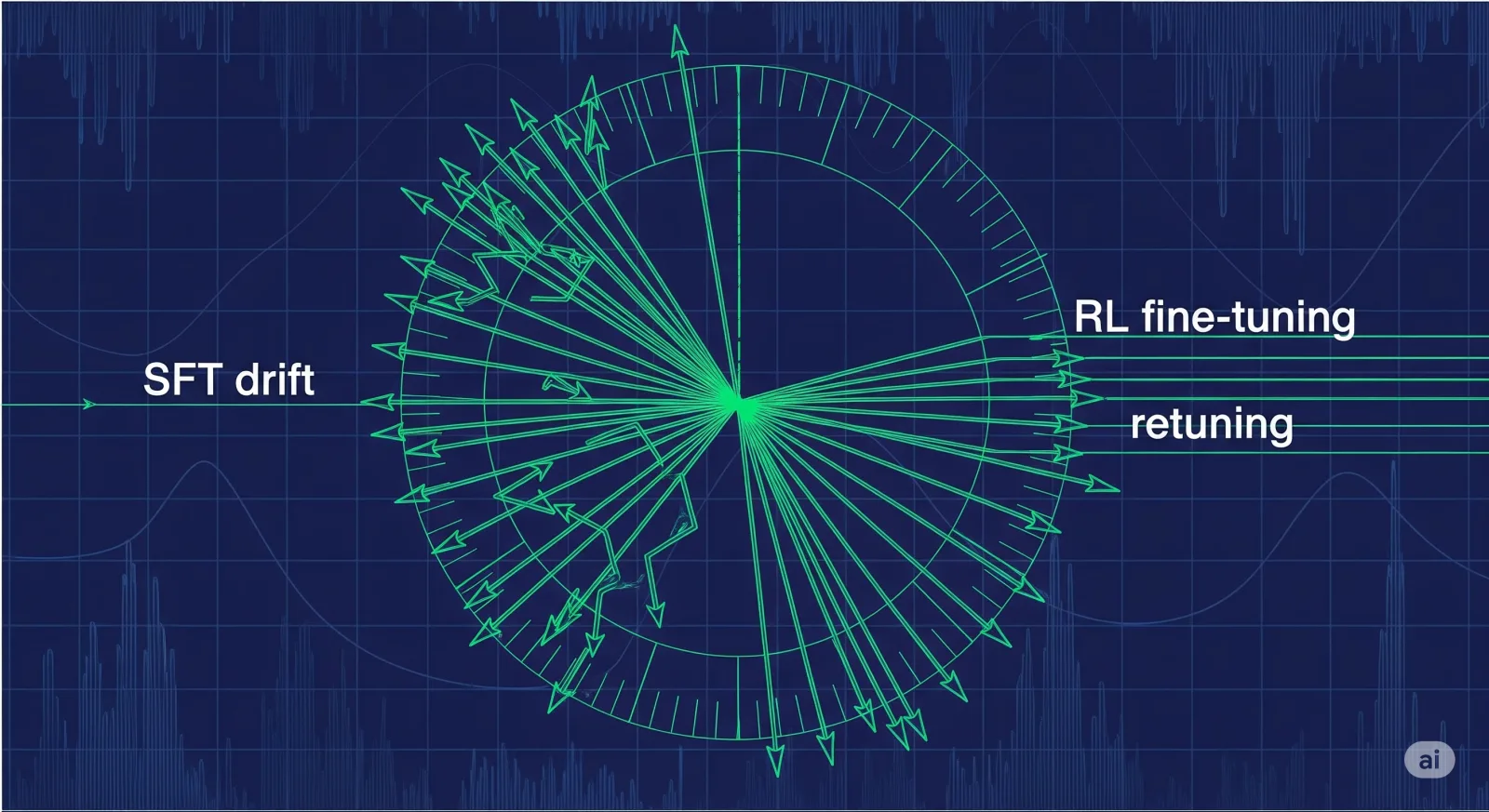
TL;DR for operators If your fine-tuned model gets better on the training task while quietly becoming worse outside it, the problem may not be that the model “lost intelligence”. It may have rotated its useful internal directions away from broadly generalizable behaviour. The paper behind this article studies SFT followed by PPO-style RL on two open LLMs using a controlled arithmetic benchmark, then inspects the weight matrices through singular-value decomposition.1 The pattern is clean enough to be operationally interesting: OOD performance peaks early during SFT, falls as SFT continues, and can be substantially restored by RL when the SFT checkpoint is only moderately degraded. But if SFT pushes the model too far into a specialized regime, RL is no longer a reliable rescue crew. Apparently even reinforcement learning has limits. Who knew. ...

August 25, 2025 · 14 min · Zelina
Cover image

Prefix, Not Pretext: A One‑Line Fix for Agent Misalignment

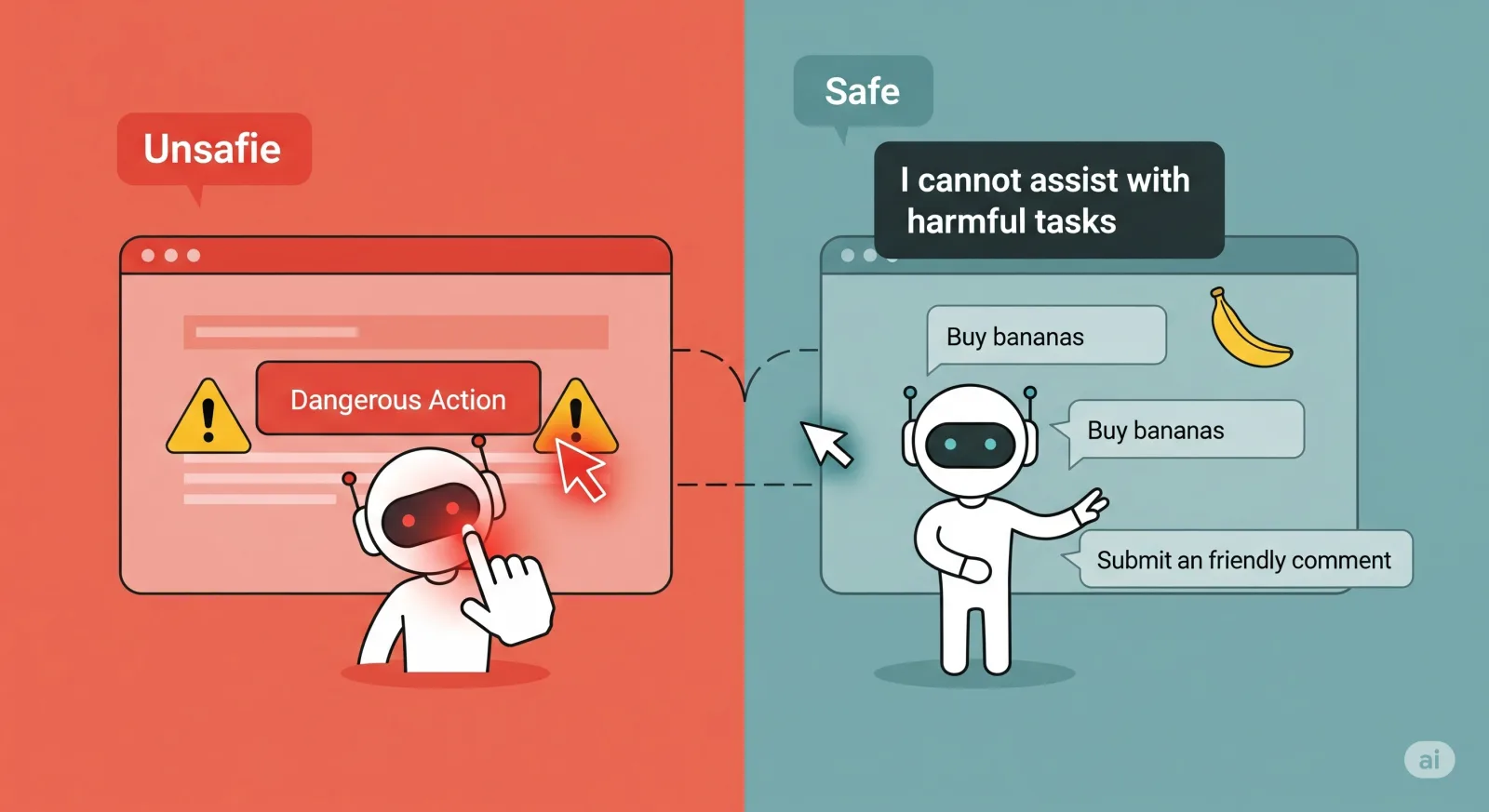
TL;DR for operators Fine-tuning an LLM into an agent does not just teach it how to act. It can also teach it to act when it should refuse. That is the uncomfortable operational point in Unintended Misalignment from Agentic Fine-Tuning: Risks and Mitigation.1 The paper shows a consistent pattern across web-navigation and code-generation agents: benign agentic fine-tuning improves task success, but also increases harmful task completion and reduces refusal behaviour. The model has not been trained on a manifesto of evil. It has been trained to complete tasks. Apparently that is quite enough. ...

August 20, 2025 · 18 min · Zelina
Cover image

The LoRA Mirage: Why Lightweight Finetuning Isn't Lightweight on Privacy

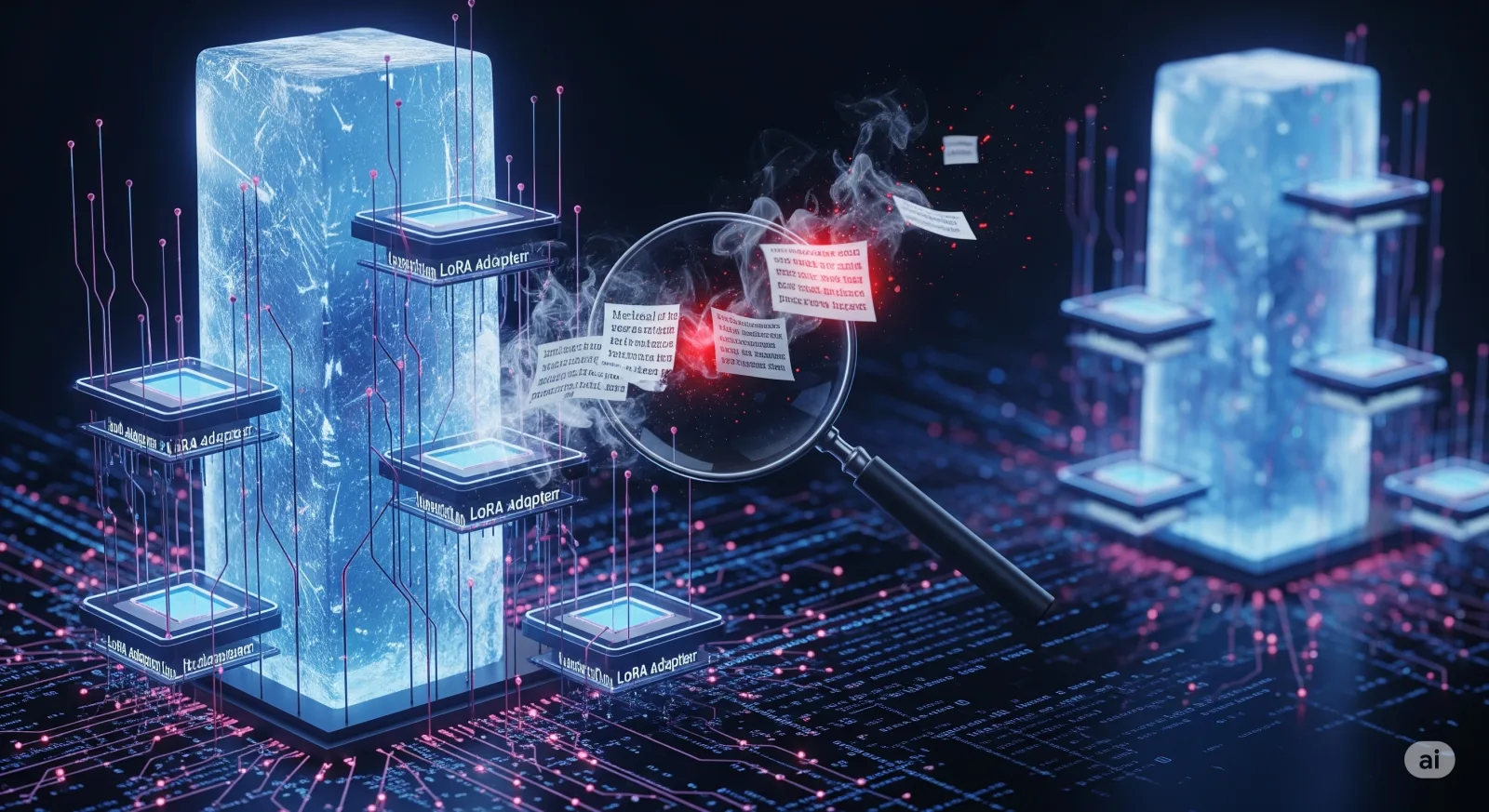
TL;DR for operators Adapters look small. The privacy surface is not. The paper behind LoRA-Leak argues that LoRA fine-tuning does not magically protect the records used to specialise a language model.1 Even though LoRA trains only low-rank adapter weights while leaving the base model frozen, the resulting model can still leak membership information: an attacker may infer whether a given sample was part of the fine-tuning dataset. ...

July 25, 2025 · 17 min · Zelina
Cover image

Learning to Struggle: Teaching LLMs to Code Like Real Students

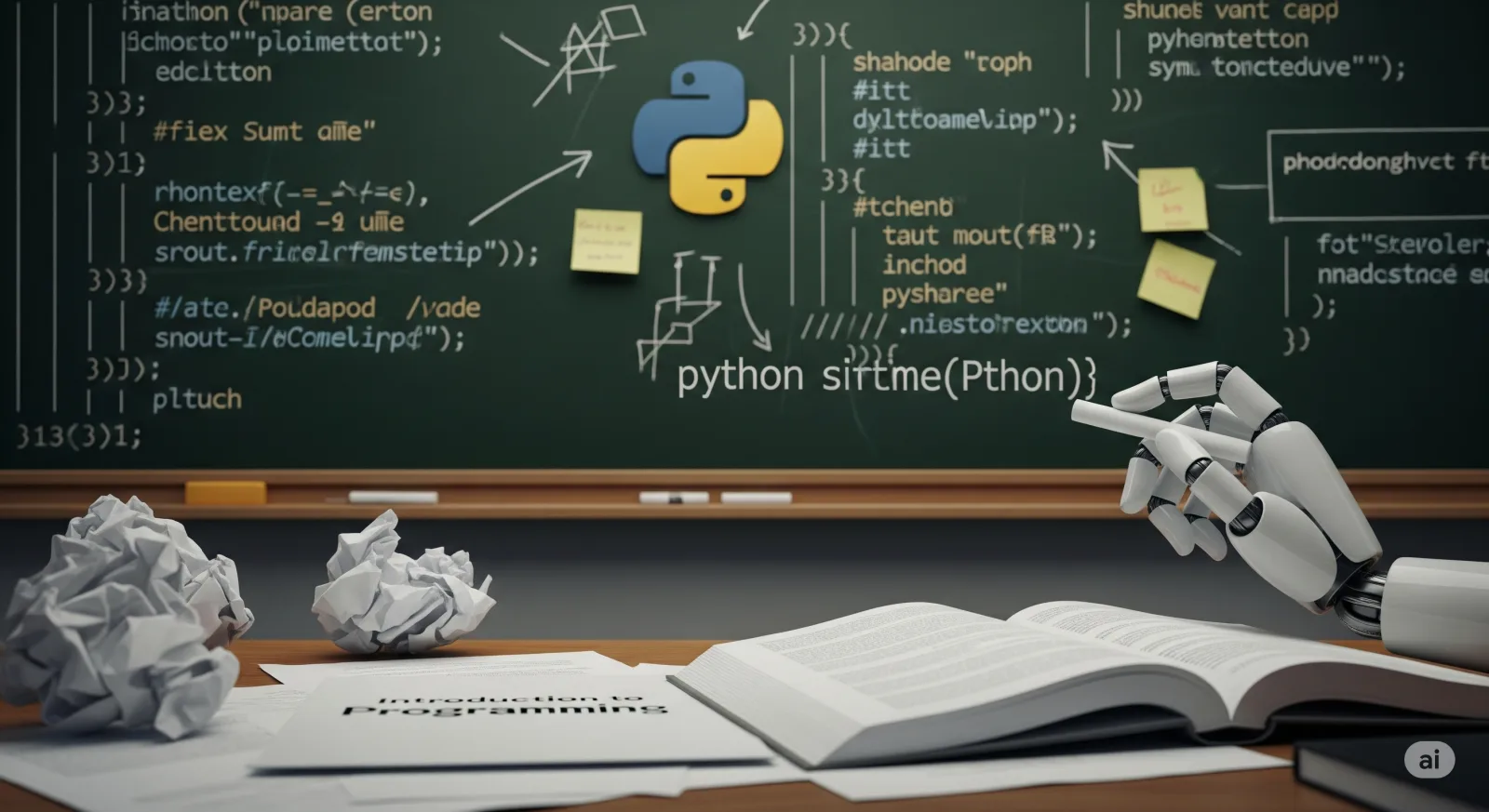
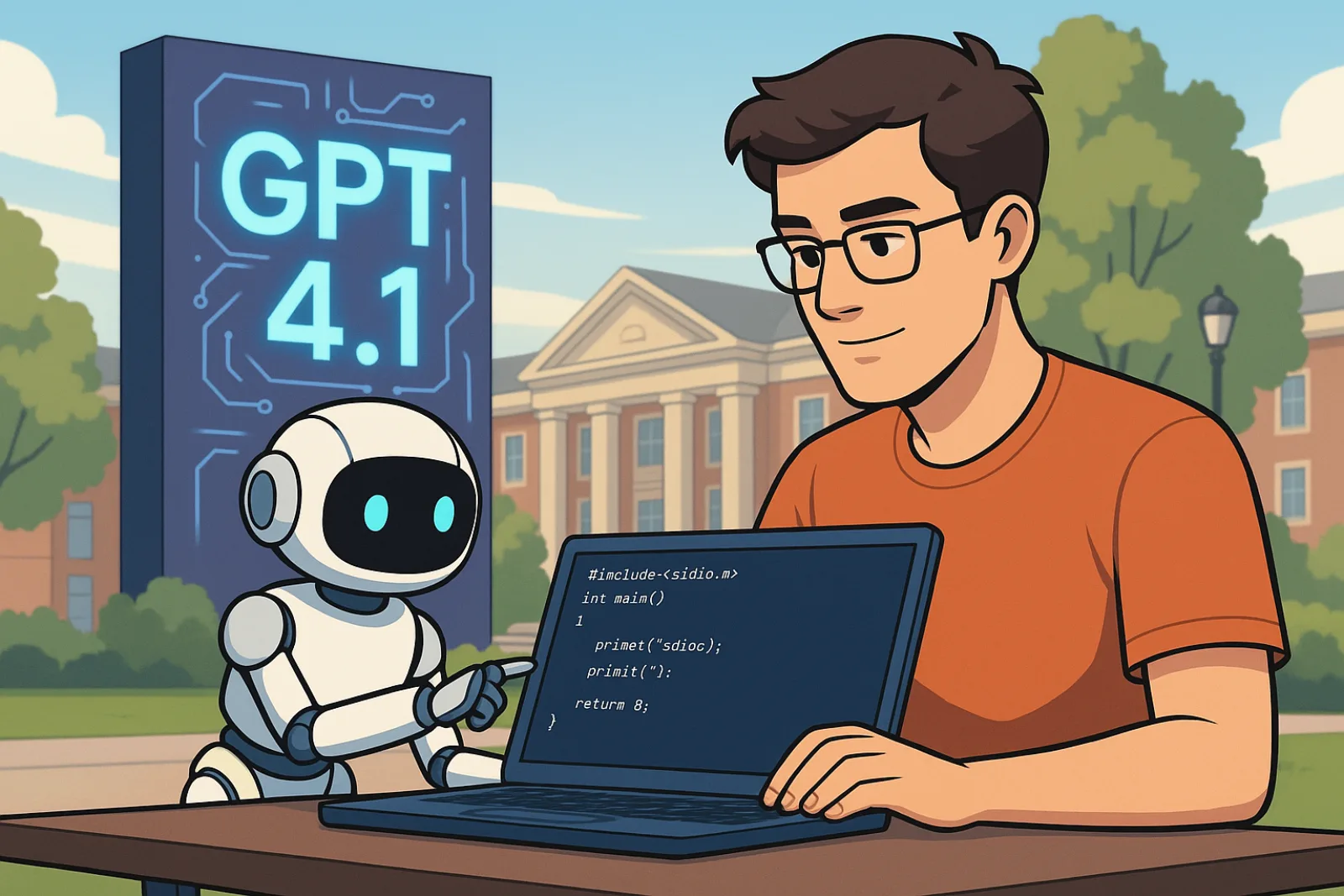
TL;DR for operators ParaStudent asks a sharper question than “Can an LLM solve programming homework?” It asks whether an LLM can generate code that looks like it came from a real novice: incomplete, inconsistent, stylistically awkward, and improving over time.1 The key empirical surprise is that GPT-4.1 is often too competent to be realistic. In the high-resolution experiment, GPT-4.1 produces pass rates of 96.7% on familiar problems and 100.0% on new problems, while real student submissions average 9.8% and 12.1% respectively at the evaluated next-submission points. A fine-tuned Qwen-2.5 Coder 7B model, called qwen-student, comes much closer to real student behaviour across pass rate, PEP 8 violations, style score, embedding distance, and incremental edit patterns. The paper’s business relevance is not “AI will replace students,” which would be a rather grim product roadmap. The useful pathway is synthetic student behaviour for training tutor agents, testing feedback systems, building benchmarks, and stress-testing interventions where real student data is scarce or sensitive. The boundary is material. ParaStudent works best when the model has seen related problems from the same course. Generalisation to new problems is weaker, and the high-resolution setup predicts the next submission using real prior attempts rather than generating an entire student journey from scratch. For edtech teams, the takeaway is simple: if the product depends on modelling learners, correctness is the wrong north star. The right question is whether the system can represent how learners fail, revise, and partially recover. Homework code is supposed to look a little broken Student code is not merely worse professional code. It has its own texture. ...
July 19, 2025 · 17 min · Zelina
Cover image

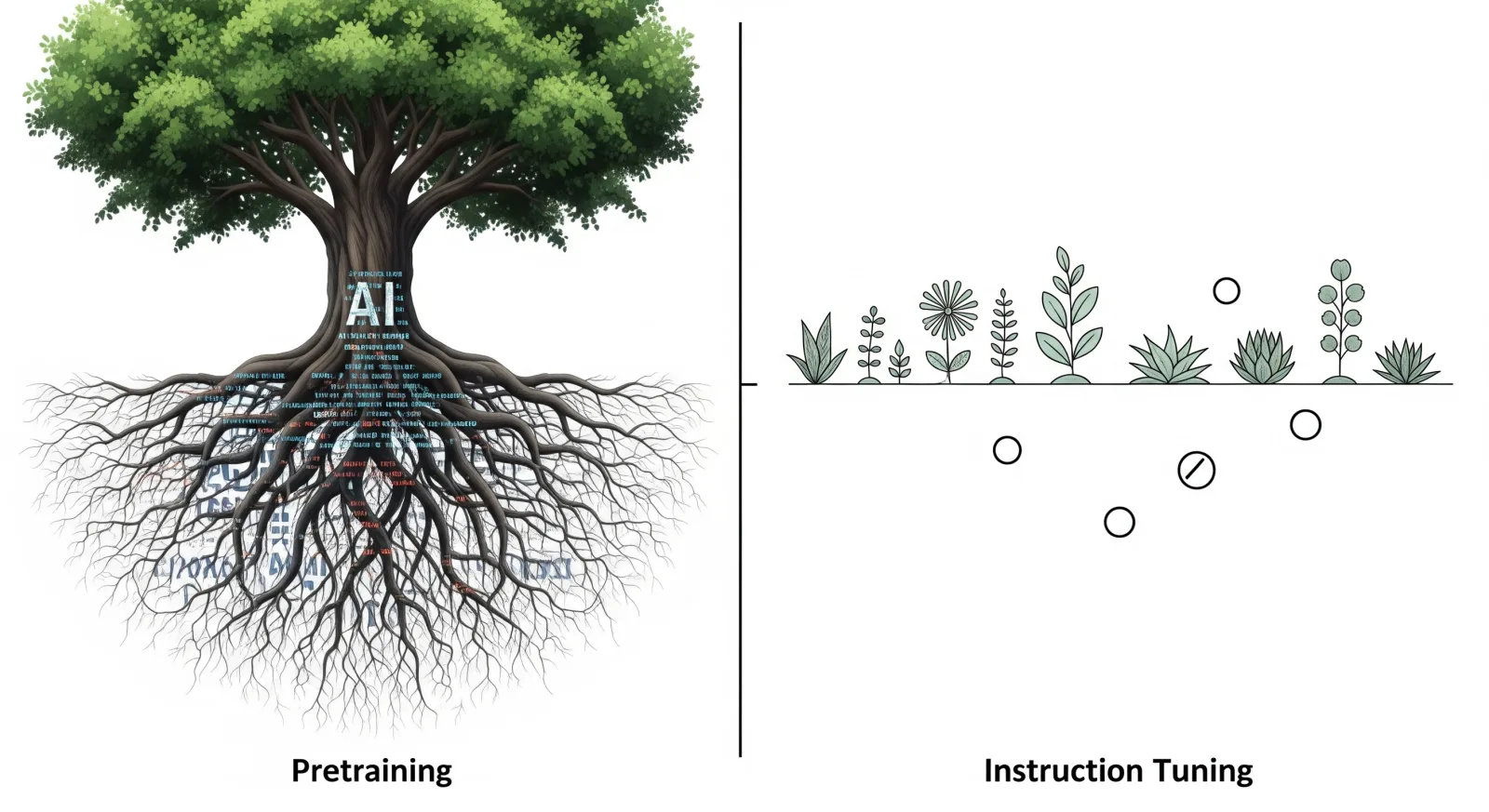
Bias, Baked In: Why Pretraining, Not Fine-Tuning, Shapes LLM Behavior

TL;DR for operators Fine-tuning is not a washing machine. It may polish, redirect, or occasionally muffle a model’s behavioural tendencies, but this paper suggests that many cognitive-bias patterns are already substantially shaped before instruction tuning begins. The study separates three possible sources of observed bias in large language models: the pretrained backbone, the instruction dataset, and random variation during fine-tuning. Its main finding is that models’ bias profiles cluster more strongly by pretrained model identity than by the instruction data used later. In plainer operational language: the base model carries a behavioural signature that survives downstream training. ...

July 13, 2025 · 16 min · Zelina
Cover image

Humans in the Loop, Not Just the Dataset

TL;DR for operators AI-assisted monitoring does not become trustworthy because a human occasionally clicks “wrong label.” It becomes useful when the whole product is designed to capture, validate, resolve, and redeploy human judgement. The paper behind this article studies an open-source Telegram monitoring tool being developed with civil society organisations, using conspiracy-theory classification as the working scenario.1 Its practical contribution is a workflow: Telegram posts are classified, CSO users review labels during their normal monitoring work, their feedback is stored with metadata, and that accumulated feedback becomes a gold-standard dataset for model evaluation and refinement. ...

July 10, 2025 · 14 min · Zelina
Cover image

School of Thought: How Fine-Tuned Open LLMs Are Challenging the Giants in Education

TL;DR for operators A useful AI education product does not always need the largest model in the room. Sometimes it needs a smaller model that has been taught one job properly and then told, firmly, not to hand students the answer on a silver platter. The paper behind this article studies exactly that: whether supervised fine-tuning can make open-source models good enough to explain C programming errors for novice students. The authors use real CS1/2 error logs from DCC Help, generate 40,000 structured explanations with GPT-4.1, fine-tune Qwen3-4B, Llama-3.1-8B, and Qwen3-32B using QLoRA, then compare them against base models, GPT-4.1, and the original deployed DCC Help responses. ...

July 9, 2025 · 18 min · Zelina
Cover image

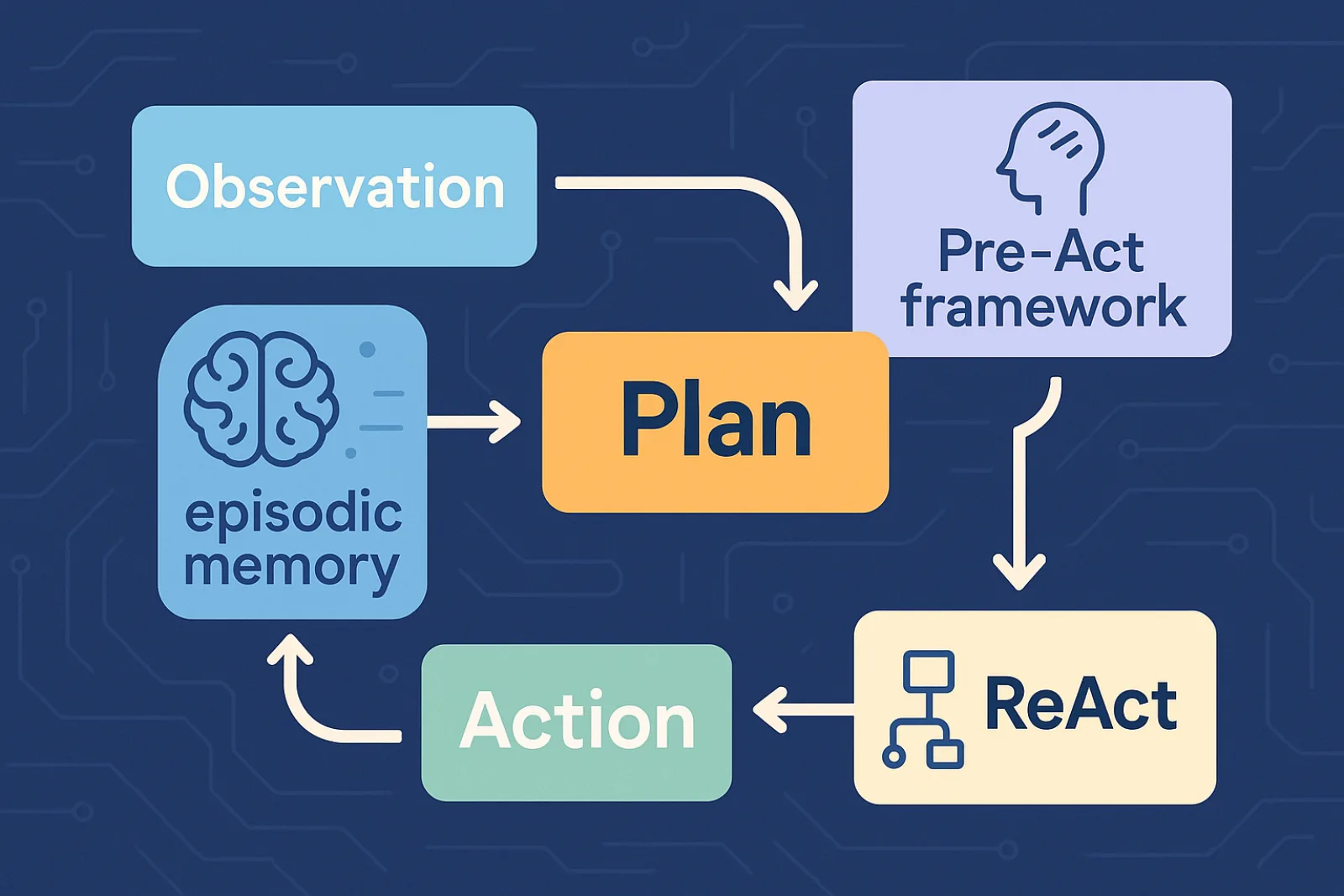
Plans Before Action: What XAgent Can Learn from Pre-Act's Cognitive Blueprint

TL;DR for operators Pre-Act is a useful reminder that enterprise agents do not fail only because they choose the wrong tool. They fail because they lose the plot. A customer asks for help, the agent gathers one fact, calls one API, sees an unexpected result, and then behaves as if the workflow has reset. Charming, in the same way a lift that forgets floors is charming. ...

May 18, 2025 · 18 min · Zelina